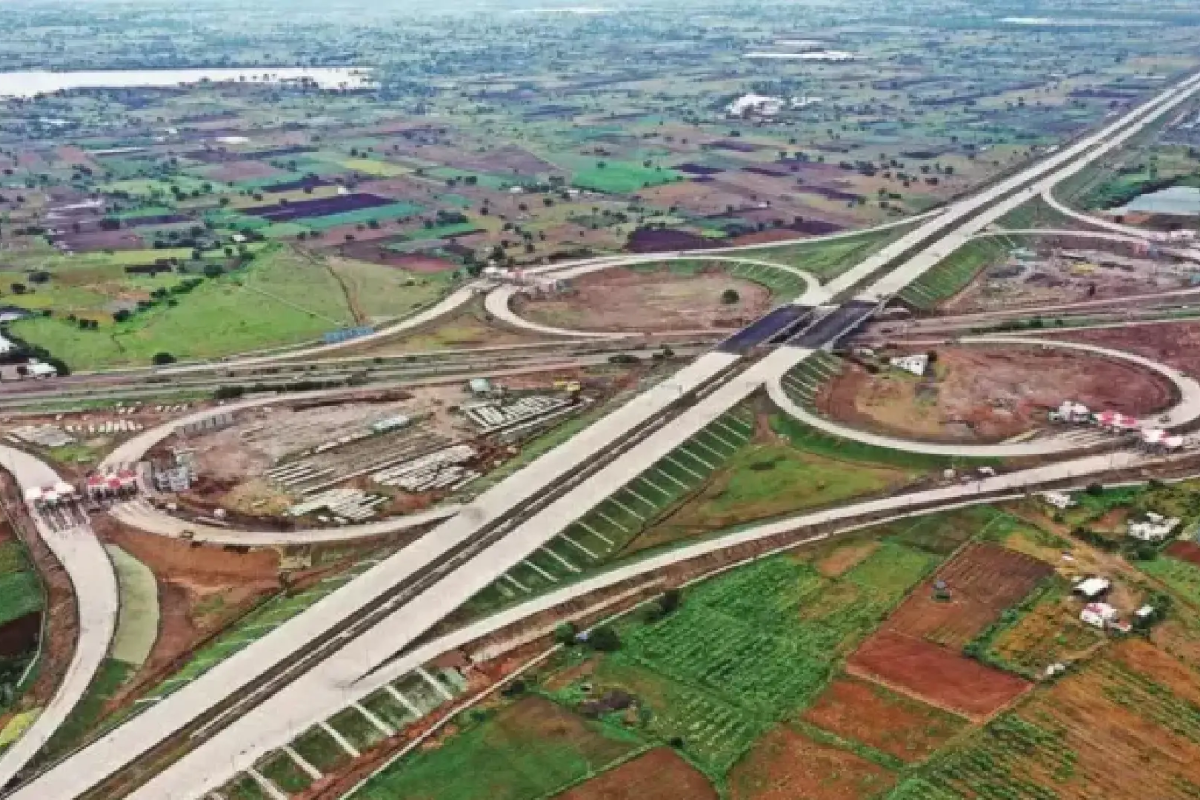
Nashik’s long-discussed ring road has secured approval from the State Cabinet Committee on Infrastructure, marking a decisive step towards preparing the city for the 2027 Kumbh Mela. The 66.15-kilometre project, expected to cost around ₹8,000 crore, is being positioned as a mobility backbone that can manage festival crowds, support industrial logistics, and ease chronic congestion across the rapidly expanding urban region.
The Maharashtra State Infrastructure Development Corporation (MSIDC) has been tasked with delivering the project, replacing the earlier expectation that the work would fall under the Maharashtra State Road Development Corporation. Officials said the shift was made to streamline implementation and ensure quicker coordination ahead of the religious congregation, which is likely to draw nearly two crore visitors.The state has cleared land acquisition expenditure of ₹3,659 crore, with funds routed through the Nashik–Trimbakeshwar Kumbh Mela Authority, according to a recent government resolution. The civil works component, estimated at ₹4,262 crore, is under discussion with the Union Ministry of Road Transport and Highways. Once negotiations conclude, both sides are expected to sign a formal agreement outlining responsibilities, timelines, and financial commitments.
Senior officials involved in the planning process said the ring road is not merely a festival-linked project but forms part of a broader strategy to shift heavy traffic away from the urban core. Nashik’s arterial roads have long struggled with a combination of freight movement, tourist inflow, and rising private vehicle ownership. A peripheral corridor, experts noted, could help cut emissions from idling traffic and improve air quality in residential pockets.The proposed alignment is expected to improve travel for transporters moving agricultural produce, industrial goods, and construction materials in and out of the region. Industry analysts said the corridor’s impact on logistics efficiency could play a significant role in Nashik’s emergence as a competitive manufacturing and agribusiness centre. The ring road could also enhance tourism circuits connecting religious, cultural, and natural sites around the district.
To recover project costs, the state has kept the option of levying tolls open, with revenue-sharing arrangements to be decided jointly with the Centre. While tolling remains a contentious issue among motorists, planners argue that cost recovery is essential for long-term asset maintenance, particularly for high-capacity roads designed to manage both daily traffic and episodic surges.Urban mobility researchers emphasise that large-scale connectivity projects must balance efficiency with inclusiveness. Ensuring safe pedestrian crossings, equitable access for peripheral communities, and environmental safeguards along the alignment will be crucial as Nashik prepares for an event that historically reshapes local infrastructure. The ring road, they added, offers the city an opportunity to create a more resilient and sustainable framework for handling future growth far beyond the festival year.
Nashik Cabinet Clears Sixty Six Kilometre Ring Road Ahead Of Kumbh Mela