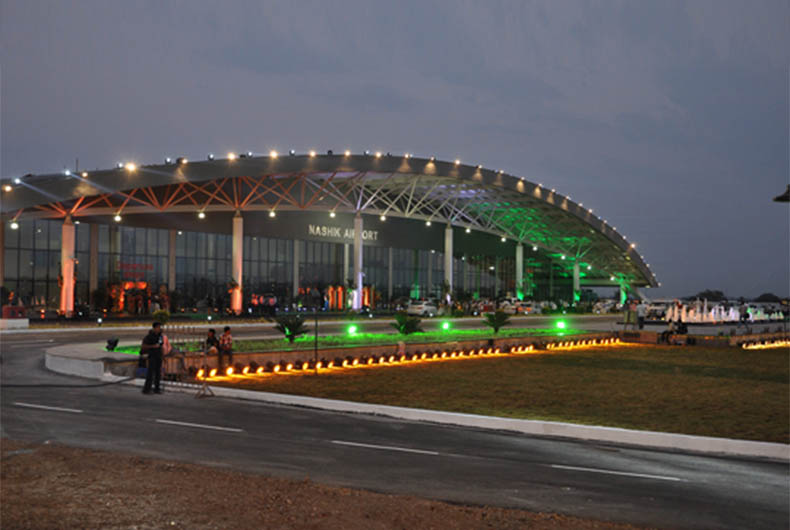
The Maharashtra government has initiated a major expansion of Nashik’s Ozar airport, aiming to significantly improve connectivity and regional economic prospects ahead of the Simhastha Kumbh Mela 2027. The project — backed by a substantial capital allocation — is designed to upgrade passenger and cargo facilities to support projected surges in travel demand and lay the groundwork for broader industrial and export opportunities across North Maharashtra.
Officials overseeing the initiative say the expansion will multiply the airport’s handling capacity and modernise key infrastructure, preparing it to accommodate intensified passenger flows and air cargo movement. These enhancements are funded as part of a coordinated effort to ensure Nashik’s transport ecosystem is resilient and future-ready, notably as the city anticipates pilgrims and visitors during the multi-year religious event that begins in late 2026.Current plans, approved by the Nashik-Trimbakeshwar Kumbh Mela Development Authority, include a new integrated terminal building and expanded apron space. The terminal upgrade is expected to raise hourly passenger capacity from around 300 to roughly 1,000, while accompanying logistics upgrades aim to streamline aircraft parking and passenger circulation. The authority has targeted March 2027 for substantial completion to align with the pilgrimage schedule.
Urban planners and transport analysts underscore that the airport works sit within a broader context of Nashik’s infrastructure transformation, including major road and rail projects designed to ease citywide movement and expand economic corridors. Coordinated upgrades — from ring roads to upgraded rail stations — are critical for distributing travel demand efficiently and reducing bottlenecks during peak periods.Beyond managing pilgrim influx, expanded air capacity is poised to act as a strategic economic lever. Nashik’s industrial base — including horticulture, manufacturing clusters and defence production units — stands to benefit from improved cargo linkages. Enhanced freight facilities could shorten market access timelines for perishable agricultural exports, while better connectivity may attract fresh investment in logistics, SME manufacturing and ancillary services.
Experts note that aviation projects can have spillover benefits for urban real estate and employment. Capacity expansions typically correlate with increased demand for commercial and residential property near transport hubs, as well as a rise in travel-dependent sectors such as hospitality, retail and logistics. Nashik’s recent passenger traffic growth — already showing double-digit year-on-year increases — suggests latent demand reaching for better infrastructure.However, realising these potentials hinges on maintaining momentum across intersecting infrastructure streams and supporting policy frameworks. Challenges around last-mile connectivity, workforce training and sustainable land use remain central to whether the airport upgrade can translate into inclusive economic opportunities for the wider region.
As Maharashtra accelerates implementation, the focus will increasingly shift to institutional coordination, regulatory clearances and phased activation of enhanced facilities — critical steps to ensure that the airport becomes a durable engine of regional connectivity and growth beyond the Kumbh milestone.