


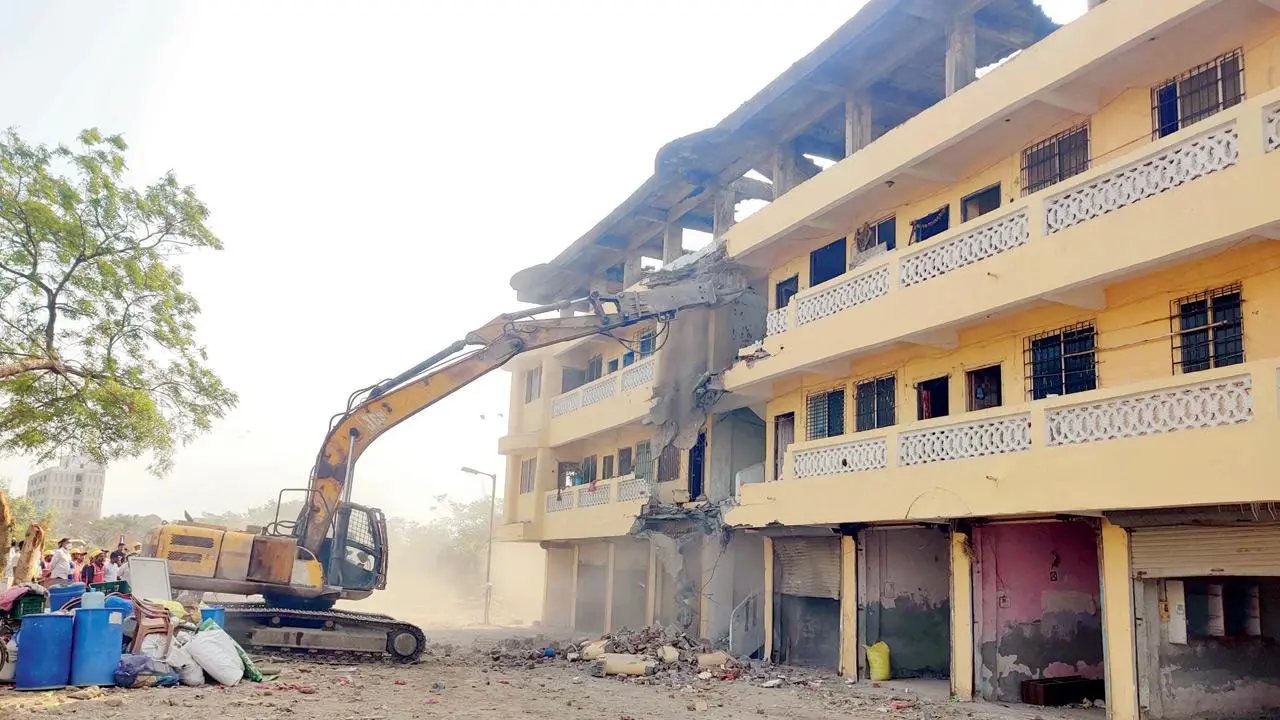
A late-night scare in Nalasopara East saw around 70 residents evacuated after their apartment block developed a noticeable lean, prompting swift action from civic and emergency authorities. Sairaj Apartment, a ground-plus-four-storey residential building in Alkapuri, became a flashpoint for public concern when it tilted precariously during renovation work in a ground-floor commercial unit.
Fire brigade personnel and Vasai-Virar City Municipal Corporation (VVCMC) officials responded rapidly, relocating residents to a nearby community hall. Authorities cited close coordination and timely evacuation for averting a potential disaster. Initial investigations suggest that renovation activities in a ground-floor shop may have compromised structural integrity. Though VVCMC has yet to officially validate these claims, early observations indicate that undoing load-bearing walls without proper planning could have triggered the tilt. A municipal inspector noted that both the affected building and its neighbour exhibited signs of weak construction, possibly exacerbated by ongoing modifications.
Building experts and structural engineers have now been engaged to evaluate the site. Their assessment will focus on foundation stability, load distribution, and the structural resilience of Sairaj Apartment. Results are expected within the next 48 hours, and authorities have pledged to keep residents informed of progress and safety measures. This incident has reignited concerns over building safety in rapidly urbanising fringe areas. Nalasopara, which hosts a mix of aging residential blocks and newer constructions, has seen similar episodes in recent years. In May, a slab collapse in another East suburb building prompted evacuation of a mother and child and ended in urgent structural retrofitting .
Critics argue that inadequate regulatory oversight and a laissez-faire attitude towards renovation activities have compounded the risks. Recent reports have highlighted unauthorised modifications and a lack of routine structural audits across the region. Civic experts emphasise that even minor internal changes—like shifting walls or altering plumbing—must undergo engineering review to prevent disproportionate load tensions. “Sustaining safe vertical spaces requires regular inspections, especially when signs of settlement or tilt are visible,” said a structural consultant involved in metro-corridor projects. “Neglecting these can lead to catastrophic collapse, with devastating human and environmental consequences.”
The VVCMC has assured that an exhaustive technical audit of Sairaj Apartment will be followed by mandatory reinforcement or evacuation if engineers deem it unsafe. Residents have called for similar audits of nearby structures, triggering local campaigns for structural safety certification and preventative upkeep. This episode ties into wider questions about sustainable urban growth. As suburbs swell to accommodate housing demand, infrastructure and civic safeguards often trail behind. Responsible renovation, stringent permit systems, and community-driven inspections are essential to prevent ecosystems of risk.
A VVCMC spokesperson reassured the public, stating: “Our immediate priority is resident welfare. We have mobilised engineers, emergency responders and inspection teams to ensure safe, timely evaluation. Learnings from this incident will inform stronger regulatory frameworks across the city.” Local community groups believe meaningful change depends on integrating structural safety into broader urban planning. They propose introducing periodic certification for buildings over a certain age or height, digital logging of renovation permits, and transparent disclosure of structural reports to ensure occupant confidence.
Meanwhile, evacuated residents wait anxiously for official clearance. Many have lost sleep wondering if they will need to seek alternative housing or face protracted repairs. The personal impact of such instability is stark. Ultimately, the Nalasopara building tilt serves as a cautionary tale. In areas straining under development pressure, renovation—without technical oversight and civic monitoring—can threaten livelihoods and lives. Strengthening institutional checks, empowering citizens to flag risks and embedding sustainability in every urban intervention will be critical for future resilience.
As Mumbai’s metropolitan edge expands, the tilt at Sairaj Apartment is a stark reminder that vertical growth must be matched by structural prudence. Urgent inspection and transparent regulation may save more than structures—they may safeguard whole communities.
Also Read : Bombay High Court Orders Demolition Of Five Illegal Uran Buildings
