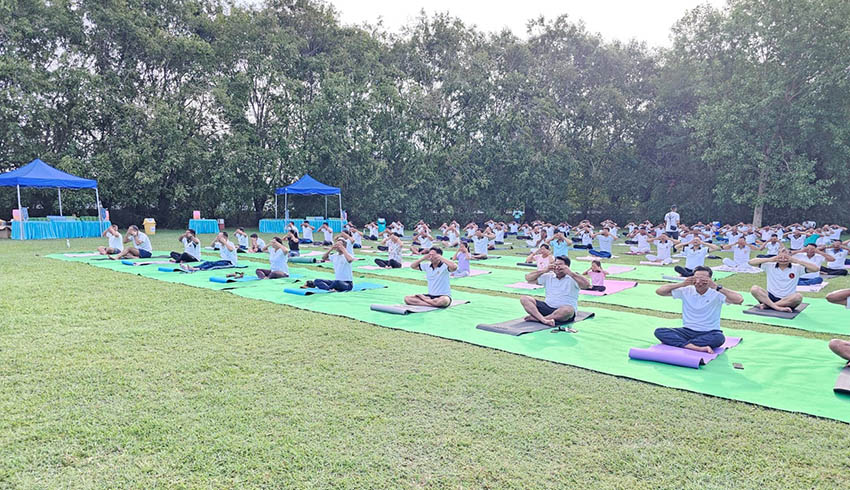
A large-scale public yoga gathering near Nagpur has marked the beginning of preparations for the 2026 International Day of Yoga, drawing thousands of participants and signalling a growing intersection between public health initiatives and urban community engagement.
The event, held in Lonar in Maharashtra’s Vidarbha region, saw nearly 5,000 people perform a synchronised yoga posture, setting a regional participation benchmark and formally launching a nationwide countdown to the global observance. The initiative is part of a broader campaign aimed at expanding yoga’s reach as a daily health practice rather than a symbolic annual event. While the scale of participation reflects strong public interest, the development is also indicative of how cities like Nagpur are increasingly integrating wellness into urban planning narratives. As urban populations grapple with rising lifestyle-related illnesses, air pollution, and sedentary work patterns, preventive health practices are gaining policy relevance alongside traditional healthcare systems.The Nagpur yoga event highlights this shift toward community-driven wellness infrastructure. Public spaces—parks, open grounds, and recreational zones—are being repurposed as platforms for collective health engagement. Urban planners suggest that such initiatives can play a critical role in reducing healthcare burdens by promoting low-cost, accessible preventive practices.The programme also showcased structured yoga modules targeting non-communicable diseases and age-related health concerns, reflecting a shift toward evidence-based wellness frameworks.
Officials indicated that upcoming campaigns will focus on integrating these practices into everyday routines, supported by digital tools and guided programmes. For Nagpur and similar tier-two cities, this approach aligns with broader urban transitions. Rapid real estate growth, expanding road networks, and increasing digitalisation have improved economic prospects but also contributed to reduced physical activity and rising health risks. Embedding wellness into the urban fabric—through both infrastructure and community participation—is emerging as a complementary strategy to address these challenges.The Nagpur yoga event also underscores the role of cultural practices in shaping sustainable urban lifestyles. Unlike infrastructure-heavy interventions, wellness programmes require minimal capital investment while offering long-term social and economic benefits. Reduced healthcare costs, improved productivity, and enhanced quality of life are among the potential outcomes often cited by experts.There is also an emerging link between such initiatives and environmental awareness. Outdoor group activities encourage the use and preservation of green spaces, reinforcing the importance of accessible urban commons in dense city environments. As climate pressures intensify, these spaces are increasingly recognised not just for recreation but for their role in supporting public health resilience.
Looking ahead, the success of large-scale participation events will likely depend on continuity rather than scale alone. Experts emphasise that sustained engagement—through neighbourhood-level programmes, workplace initiatives, and school-based interventions—will determine whether such campaigns translate into measurable health outcomes.As preparations continue for the 2026 global observance, the momentum generated by the Nagpur yoga event offers a glimpse into how Indian cities are rethinking health—not just as a service, but as an integral part of urban living and planning.