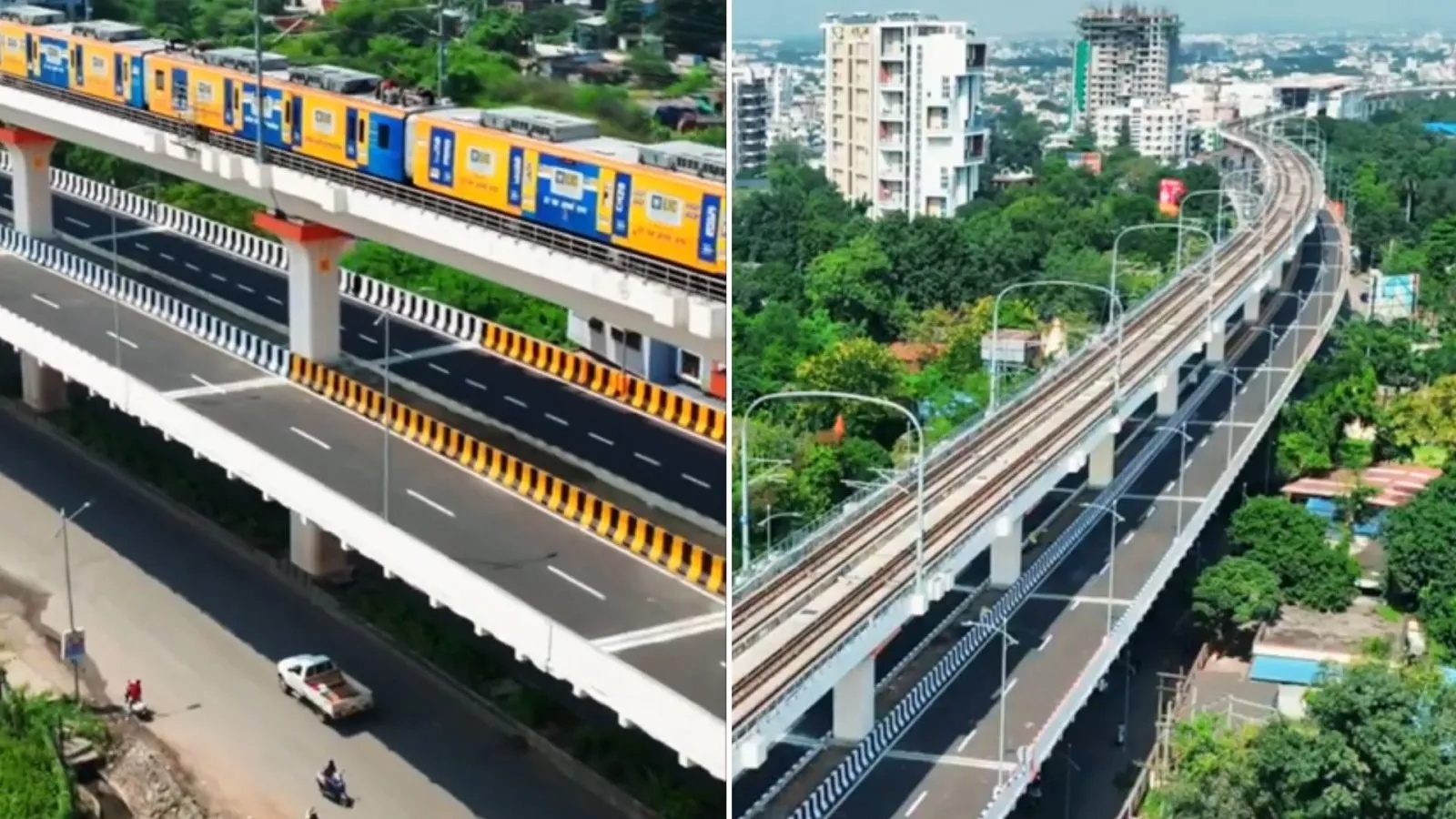
Nagpur Urban Mobility Boost with New Flyover Landing
Nagpur’s efforts to untangle persistent traffic gridlocks in the historic Sadar district have reached a critical milestone as Maha Metro finalises a revised alignment for the Sadar Flyover, with a detailed project report (DPR) slated for submission within 10 days.
The restructuring underscores ongoing challenges in integrating legacy road networks with modern mobility infrastructure while aiming to improve commuter flow in one of the city’s busiest nodal points. The updated design shifts the flyover’s landing point from near Kasturchand Park to a location opposite the RBI petrol pump at RBI Square, a decision driven by functional assessments to allow traffic from the Sadar side to bypass multiple signals and reduce chronic waiting times at Kasturchand Park, RBI Square and surrounding junctions.
Urban transport planners have long flagged the Sadar Flyover’s original configuration as partially responsible for traffic snarls — particularly where descending vehicles converge into constrained road space near heritage precincts and high-density mixed-use zones. Redesigning the landing aims to optimise dispersal and reduce intersection conflicts, which would otherwise push traffic onto alternative routes and amplify emissions from idling vehicles in the core city area. The nearly final DPR will reflect an extended flyover length and likely increased project cost, given the new landing geometry. Construction can only commence once the Union Ministry and relevant state agencies approve adjustments to expenditure and land use plans.
Analysts note that Nagpur’s mobility landscape is rapidly evolving, with a suite of major transport upgrades — including metro expansions, rail-station redevelopment and additional flyover networks — advancing concurrently. Such complexity poses coordination challenges, particularly where multiple agencies must align work sequencing to minimise commuter disruptions and avoid cumulative congestion during peak hours. For residents and businesses in the Sadar-RBI Square corridor, the redesign brings cautious optimism. Daily commuters have endured prolonged travel delays, narrow detours and signal-induced congestion that eat into productivity and increase fuel costs. Reducing stop-start traffic movement can deliver tangible benefits in travel time savings and improved air quality, an increasingly pressing concern as vehicle volumes surge with urban growth.
However, the project also highlights enduring tensions between heritage conservation and infrastructure modernisation. The original approach encountered resistance in heritage-sensitive zones such as Kasturchand Park, where planners sought to preserve open space while accommodating elevated road structures. The revised landing exemplifies efforts to balance mobility gains with cultural-landscape protection — a core consideration in sustainable urban planning.
Looking forward, the Sadar Flyover redesign will be a litmus test for multi-modal integration in Nagpur’s transport ecosystem. Successfully connecting flyovers with metro corridors, pedestrian pathways and public transport nodes is essential for equitable access and climate-aligned mobility. As the DPR enters final clearance, authorities will be under pressure to articulate clear timelines, phased delivery benchmarks and mitigation strategies that reflect both commuter needs and urban resilience goals.