Nagpur Turns Water Hyacinth Waste Into Eco-Craft Livelihoods
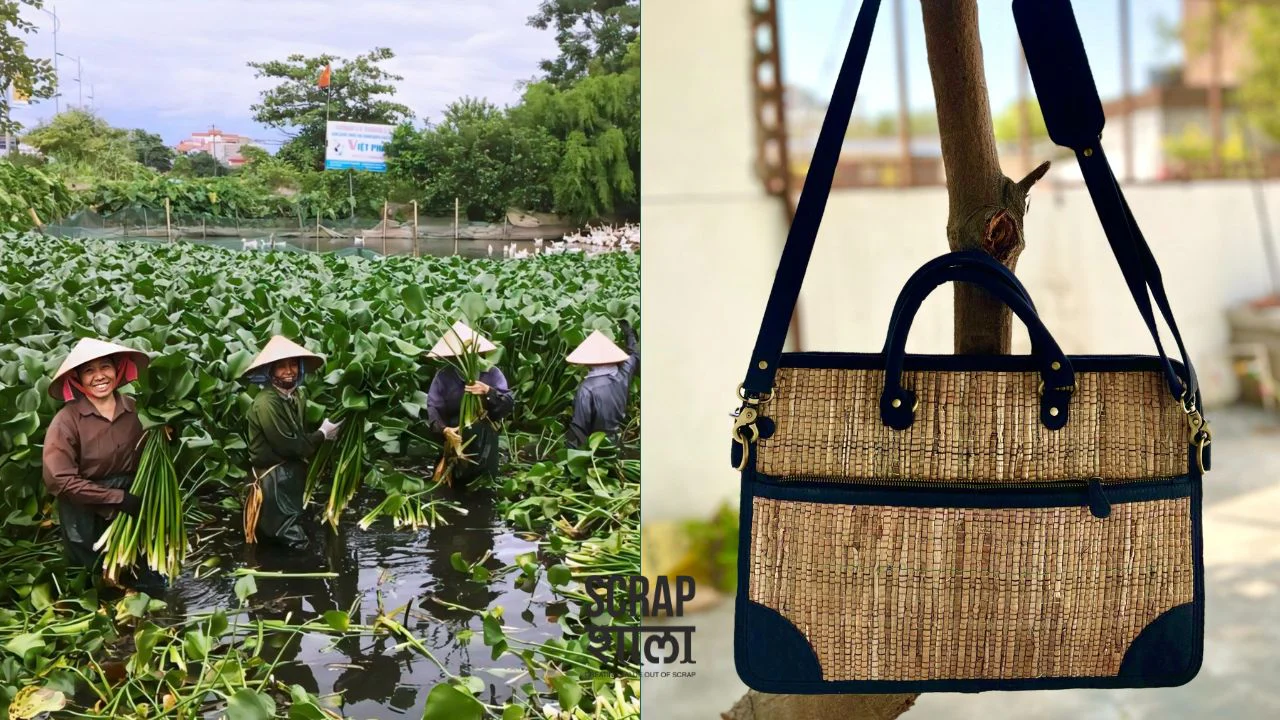
Nagpur has taken an innovative turn in urban ecosystem management by converting invasive water hyacinth from Ambazari Lake into marketable handicrafts — a move that is simultaneously addressing ecological imbalance and generating sustainable livelihoods for women artisans.
The initiative, embedded within the city’s Smart City development framework, exemplifies how urban environmental challenges can be reframed as opportunities for inclusive economic participation. Ambazari Lake — the largest urban lake in Nagpur, known for its ecological and recreational importance — has long struggled with the rapid proliferation of water hyacinth, an invasive aquatic plant that depletes oxygen in water, suffocates native flora and fauna, and disrupts ecosystem services. In contrast to conventional removal methods, the city’s latest approach repurposes extracted biomass into eco-products, turning a nuisance into a resource.
The project, introduced at a municipal Skill Development Centre under the Smart City programme, involves harvesting the weed, processing its stems, leaves and roots, and sun-drying the material for craft production. Local women trained in weaving and manual processing have already turned out hundreds of items — from laptop bags and yoga mats to purses and laundry organisers — with over 800 products made since the initiative began. Urban planners and sustainability experts see this as a model of circular economy at the neighbourhood scale, where waste materials are funneled into value chains that support both environmental restoration and social equity. By embedding informal artisans into formal production streams, cities can broaden economic opportunity while reducing ecological stress on critical water bodies. Such synergies align with broader goals of climate-smart and inclusive urban development.
Crucially, this initiative also intersects with a growing national and international movement to harness water hyacinth’s potential beyond nuisance removal. In regions such as Assam, similar crafts based on dried hyacinth have evolved into recognised cottage industries, producing biodegradable products and inspiring rural entrepreneurship. Municipal leaders provided space and institutional support under Nagpur’s Smart City Project, with civic oversight ensuring both quality control and market outreach. While initial uptake has been promising, scaling such programmes hinges on robust marketing, brand development and access to broader distribution — factors that determine whether eco-craft clusters can transition from pilot projects to sustainable enterprises.
For residents and environmental advocates, the project represents a win-win: it actively reduces the weed burden in waterways while expanding economic agency for women artisans. Yet the solution also underscores a structural truth in urban ecology — that managing invasive species requires not just extraction, but integration with economic systems that value sustainability. As cities like Nagpur grow, blending ecological stewardship with equitable livelihoods will be key to shaping resilient urban futures.