


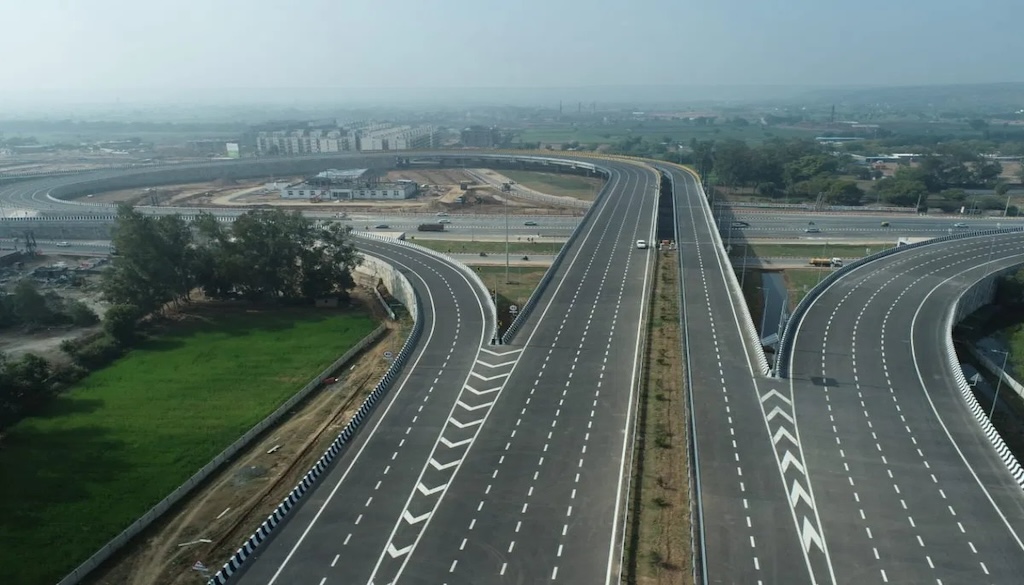
Maharashtra’s state government has formally ruled out plans to widen the existing Nagpur‑Ratnagiri highway to six or eight lanes, even as political and planning debates intensify around the broader Shaktipeeth Expressway project. The clarification signals a recalibration of high‑speed road infrastructure expectations in one of India’s key east‑west connectivity corridors, with implications for regional mobility, environmental stewardship and future transport investment. Deputy Chief Minister and state transport portfolio holder addressed the issue in the state legislative council this week, underlining that the 925‑kilometre Nagpur‑Ratnagiri corridor — comprising segments of NH‑166, NH‑52 and NH‑361 — remains primarily four‑laned and under the jurisdiction of the National Highways Authority of India (NHAI). No formal proposal to expand it into six or eight lanes has been received from the central agency, the government clarified. Instead, authorities highlighted the state’s focus on developing an access‑controlled Shaktipeeth Expressway, a new greenfield route intended to significantly cut travel times and enhance connectivity from Nagpur to the Maharashtra‑Goa border. Designed to slash travel times — estimated at 18 hours on existing roads — to roughly eight hours once complete, the expressway is pitched as part of a broader strategy to link economic nodes and religious tourism hubs across 12 districts of the state.
Urban mobility analysts say the state’s clarification reflects evolving infrastructure priorities. “Expanding existing highways to eight lanes isn’t always the most efficient or sustainable solution when traffic demand is uneven or environmental costs are high,” said a transportation planner, noting the corridor traverses sensitive landscapes such as the Western Ghats, where road widening can trigger complex environmental clearances and mitigation needs. (Analyst insight) The Nagpur‑Ratnagiri route already accommodates a mix of freight and passenger traffic critical to Maharashtra’s industrial and agricultural supply chains. But experts argue that without clear traffic data justifying eight lanes, widening could impose disproportionate financial, land and ecological costs relative to mobility gains. This calculus gains weight in a state balancing multiple mega expressway projects alongside fiscal constraints. Public responses to the Shaktipeeth project have been mixed. While proponents underscore potential tourism stimulus and regional integration, local stakeholders in districts along the proposed alignment have raised concerns about land acquisition, displacement and ecological disruption. Incidents of community resistance during preliminary surveys in some zones signal the depth of local anxieties, even as the government asserts compliance with statutory clearance norms.
From a policy perspective, the decision to defer highway widening until clear demand emerges aligns with emerging global practice emphasising targeted capacity upgrades over blanket expansion. Sustainable transport planners argue that multimodal investments — including improved rail services and regional public transit — should complement road projects to deliver equitable, climate‑resilient mobility. As debate continues in the state assembly and beyond, the clarification on lane expansion sets the stage for more nuanced infrastructure planning discussions in Maharashtra. What remains critical is transparent traffic forecasting and inclusive stakeholder engagement to ensure major transport corridors serve economic objectives without undermining environmental and social well‑being.
ALSO READ – Indore Elevated Corridor Faces Legal and Planning Doubts
Nagpur Ratnagiri Highway Not Being Widened To Eight Lanes
