


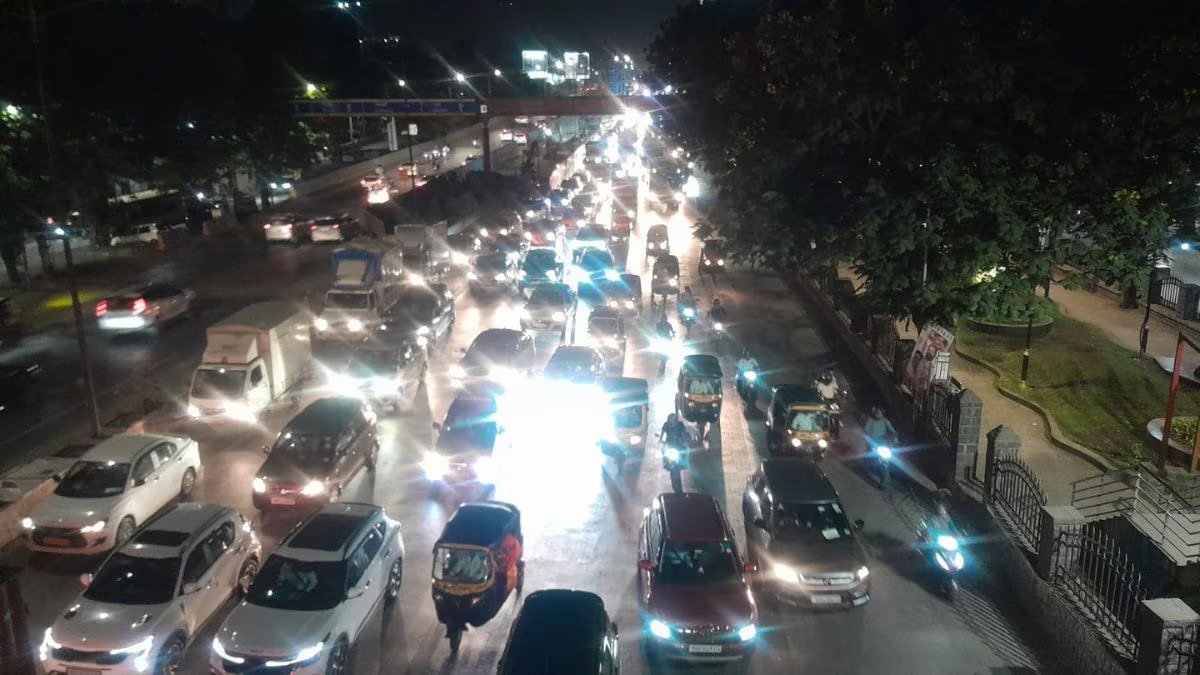
Nagpur’s transport network is facing new pressures as a rapid rise in private vehicle ownership begins to challenge the city’s long-term mobility strategy. Urban planners warn that unless public transport and sustainable mobility systems expand quickly, the growing dependence on personal vehicles could intensify congestion, pollution and infrastructure strain. Recent transport assessments suggest that the surge in vehicle registrations has accelerated faster than anticipated, raising concerns about the effectiveness of the current Nagpur urban mobility plan. The city has witnessed a steady increase in two-wheelers and passenger cars over the past decade, reflecting rising incomes and expanding residential development across suburban areas.
Officials involved in urban planning say the Nagpur urban mobility plan was originally designed to balance road infrastructure expansion with investments in public transport, including metro rail services and improved bus connectivity. However, the pace of private vehicle adoption is now testing whether these systems can keep up with changing travel behaviour. Transport economists note that rising car ownership is a common trend in rapidly growing cities where urban sprawl increases travel distances. As residential areas expand outward and employment centres remain concentrated in certain districts, commuters often turn to personal vehicles for convenience and flexibility. The increase in vehicle numbers is already affecting several parts of the city’s road network. Busy intersections and arterial corridors experience peak-hour congestion as traffic volumes exceed the capacity of existing infrastructure. The Nagpur urban mobility plan therefore faces a critical moment where policy decisions could determine the long-term sustainability of the city’s transport system. Urban mobility experts emphasise that expanding road capacity alone cannot solve congestion problems. Global experience shows that new roads often encourage additional vehicle use, eventually recreating the same traffic bottlenecks. Instead, cities are increasingly focusing on multimodal transport systems that integrate metro rail, bus services, cycling infrastructure and pedestrian-friendly street design. Nagpur has taken several steps in this direction, including the introduction of metro rail corridors and the expansion of city bus services. However, experts argue that improving last-mile connectivity remains crucial for encouraging commuters to shift away from private vehicles. The Nagpur urban mobility plan also has implications for environmental sustainability. Transport emissions are one of the fastest-growing sources of urban air pollution. Increasing reliance on personal vehicles can worsen air quality and contribute to rising greenhouse gas emissions. Climate-resilient urban planning therefore emphasises transit-oriented development, where residential and commercial projects are built around public transport corridors. Such strategies reduce travel distances and encourage the use of mass transit systems.
For Nagpur, the challenge is not only managing traffic but shaping the future of urban mobility. Investments in efficient public transport, safe walking infrastructure and integrated transport planning could determine whether the city evolves into a sustainable mobility hub or faces growing congestion pressures. As vehicle ownership continues to climb, the effectiveness of the Nagpur urban mobility plan will depend on how quickly infrastructure and policy measures adapt to the city’s changing transportation patterns.
ALSO READ – Nagpur Urban Water Leakage Raises Infrastructure Concerns
Nagpur Private Vehicle Surge Strains Urban Mobility Planning
