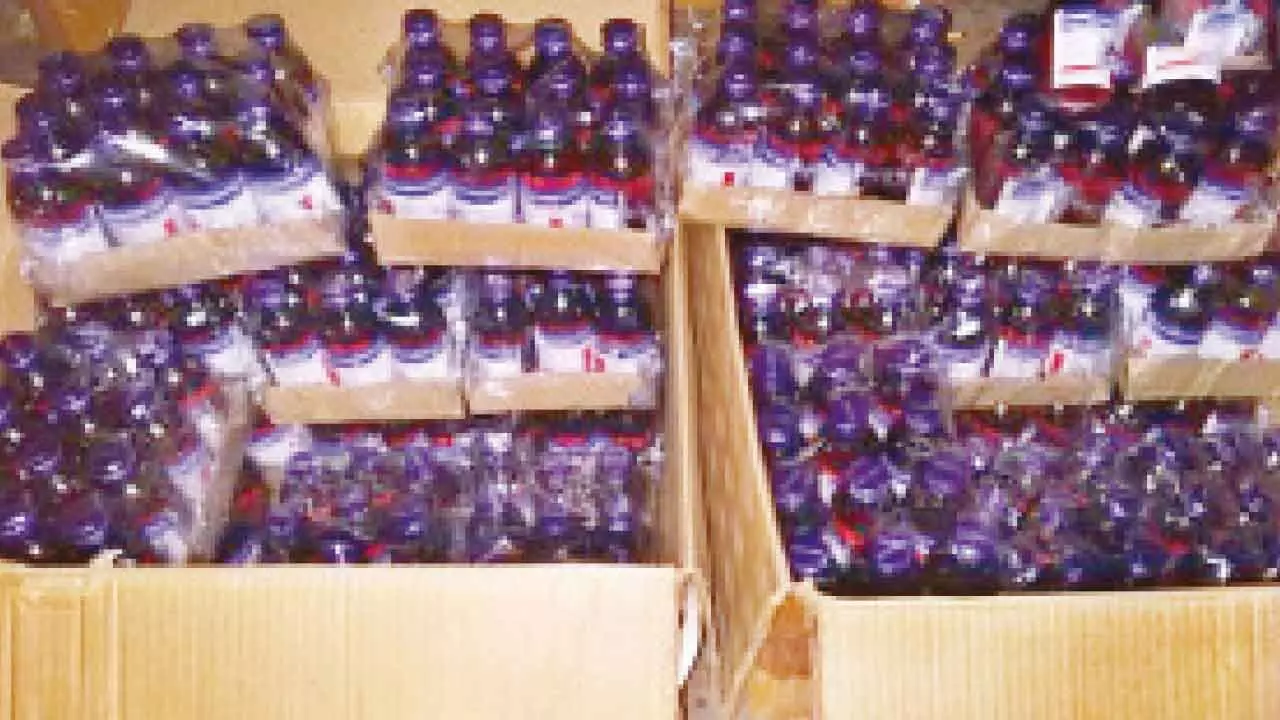
Nagpur — Law enforcement agencies in Nagpur have seized a significant cache of unauthorised codeine-based cough syrups in a coordinated action that exposed vulnerabilities in pharmaceutical distribution channels and raised questions about regulatory enforcement and public health oversight.
The operation resulted in the confiscation of approximately 4,800 bottles of unlicensed pharmaceutical product, highlighting broader challenges related to drug misuse and the integrity of supply systems in urban markets. The Anti-Narcotics Cell (ANC), acting on intelligence inputs, carried out targeted searches at multiple commercial locations in the city’s industrial precincts. The syrups, which contain codeine — a narcotic cough suppressant regulated under India’s Narcotic Drugs and Psychotropic Substances (NDPS) Act, were being stored without mandatory approvals from authorised pharmaceutical control authorities. Officials described the seizure as one of the largest of its kind in the region over recent months. Codeine-based syrups have legitimate therapeutic uses, particularly in treating persistent cough, but their opioid properties also make them susceptible to misuse and dependence when accessed without medical supervision.
Regulatory frameworks require stringent tracking, prescription control and licensing for distribution to prevent diversion into illicit channels. The intercepted stock reportedly lacked verifiable documentation and proper labelling, fuelling concern that unmonitored pharmaceutical products may be reaching markets outside formal regulatory oversight. Public health specialists point out that the illegal circulation of controlled medicines mirrors broader issues within urban health ecosystems where gaps in monitoring and enforcement can lead to public harm. “Medicines intended for therapeutic benefit can have adverse consequences when diverted into non-medical consumption,” said a senior clinical pharmacologist. “Robust supply chain tracking and vigilant oversight are essential to protect public health and ensure patient safety.” The ANC’s action involved cross-checking inventories at multiple storage sites and collaborating with drug control authorities to authenticate product licences and corporate permissions.
The operation culminated in the seizure of 4,800 bottles of the codeine-based syrup — a quantity that, if distributed through informal channels, could have significant public health implications given the drug’s addictive potential. Urban planners and policy experts say the incident underscores the need for integrated regulatory responses that bridge law enforcement, healthcare systems and community awareness initiatives. Urban market centres, with high population density and diversified consumer demand, can become hubs for both licit pharmaceutical trade and illicit diversion if oversight mechanisms are inadequate. Regulatory gaps in monitoring controlled substances are not unique to Nagpur; they reflect systemic challenges linked to rapid urbanisation, high demand for over-the-counter remedies and shifting patterns of pharmaceutical consumption.
Without real-time digital tracking of drug distribution and sales, authorities can be reactive rather than preventive in addressing diversion risks. The seized syrups are now in custody as part of ongoing investigations to trace their supply chain origins and potential end-points. Authorities are scrutinising records to identify suppliers, sellers and logistics networks involved. Action under relevant sections of the NDPS Act and the Drugs & Cosmetics Act is anticipated as the probe deepens. Lawmakers and civic administrators have welcomed the enforcement effort but also emphasised that enforcement must be complemented with public education on the dangers of non-prescription use of controlled medicines. Public health campaigns, combined with tighter pharmacy audit standards and digital traceability systems, could reduce the likelihood of similar incidents recurring.
The seizure serves as a reminder of the complex interplay between regulatory enforcement, public health protection and urban market dynamics in emerging metropolitan regions. Strengthening multi-agency coordination remains a priority to safeguard citizens and maintain integrity within the pharmaceutical supply ecosystem.