


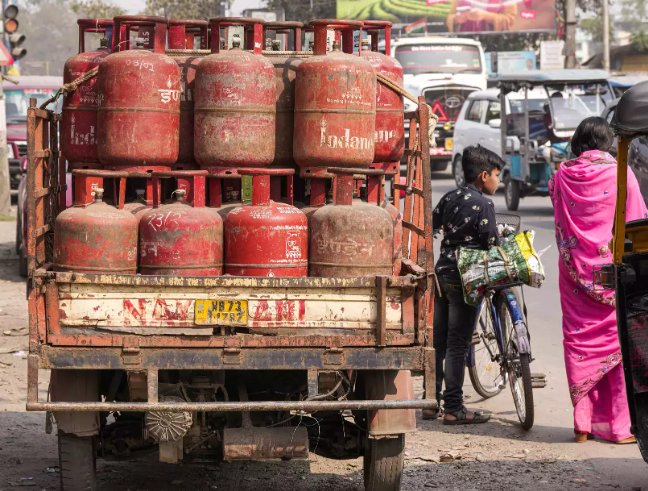
Nagpur’s transition towards cleaner household energy remains uneven, with large sections of the city still lacking access to piped natural gas despite growing demand and periodic supply concerns linked to conventional fuels. The Nagpur PNG access issue highlights the challenges of scaling last-mile energy infrastructure in rapidly expanding urban environments. While piped natural gas is widely viewed as a cleaner and more efficient alternative to liquefied petroleum gas, its availability across Nagpur remains limited. Residents in several localities continue to rely on cylinder-based systems, pointing to gaps in pipeline coverage and delays in network expansion.
The Nagpur PNG access challenge is particularly relevant as cities aim to reduce emissions and improve energy efficiency. Piped gas systems eliminate the need for transport and storage of fuel cylinders, reducing both logistical constraints and associated environmental impact. However, achieving widespread adoption requires significant upfront investment in distribution networks. Industry observers note that the expansion of city gas distribution infrastructure often faces multiple hurdles, including regulatory approvals, high capital costs, and coordination with existing urban infrastructure. In cities like Nagpur, where development is spread across both established and newly emerging areas, extending pipelines can be complex and time-consuming. The issue also intersects with broader questions of urban equity. Access to cleaner energy sources is increasingly seen as a basic urban service, yet uneven rollout can create disparities between neighbourhoods. Experts argue that ensuring equitable Nagpur PNG access should be a priority, particularly for areas with high population density and limited alternatives. From an economic perspective, limited pipeline coverage can affect both households and small businesses. While piped gas offers cost stability and convenience, reliance on cylinder-based supply exposes users to price fluctuations and distribution constraints. Expanding the PNG network could therefore improve energy security at the local level. Urban planners highlight that integrating gas infrastructure with other utility networks—such as water, electricity, and telecom—can improve efficiency and reduce disruption during implementation. Coordinated planning is essential to avoid repeated excavation and ensure smoother rollout. The Nagpur PNG access issue also has implications for climate goals. Transitioning households to cleaner fuels is a key component of reducing urban carbon emissions. Without adequate infrastructure, cities may struggle to meet sustainability targets despite policy intent. A senior official indicated that efforts are ongoing to expand the network in phases, with priority given to high-demand areas. However, experts caution that progress must accelerate to keep pace with urban growth and evolving energy needs.
The situation underscores the importance of long-term infrastructure planning that anticipates demand rather than reacting to it. As Nagpur continues to expand, ensuring reliable and equitable access to cleaner energy will be critical for both environmental and social outcomes. Looking ahead, the effectiveness of the city’s energy transition will depend on how quickly and efficiently the PNG network can be scaled—transforming current gaps into a more inclusive and sustainable urban energy system.
ALSO READ – Nagpur Bound Train Derailment Highlights Rail Safety Gaps
Nagpur PNG Access Gaps Highlight Urban Energy Inequality
