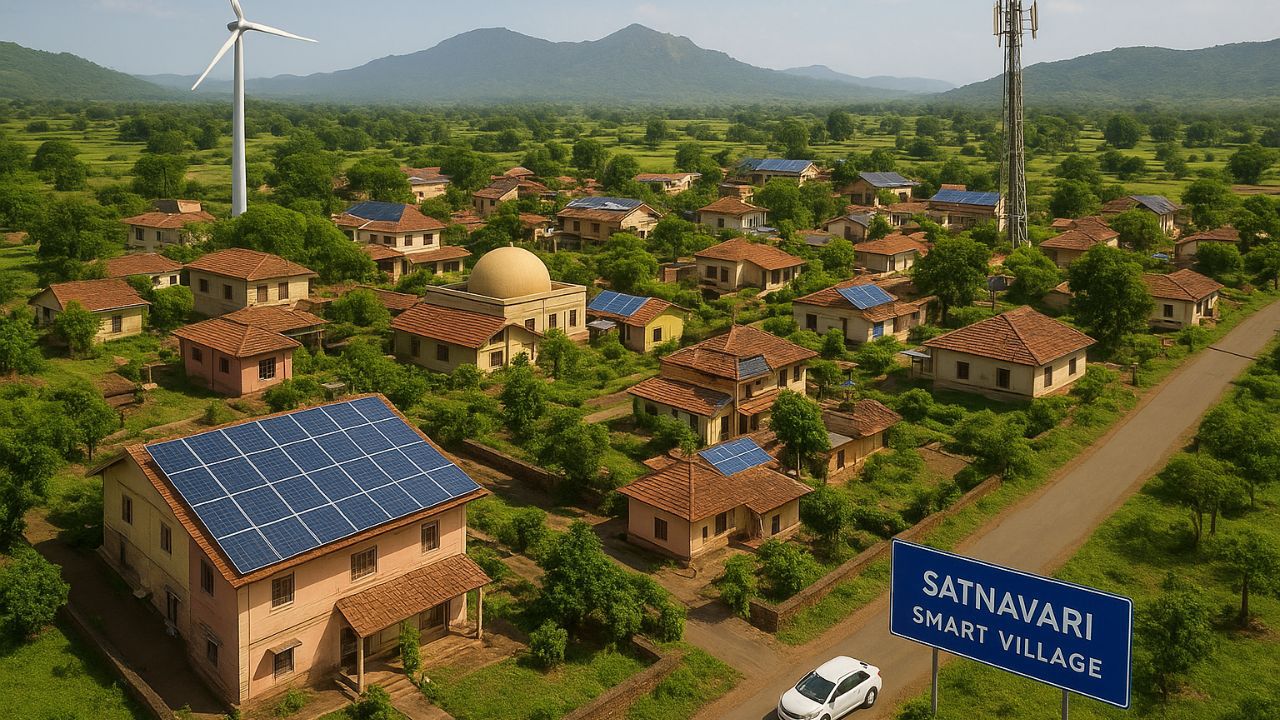
Nagpur Pilots Low Cost Smart Homes For Inclusive Growth
At a design and infrastructure conclave in Nagpur this weekend, a senior Union minister spotlighted a government-backed pilot aimed at delivering low-cost, innovation-driven homes for economically weaker sections, underlining the urgent mismatch between housing needs and affordability in fast-expanding cities. The initiative — part of a broader smart village model — aims to blend quality, sustainability and cost-efficiency in residential development to meet rising urban demand.
Speaking at the closing session of a national interior design exhibition, the minister outlined plans for a cluster of around 1,000 compact homes near Nagpur, each around 550 sq ft and priced near ₹5 lakh. The goal is to create durable housing that ensures uninterrupted water and power supplies throughout residents’ lifetimes, while leveraging waste and alternative materials to curb overall costs. Government authorities have allocated land at minimal cost to support the project.The emphasis on cost-efficient, design-led construction comes at a time when India’s urbanisation is accelerating. Urban planners and housing economists say that traditional building practices and materials often inflate prices, locking out low-income households. Aligning housing design with purchasing power and material innovation — as called for in Nagpur — could help bridge that gap without sacrificing structural quality.
In his address, the minister urged architects, planners and builders to retool their portfolios to prioritise affordable housing. Instead of directing all creative and technical resources toward high-end developments, he recommended that at least 60 per cent of architectural efforts focus on meeting the needs of those with limited means. Such a shift would recalibrate the real estate sector’s impact on inclusion and economic equity, experts note.To illustrate potential cost savings, he drew a parallel with innovations in highway construction — such as using agricultural waste to produce bio-bitumen — suggesting that similar resourceful approaches could be applied in housing construction. Here, the integration of alternative materials and recycling techniques could significantly reduce input costs while supporting environmental goals.
The Nagpur pilot aligns with national housing programmes like the Pradhan Mantri Awas Yojana, which aim to expand affordable housing stock for all income groups, although recent policy discussions have increasingly stressed the need for innovation and material efficiency alongside subsidy support.Urban analysts highlight that providing affordable, climate-resilient homes is not only a social priority but also an economic necessity in India’s burgeoning cities. Access to secure housing tends to improve livelihood outcomes, bolster local economies and reduce vulnerabilities related to climate shocks and informal settlement growth.However, implementing such models at scale poses challenges. Construction cost reduction must be balanced against durability, safety standards and long-term maintenance considerations. Equally, ensuring genuine affordability will depend on financing mechanisms, partnerships with private developers, and ecosystem support for material innovation.
As the Nagpur project unfolds, it could offer valuable lessons for other regional centers grappling with rising urban housing needs — particularly in how design ingenuity and policy support intersect to deliver more equitable, resilient communities.