Nagpur Metro Feeder Bus Plan Expands Last Mile Connectivity
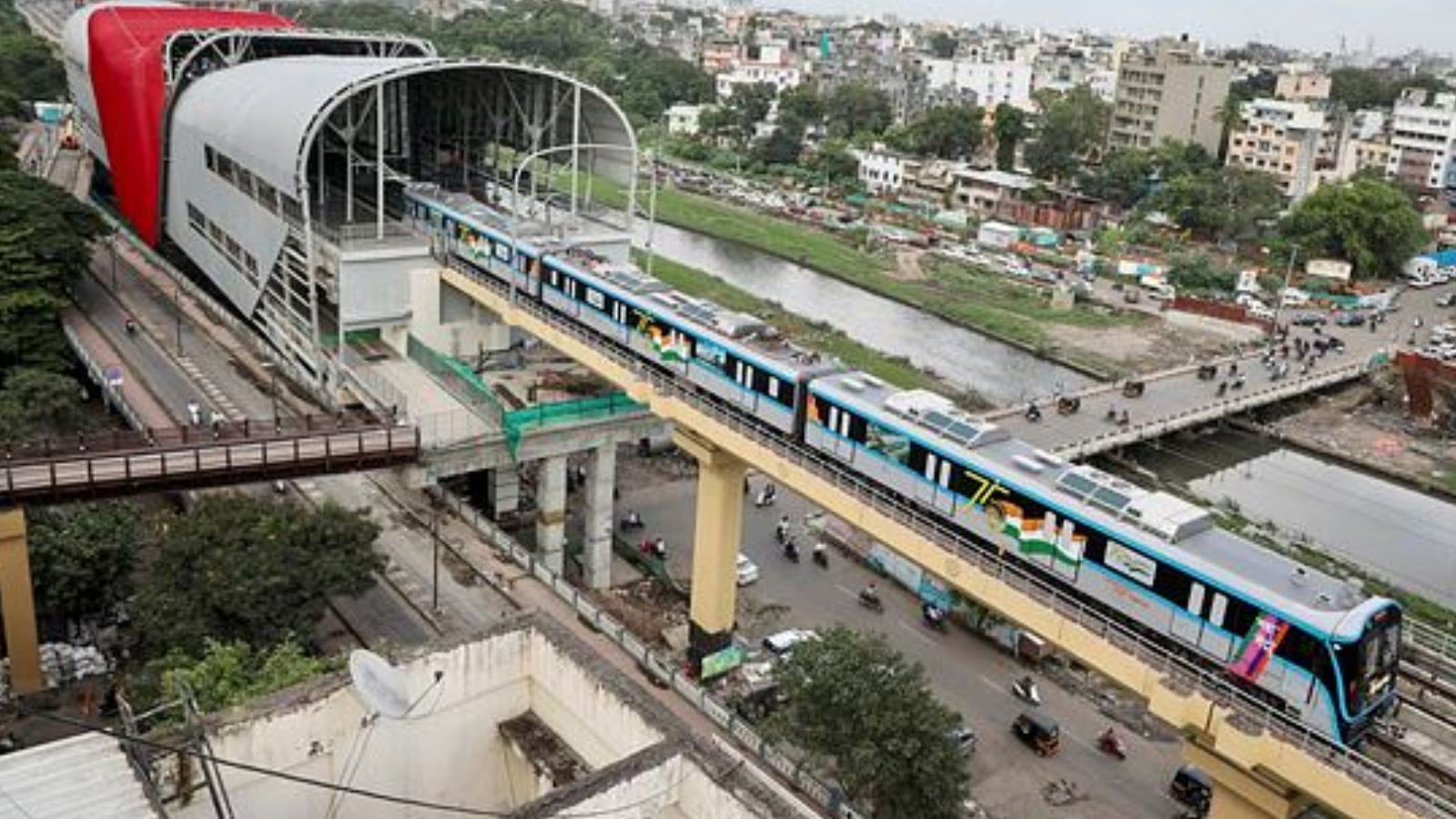
Public transport connectivity in Nagpur is set to expand with plans to introduce a feeder bus network connecting the Hingna industrial area with nearby metro stations. The proposed Nagpur metro feeder bus service is designed to improve last-mile connectivity and encourage greater use of the city’s metro rail system.
Transport authorities say the feeder buses will operate along routes linking residential neighbourhoods and industrial zones in Hingna with the nearest metro stations. By providing convenient transit options for commuters travelling to and from the metro network, the service aims to bridge the gap between mass transit corridors and local travel needs.Urban mobility experts note that the Nagpur metro feeder bus service addresses one of the most common challenges faced by metro systems — the difficulty commuters encounter in reaching stations from their homes or workplaces. Without efficient last-mile connectivity, many passengers continue relying on private vehicles or informal transport options.Hingna is one of Nagpur’s key industrial clusters, hosting manufacturing units, warehouses, and employment centres that attract thousands of workers daily. Improved connectivity through the Nagpur metro feeder bus service could make commuting easier for employees travelling between industrial areas and residential neighbourhoods across the city.Transport planners emphasise that feeder systems are essential for maximising the effectiveness of urban rail networks. While metro corridors provide high-capacity transport along major routes, feeder buses help distribute passengers across surrounding localities, increasing ridership and reducing dependence on private vehicles.
The Nagpur metro feeder bus service is also expected to support more sustainable urban mobility. By encouraging commuters to shift from cars and motorcycles to public transport, integrated transit systems can help reduce road congestion, lower emissions, and improve overall traffic flow.Urban infrastructure specialists say integrating bus and rail networks is becoming a central strategy in modern city planning. Multimodal transport systems allow commuters to move seamlessly between different forms of public transport, improving efficiency across the entire mobility network.Officials involved in planning the service indicated that route mapping and operational planning are being designed to ensure convenient access for commuters in areas surrounding the Hingna industrial estate. The service may also be synchronised with metro schedules to minimise waiting times for passengers.The Nagpur metro feeder bus service forms part of broader efforts to strengthen the city’s public transport ecosystem as urbanisation increases travel demand. Efficient last-mile connectivity is widely considered a key factor in determining whether commuters adopt metro services as their primary mode of travel.
Urban planners also highlight that improved public transport accessibility can stimulate economic activity by connecting workers more efficiently with employment hubs.For Nagpur, which has been expanding its metro infrastructure over recent years, the addition of feeder buses could help improve passenger convenience while strengthening the city’s long-term mobility strategy.If implemented successfully, the Nagpur metro feeder bus service could become an important component of the city’s integrated transport system, supporting both commuter convenience and environmentally sustainable urban mobility.