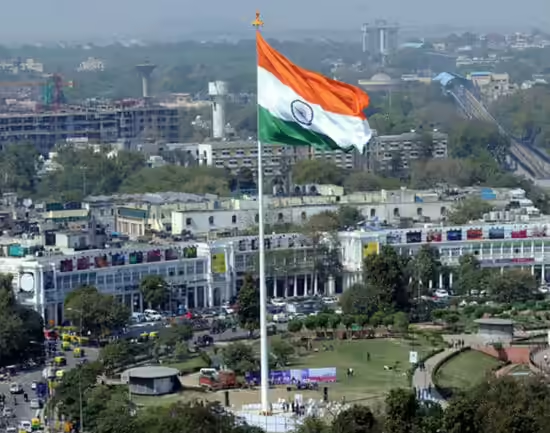
Nagpur Landmark Flag Mast Installed At Kasturchand Park
A prominent public space in Nagpur has gained a new civic landmark after a 200-foot-tall national flag mast was installed and formally dedicated during a ceremony attended by senior state leadership. The installation at Kasturchand Park places one of the tallest public tricolours in the region at the centre of the city’s historic grounds, reinforcing Nagpur’s evolving identity as both a cultural and administrative hub in Maharashtra. The towering mast carries a large national flag measuring roughly 60 by 40 feet, making it visible across significant parts of the surrounding urban landscape. The structure was unveiled during a public ceremony that drew local officials, civic representatives and residents, highlighting the symbolic and civic importance of the installation.
Kasturchand Park, a large open ground located near the city’s central business district, has long served as a venue for major public gatherings, cultural events and civic celebrations. By installing the high-mast tricolour at the site, local authorities and organisers aim to transform the park into a stronger symbol of civic identity and public engagement. Urban planners note that such installations increasingly function as civic landmarks in growing cities. High-mast national flags are often positioned in prominent public spaces, where they act as visual anchors that strengthen the identity of shared urban environments while attracting visitors and local gatherings. The Nagpur installation also reflects the city’s historical importance. Located near the “Zero Mile” marker — traditionally considered the geographic centre from which distances across India were measured during the colonial era — Nagpur has long been associated with national connectivity and transport networks. According to officials involved in the project, the mast stands approximately 200 feet tall, placing it among the largest flag installations in the region. The scale of the tricolour and its elevation are designed to ensure the flag remains visible across the surrounding skyline while withstanding wind conditions and seasonal weather variations. Civic authorities say the initiative also carries educational and cultural value. Large public flag installations are often used during national events such as Independence Day and Republic Day, where public participation and civic ceremonies reinforce collective identity and awareness of constitutional values. Urban sociologists point out that public spaces anchored by symbolic structures can play an important role in strengthening civic engagement. Open grounds such as Kasturchand Park already function as important urban commons where residents gather for cultural programmes, sports activities and festivals. Integrating national symbols within such spaces can reinforce a sense of shared ownership of public infrastructure while encouraging greater use of parks and open areas — an important factor in improving liveability in dense urban environments.
As Nagpur continues to expand as a logistics, education and governance centre in central India, civic leaders are increasingly investing in visible public landmarks alongside infrastructure development. Such initiatives aim to balance rapid urban growth with the preservation of civic identity and accessible public spaces. The installation of the new flag mast therefore represents more than a ceremonial gesture. For a rapidly evolving city like Nagpur, it marks another step in shaping a civic landscape where symbolic landmarks coexist with expanding urban infrastructure and public life.