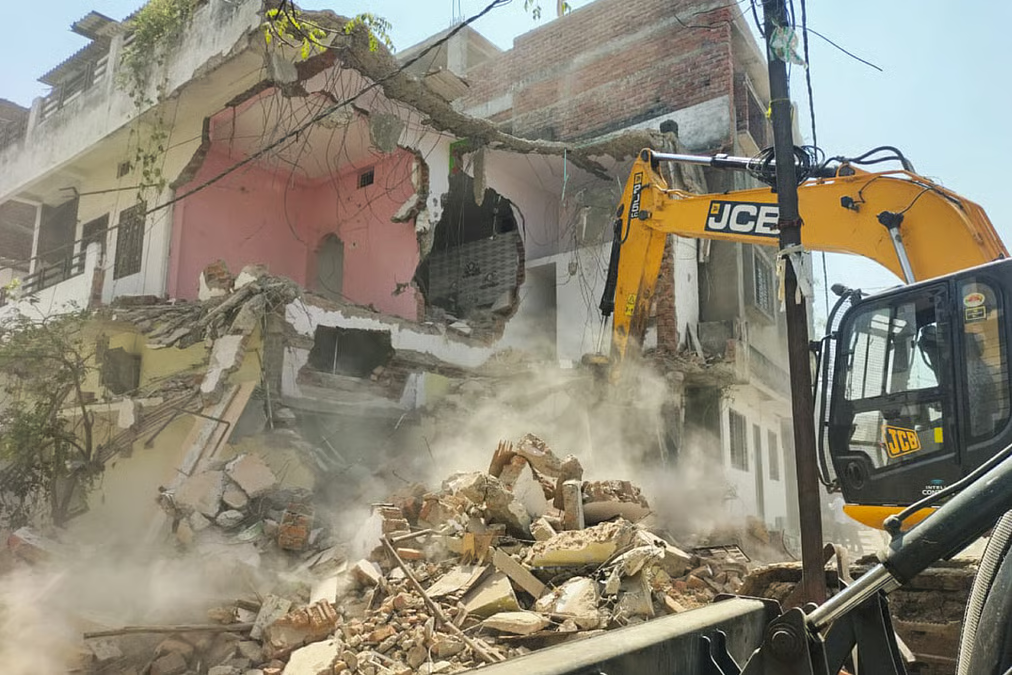
Nagpur High Court Stops Civil Lines Building Demolition
Nagpur’s judicial oversight on urban regulation tightened this week as the Nagpur bench of the Bombay High Court imposed an interim halt on the demolition of a multi‑storey structure in the Civil Lines district, directing the Nagpur Municipal Corporation (NMC) to evaluate a revised architectural proposal within seven days. The building, located near key government institutions, has been at the centre of a long‑running legality dispute, bringing into sharp focus procedural delays in enforcement and the city’s approach to planned, compliant development.
Civic authorities had initiated demolition action earlier this month following a notice citing alleged unauthorised construction in the basement and several upper floors, including an extra service level said to exceed sanctioned plans. The High Court’s directive came after the building’s management submitted an updated design, prompting judicial pause to ensure due consideration of regulatory compliance and procedural fairness.The underlying dispute dates back to a public interest litigation filed in 2016, which raised concerns about construction irregularities and potential security risks to nearby institutional buildings such as the state Vidhan Bhavan and the Reserve Bank of India office. Urban policy specialists say the case highlights systemic challenges in municipal enforcement — where legal breaches can persist for years before decisive action — and underscores the importance of clear, enforceable standards for construction within sensitive urban precincts.
Municipal regulators argue that formal demolition notices are issued only after exhaustive reviews under relevant planning statutes. However, urban planners and legal analysts note that delayed enforcement can erode public trust and allow irregularities to become entrenched in the urban fabric, particularly in centrally located neighbourhoods like Civil Lines that serve as administrative and commercial hubs. Robust mechanisms for plan review and real‑time compliance tracking could mitigate such backlogs and reduce litigation.The High Court’s interim order reflects a broader trend of judicial scrutiny in Nagpur’s civic governance. In recent years, courts have intervened on matters ranging from footpath encroachments and storm drain safety to unauthorised hoardings and infrastructure quality, pressing the NMC for written responses and action plans within strict deadlines. These interventions signal growing legal expectations for transparent, accountable urban management in India’s third largest city.
Industry experts suggest that the current case could set a procedural benchmark for how violations are reconciled with revised compliance submissions, particularly where significant public interest and safety concerns are involved. For developers, this may reinforce the imperative to align early design submissions with statutory requirements and engage constructively with regulatory authorities to avoid protracted legal entanglements. Analysts also recommend that municipal bodies strengthen early warning systems for unauthorised works using digital plan approvals to close gaps between approval, construction and compliance verification.
As Nagpur’s built environment evolves, the balance between swift enforcement and procedural fairness will remain pivotal. The NMC’s forthcoming response to the High Court could shape future municipal practice on how urban growth, architectural integrity and due process coalesce in India’s rapidly transforming cities.