


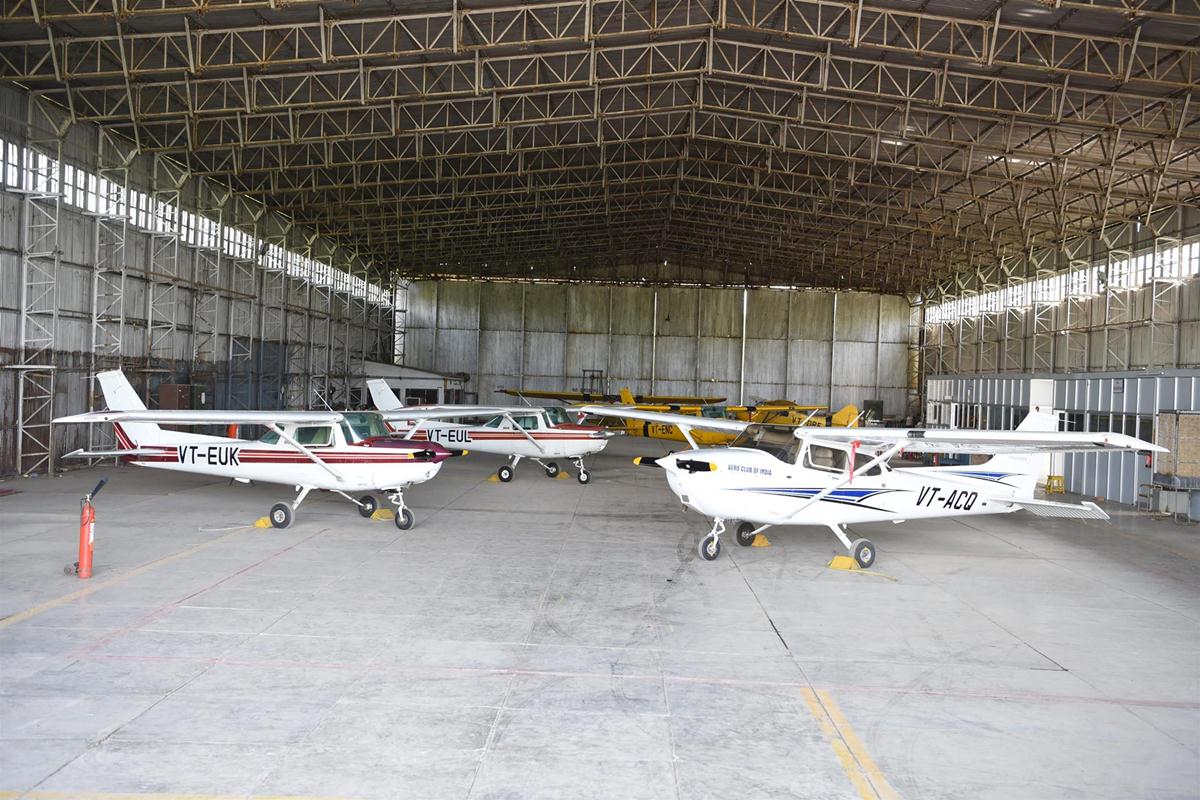
Nagpur Flying Club Receives DGCA Approval to Resume Flight Training at Morwa Airport
The Directorate General of Civil Aviation (DGCA) has granted provisional approval for the club to resume its flying operations at Morwa Airport in Chandrapur. The clearance, effective from January 27, 2025, until July 26, 2025, offers a much-needed alternative for the club, which has been grappling with severe disruptions to its flight training activities for months due to congestion at Nagpur Airport.
Since June 2024, NFC had struggled to operate at Nagpur’s busy airport, with ongoing runway recarpeting work and restricted flying slots. This led to severe delays in the club’s flight training schedule, with student pilots unable to log the necessary flying hours to meet the requirements for their Private Pilot Licence (PPL) and Commercial Pilot Licence (CPL). These delays, which halted the progress of numerous aspiring pilots, sparked growing concerns within the aviation community. For many, the news of Morwa Airport’s provisional approval comes as a welcome relief. NFC can now resume flight training activities, providing a temporary yet much-needed solution to its operational challenges. Students who had been sidelined due to the disruptions will now have the opportunity to complete their training and pursue their aviation careers. The provisional approval, issued by DGCA Joint Director General Maneesh Kumar, includes several conditions aimed at ensuring the safety and compliance of the flying operations. Among these conditions is the submission of a safety risk assessment report three months after operations commence. The DGCA also conditionally approved night flying operations, provided NFC adheres strictly to safety protocols.
A key requirement for NFC is to conduct a mock emergency drill in alignment with its aircraft contingency plan, and submit a report to the aviation authorities before resuming operations. The club’s instructors, trainees, and staff will also be required to undergo specialised training, including standard operating procedures (SOPs), low-visibility protocols, and emergency response measures at Morwa Airfield. Furthermore, the club must ensure compliance with Continuing Airworthiness Requirements (CARM) for aircraft maintenance at the temporary facility. If NFC intends to perform maintenance operations on-site, it must secure approval from the DGCA for line maintenance. In a move to improve safety, NFC’s chief flight instructor has been assigned to prepare a localised flight chart for Morwa Airport, which will include emergency landing sites. This graphical tool will aid pilots in contingency planning, helping to ensure the smooth and safe operation of flight training sessions.
For NFC, which has faced multiple hurdles in securing slots at Nagpur Airport, this six-month provisional approval is seen as a temporary but essential respite. However, aviation experts are calling for a long-term solution to the recurring challenges faced by NFC and other regional flight training organisations. While Morwa Airport offers a temporary solution, the real question remains whether it can provide a long-term alternative, especially considering the growing congestion in the region’s aviation space. As NFC prepares to resume its flying activities at Morwa, all eyes will be on the club’s ability to meet the stringent safety and operational conditions outlined by the DGCA. The coming months will be pivotal in determining whether Morwa can serve as a viable long-term solution for the club, or if NFC will once again be left struggling to find space for its operations.
While the approval to operate at Morwa Airport is a positive step, there is an underlying need for sustainable solutions to address the overcrowding at Nagpur Airport. Aviation professionals, students, and stakeholders within the industry are closely watching how NFC adapts to the new conditions and whether the challenges facing regional flight training institutions can be effectively resolved in the near future. As the aviation ecosystem continues to grow, the need for more accessible and less congested airfields becomes ever more pressing. The focus now shifts to how well Morwa can handle the increased training operations and what long-term strategies will be developed to alleviate the ongoing challenges faced by flying clubs across the region.
