Nagpur Faces Prolonged Road Woes as ₹260 Cr Project Stalls, Contractors Granted More Time
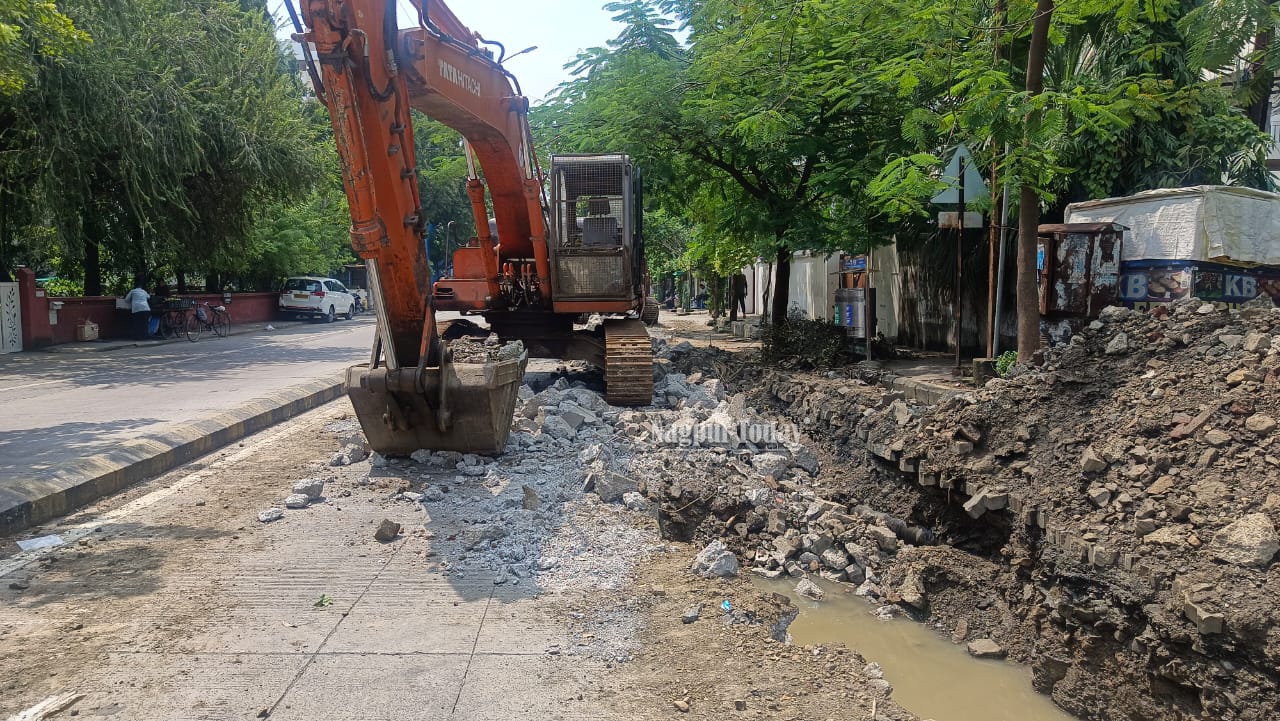
Nagpur’s ambitious ₹260 crore cement road project under Phase-IV has once again been hit by delays, with contractors missing key construction deadlines. Several major routes across city zones remain either dug up or barricaded, worsening travel conditions amid monsoon rains. Authorities have controversially extended the deadline for multiple packages until December 2025, raising concerns over project management and commuter safety in one of Maharashtra’s fastest-growing cities.
The cement road initiative—meant to upgrade 33 arterial tar roads into durable concrete corridors—was launched under Phase-IV of Nagpur’s urban infrastructure overhaul. Spread across 14 project packages and several core city zones such as Laxmi Nagar, Dharampeth, Dhantoli, and Lakadganj, the roads are crucial for daily connectivity. Despite a May 2025 completion deadline, work progress has remained sluggish. Contractors responsible for packages 1, 2, and 4 have been granted extensions till December 2025, while another, handling Package 9, has formally requested additional time. These developments come amid rising scrutiny, as delays threaten to paralyse traffic movement during the monsoon season. Authorities say a combination of resource shortages and logistical bottlenecks are behind the extensions. However, there is growing public frustration over the lack of progress, especially since vital stretches like Ajni to Sita Nagar and Chhatrapati Square to Besa remain disrupted. With rainy weather compounding road inaccessibility, the city’s transport resilience hangs in the balance.
The ongoing delays have triggered widespread concerns among commuters and civic observers. Many arterial routes, including Manish Nagar to Laxmi Nagar and Ram Nagar to Adivasi Vikas Bhawan, are now in varying states of disrepair. Muddy detours, incomplete junctions, and traffic bottlenecks have become routine, with reports of minor accidents and emergency vehicle blockages emerging. While the public works department continues to cite administrative approvals and contractor coordination as reasons for the lag, experts argue that such projects demand real-time monitoring, especially during monsoon-prone months. Several contractors across zones have come under the radar for slow execution, but extensions are still being granted with little accountability. This has raised larger questions about the quality and pace of urban infrastructure rollouts in tier-2 cities. As the December deadline looms, it remains uncertain whether the extensions will ensure timely delivery or if further delays will become inevitable, leaving residents stranded in a maze of unfinished roads.
Nagpur’s cement road project, initially envisioned as a step towards robust, low-maintenance urban infrastructure, now risks becoming a prolonged civic disruption. The missed deadlines and granted extensions expose inefficiencies in planning and contractor management. While the city reels under monsoon-driven transport hurdles, unfinished roads only add to the crisis. Authorities may need to consider stricter compliance checks, on-site supervision, and phased work openings to ease public inconvenience. Until then, commuters across several zones must navigate treacherous detours and face daily uncertainty, waiting for a long-promised upgrade that remains stuck under construction tape and bureaucratic delays.