


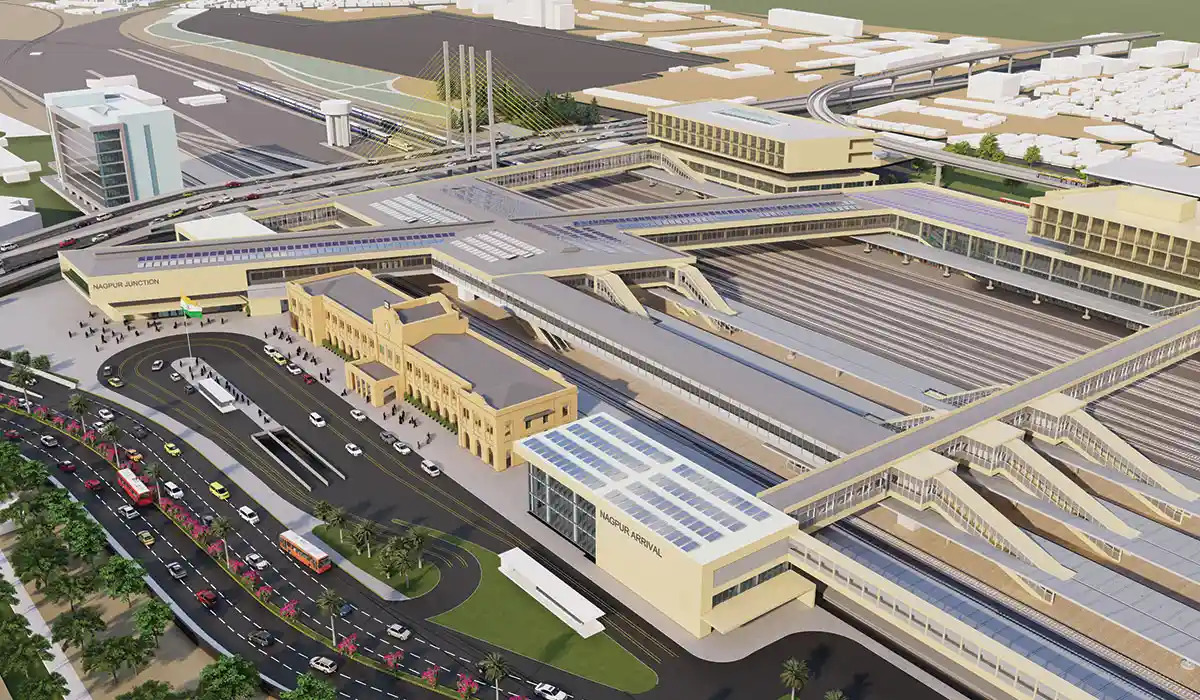
The Maharashtra government has officially cleared the decks for Nagpur’s long-delayed Multimodal Transport Hub (MMTH) project. The clearance, issued on July 28, modifies land-use classifications near the Nagpur railway station—transforming key parcels into commercial zones as per the city’s revised development plan. This strategic land-use approval paves the way for a major transport infrastructure overhaul in central India. The proposed MMTH will bring together metro rail, Indian Railways, bus terminals and commercial development into one centralised facility—optimising passenger movement, reducing traffic congestion and supporting eco-friendly transit solutions.
The updated zoning was presented before the Nagpur bench of the Bombay High Court, further bolstering the project’s legal framework. The project incorporates lands previously earmarked for institutional use, including those held by state transport corporations and a section occupied by an educational institution. Their integration into the MMTH blueprint signals a shift in planning priorities toward transit-oriented development, aligning with India’s broader commitment to low-carbon cities.
Significantly, the state has linked the hub’s design with social equity considerations. Following judicial intervention over the displacement of vendors during prior infrastructure projects, the revised MMTH plan now includes a multi-storey parking structure with dedicated space for vendor resettlement—marking a rare example of inclusive urban planning. Before construction begins, the project must satisfy several regulatory conditions. These include securing no objection certificates from the defence ministry for overlapping lands, resolution of pending litigation involving land ownership, and consent from the Maharashtra State Road Transport Corporation and the Railways.
MahaMetro has also been tasked with clarifying acquisition processes within three weeks. Meanwhile, the revised city zoning map is now available for public scrutiny at the Nagpur Municipal Commissioner’s office for a month. The project represents more than just a transport hub—it is a potential turning point in the way Indian cities approach infrastructure. If implemented efficiently, Nagpur’s MMTH could become a model for future-ready, equitable, and sustainable mobility hubs across the country.
Also Read :Bengaluru Auto Passengers To Pay Rs 36 For First 2km
