


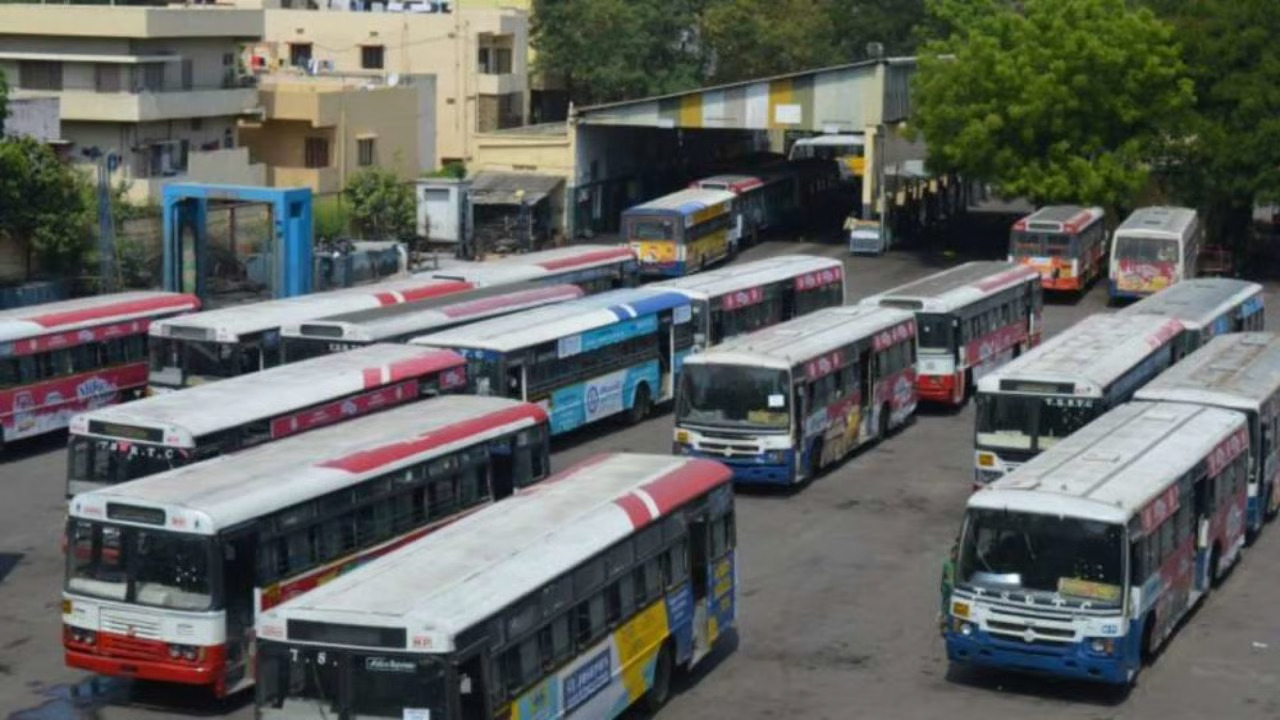
Commuters across Nagpur are enduring significant delays and route diversions, with 86 out of 135 Aapli Bus services—nearly 64%—impacted by ongoing metro construction, roadworks, flyovers, and weekly markets. With travel times extending from thirty minutes to over an hour, public transport has become a daily ordeal, undermining the city’s green transit ambitions and commuter equity.
A detailed breakdown reveals that all seven municipal bus depots—Patwardhan, Wathoda, Hingna, Koradi, Khapri Naka, Wadi, and Orange Street—are under severe strain. Core traffic junctions such as Cotton Market, Loha Pul, Sakkardara Square, Law College stretch, Mankapur ring road, and Koradi Naka have become primary choke points, plagued by overlapping infrastructure disruptions. A driver from the Wadi depot, speaking anonymously, described daily gridlock: “We get stuck near Cotton Market or Mankapur for nearly half-an-hour every day. Sometimes we have to skip stops or terminate early because commuters begin raising hue and cry. We don’t get any real-time updates.” This logistical breakdown underscores a broader failure in communication and route management by the Nagpur Municipal Corporation (NMC).
Data from the NMC transport department shows that Wadi depot is the worst affected, with its entire route network disrupted by Metro works at Kamptee, flyover construction near Loha Pul, and congestion around Law College. Orange Street depot fares similarly, with 100% of its routes snarled by metro-related diversions along the Hingna corridor and Loha Pul flyover activity. Other depots face similar challenges: Hingna depot is suffering from metro construction near Hingna Gramin Hospital, road surface deterioration and flyover work; Wathoda depot sees two-thirds of its services affected by bridge projects, industrial traffic, and residential bottlenecks; Patwardhan depot handles central Nagpur episodes of heavy market congestion and metro build-up; Koradi depot struggles with gridlock at Koradi Naka and Lonkhairi Phata; while Khapri Naka routes are hindered by industrial zone congestion and metro-linked link-road works. Commuters are bearing the brunt. A 45‑year‑old passenger at Sakkardara square described her wait: “I waited 45 minutes for a bus. No updates—just uncertainty. It’s like we’re on our own.” Such testimonies highlight the daily struggle and emotional fatigue experienced by bus users.
While NMC has introduced GPS-based tracking on Android devices, usefulness remains limited. Inadequate signage and the absence of real-time alerts at bus stops leave passengers uninformed of disruptions and diversions. The result is an ambivalent, information-poor commute that erodes trust in public transport services. Transport policy experts are calling urgently for improved inter-agency coordination. They argue that constructing temporary digital signboards at affected stops to provide live updates could significantly ease commuter anxiety. Moreover, proactive warnings through both online and offline channels about planned disruptions could help passengers plan alternate routes.
Such interventions are not merely convenience measures—they align with Nagpur’s broader sustainable urban mobility goals. By ensuring that public transport remains reliable and resilient, city authorities can advance the reduction of private vehicle use and corresponding carbon emissions. Efficient citywide bus networks will support equitable access for women, elderly passengers, and lower-income groups. The current crisis also reveals critical misalignment between metro construction timelines and bus route planning. While metro expansion promises long-term urban transformation, short-term oversight of its impact on bus services has led to traffic spillover into areas that are vital for last-mile connectivity. Urban planners say such modal conflicts could have been mitigated through preemptive route redesigns and flexible scheduling.
Moreover, the credibility of the city’s green transit agenda is at stake. Citizens make fewer sustainable transport choices when they cannot depend on punctuality or clarity of service. A commuter who misses a bus and resorts to a ride-hailing service adds to air pollution and traffic congestion—undermining the very goals of emissions reduction the metro is designed to achieve. The emotional toll on commuters should not be underestimated. Daily uncertainty breeds stress and reduces quality of life, especially for time-sensitive riders like students, factory workers, and healthcare personnel. Continue such inconsistency, and ridership could decline – a dangerous signpost for urban mobility resilience.
Officials from NMC’s transport wing acknowledge the gravity of the situation. In response, they have proposed establishing an inter-departmental task force to synchronise construction schedules with bus operations. Additionally, they are exploring dedicated mobile alerts and advance community announcements for areas facing intense diversions. Quick-implementation measures include deploying additional buses on unaffected routes to compensate for gaps. Yet these steps may not be enough. Experts recommend more structural interventions: redesigning corridor-based buses that avoid congested chokepoints, establishing temporary boarding depots, and introducing shuttle services that bridge construction-affected zones to major transit hubs like AIIMS and industrial belts. Such resilience-centric planning can ensure Nagpur’s public transport remains a reliable backbone rather than a casualty of urban upgrades.
Nevertheless, with proper implementation, the current disruptions could be reframed as a learning opportunity. Nagpur has a chance to recast its daily commuter chaos into a blueprint for coordinated, sustainable urban transformation—where metro progress does not stall bus services but instead complements them through integrated mobility planning. As the city navigates this period, success will depend on transparent communication, data-driven route adjustments, and commuter-centred metrics. If the NMC and metro authorities can collaboratively align operational plans, Nagpur’s transport ecosystem will not only recover—it could emerge stronger, cleaner, and more equitable as part of the city’s evolution toward zero-emission urban living.
Also Read : Rail Passengers to Be Charged for AC Waiting Rooms from July 15
