


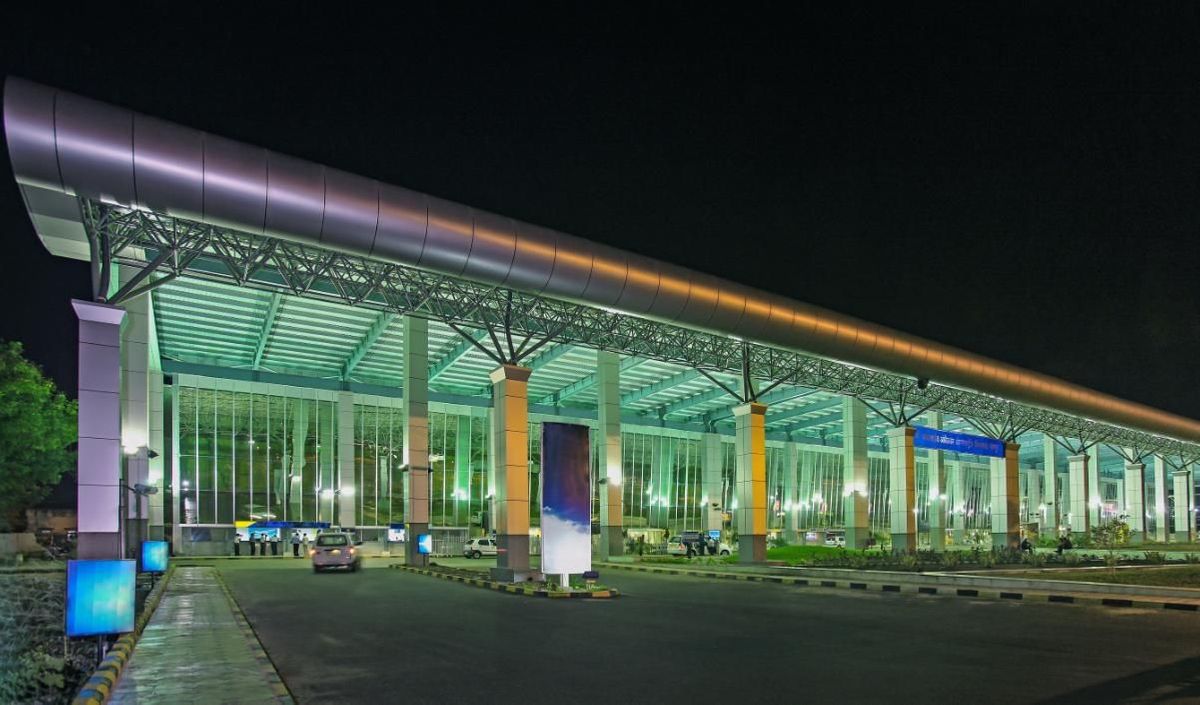
More than 60 buildings around Nagpur’s international airport remain in violation of aviation height regulations, creating serious risks to flight safety. Despite notices issued over a year ago, the proposed demolitions are yet to progress due to a maze of procedural red tape and jurisdictional overlaps. The buildings, many located in the Jaitala area, have been flagged for obstructing aircraft take-off and landing paths on the current operational runway.
These structures, some of which gained height through illegal floors, terrace constructions, or even rooftop solar panels, were found to breach the stipulated elevation limits set by aviation authorities. However, even after verification by the local airport operator, there has been no clear action on demolition from central regulatory bodies. The airport, operated by a state-owned entity, has little authority to act unilaterally on such matters. Under the Aircraft (Demolition of Obstruction Rules), only the Directorate General of Civil Aviation (DGCA) can issue orders for demolition. This fragmented governance system has stalled progress, despite the operator having completed its due diligence and communicated violations to the relevant authorities.
Until 2015, the Airports Authority of India (AAI) handled clearances by issuing No Objection Certificates (NOC) based on a property’s distance from the runway and elevation. Post-2015, a digital NOC Application System (NOCAS) has streamlined this process, but legacy violations from older constructions remain unresolved. Of the 68 buildings initially identified, partial demolition was ordered for only eight. The remaining 60 continue to tower over the safety limits. Sources indicate that the DGCA conducted a hearing over eight months ago, following which a few corrective actions were taken. But the bulk of violations—especially in critical air corridors—are still pending decision. Notably, when considering the proposed second runway, over 160 buildings are believed to breach permissible heights, according to internal assessments.
Further complicating the matter is the enforcement chain. Even when the DGCA issues demolition orders, the implementation rests with the highest administrative authority in the district—such as the municipal commissioner, district collector, or divisional commissioner. This multi-layered chain of command often results in bureaucratic inertia, especially in cases involving older, occupied residential buildings. While the regulator retains the authority to initiate a fresh height and distance survey to validate each violation, such surveys have reportedly not been ordered for most of the pending cases. As a result, the safety of thousands of passengers and the future of planned airport expansions are being jeopardised by institutional delay and policy inertia. The lack of timely enforcement highlights the urgent need for better coordination between municipal bodies, aviation regulators, and local governments.
In cities like Nagpur, which are aiming to grow as smart and sustainable urban hubs, aviation safety must be integrated into broader urban planning efforts. Poor enforcement not only endangers lives but also derails investments in modernising airport infrastructure. As Indian cities densify vertically in response to space constraints, adherence to aviation safety norms must become a priority. Urban growth cannot come at the cost of safety, and streamlining inter-agency decision-making will be key to mitigating risks going forward. For now, the airport operator continues to await the DGCA’s move—one that could decide whether India’s ambitious regional connectivity and urban development visions can safely coexist in practice.
Also Read :Bhubaneswar to Hold Emergency Drill Amid Aviation Safety Concerns
