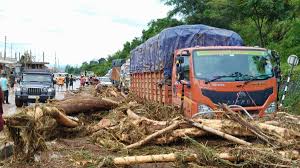
Nagaland’s vital National Highway 29, a lifeline connecting Kohima and Dimapur, has once again borne the brunt of severe monsoon rains, experiencing significant landslide damage. This recurring vulnerability underscores the urgent need for a paradigm shift in infrastructure development, moving towards more resilient and eco-friendly solutions. The state leadership has actively inspected the affected sections, emphasising the imperative for durable drainage systems and larger culverts to manage debris, while also addressing long-standing land compensation issues crucial for sustainable upgrades.
The National Highway 29 is not merely a transport route; it is the economic artery for much of Nagaland, facilitating trade, commerce, and the movement of essential goods and services. Its frequent disruption due to monsoon-triggered landslides imposes substantial socio-economic burdens on the state, leading to inflated prices, supply chain bottlenecks, and significant inconvenience for daily commuters and businesses. The continuous battle against natural geological instability highlights the challenges of maintaining critical infrastructure in challenging terrains, necessitating a comprehensive, long-term approach to disaster mitigation and prevention.
During recent inspections, state officials reiterated the government’s commitment to implementing permanent engineering solutions. The focus is on constructing robust drainage mechanisms and deploying larger hume pipes, which are essential for effectively channelling rainwater and preventing the accumulation of debris that triggers landslides. Furthermore, the discussion has extended to exploring infrastructure upgrades akin to those in other regions, which utilise bridge construction to bypass chronic landslide zones entirely. Such innovative approaches are vital for creating resilient infrastructure that can withstand extreme weather events, aligning with a vision for zero net carbon and sustainable urban and regional development.
A critical impediment to swift and effective restoration efforts has been the persistent challenge of unresolved land disputes. While the Central government has sanctioned ₹24 crore for necessary repairs and innovations, the execution of these projects remains hampered by delays in securing land and providing timely compensation to affected landowners. This issue underscores the need for equitable and transparent land acquisition frameworks, ensuring that developmental imperatives do not inadvertently marginalise local communities. Resolving these disputes is paramount for the seamless progression of vital infrastructure projects that serve the larger public interest.
The state is also exploring potential alternative routes to bypass the most landslide-prone sections, aiming to provide more reliable connectivity during the monsoon season. This multi-faceted strategy—combining immediate repairs with long-term engineering solutions, equitable land acquisition, and the exploration of new alignments—is essential for building a more resilient Nagaland. The continuous disruption to connectivity impacts not only economic activity but also access to essential services, underscoring the human element of these infrastructure challenges. By adopting a holistic and forward-looking approach, Nagaland can work towards building equitable and accessible cities resilient to the forces of nature.