


Mumbai’s Municipal Commissioner recently conducted a detailed inspection of the city’s flagship infrastructure projects, including the Coastal Road Project (MCRP North), the Versova–Dahisar–Bhayandar Link Road (VDBLR), and the Goregaon–Mulund Link Road (GMLR) twin tunnels. The review highlighted the urgency of securing all necessary permissions, No Objection Certificates, and land acquisition for these high-impact projects, emphasising speed, efficiency, and sustainable urban development.
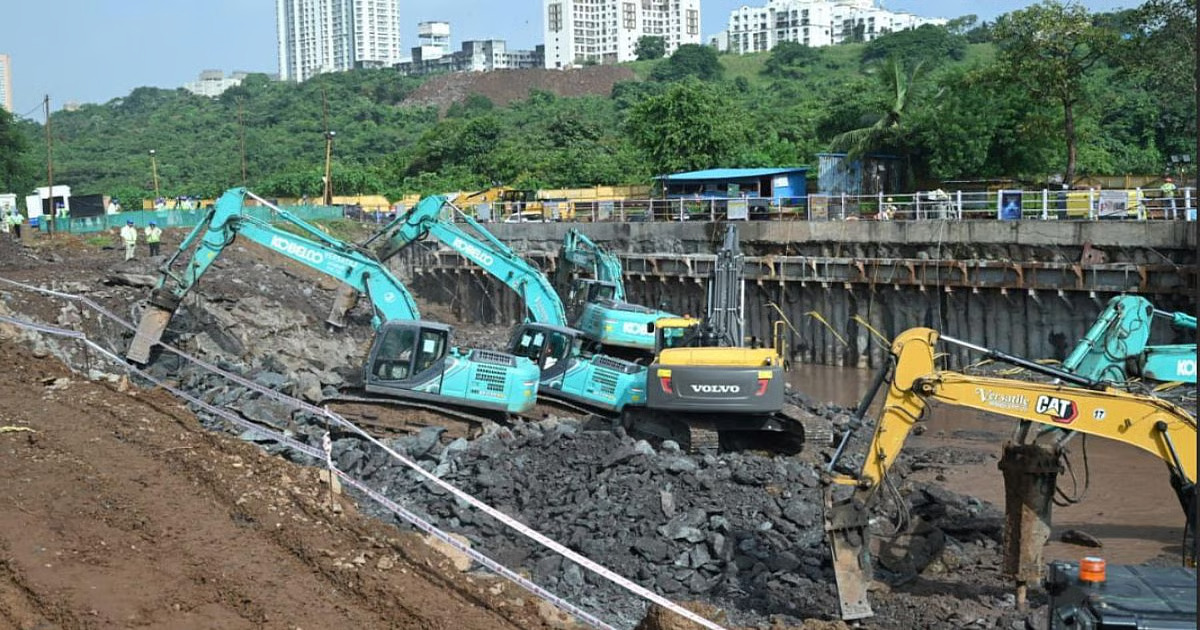
Officials accompanying the commissioner visited key construction sites across the western suburbs, including the VDBLR stretch and the GMLR tunnel at Dadasaheb Phalke Film City, Goregaon. The Phase 3(B) GMLR works include a 1.22-kilometre triple-lane box tunnel and twin tunnels of 4.7 kilometres each, stretching beneath Sanjay Gandhi National Park. These tunnels, lying 20–160 metres underground, will be interconnected every 300 metres and will feature advanced ventilation, lighting, fire safety systems, CCTV surveillance, control rooms, stormwater drains, and utility ducts. A senior civic official confirmed that a state-of-the-art Tunnel Boring Machine imported from Japan has already arrived for Film City operations, with a second TBM expected by December 2025. Launch shaft excavation is progressing rapidly, currently reaching 3.5 metres in depth, marking a significant milestone in tunnel construction and urban engineering.
In addition to underground works, the commissioner assessed progress on the 27-kilometre Coastal Road and VDBLR. The Coastal Road is expected to cut travel time between Versova and Bhayandar to just 15 minutes, while the GMLR will reduce east-west commute time from 75 to 25 minutes by connecting the Western Express Highway at Goregaon with the Eastern Express Highway at Mulund. Both projects are designed to improve traffic decongestion, promote low-emission transport, and enhance equitable urban mobility. The inspection also focused on site readiness for casting yards, construction activities, and access roads at locations such as Malad Marina Enclave, Charkop, Gorai, Aksa Metro Station, Kandarpada Metro Station, and Anand Park in Dahisar. Officials emphasised integrating the projects with the broader urban transport network, including potential linkages between Coastal Road and GMLR for seamless connectivity.
Experts say these initiatives will not only optimise travel efficiency but also open opportunities for green infrastructure integration, including sustainable drainage systems, pedestrian-friendly access, and energy-efficient construction practices. Officials highlighted that adherence to environmental norms is central, especially for tunnel sections passing under ecologically sensitive areas like Sanjay Gandhi National Park. Once completed, the combined impact of the Coastal Road, VDBLR, and GMLR projects is expected to transform Mumbai’s western suburbs, reducing congestion, cutting commute times, and improving citywide transport resilience while supporting gender-neutral and sustainable urban mobility.
Also Read: Nagpur-Gondia Expressway Gets Maharashtra Government Approval
