Mumbais Undersea Tunnel Progresses As Gujarat Bridges Nears Completion
The Mumbai-Ahmedabad High-Speed Rail (MAHSR) project, India’s first bullet train initiative, has marked a pivotal moment with significant progress in both Maharashtra and Gujarat. The National High-Speed Rail Corporation Limited (NHSRCL) has announced the completion of the 17th river bridge in Gujarat, along with a major breakthrough on the critical undersea tunnel in Maharashtra. This dual progress signals a strong acceleration in the project’s construction, overcoming past land acquisition hurdles. The project’s milestones, particularly the development of the undersea tunnel, represent not only engineering feats but also a critical step toward creating an interconnected, efficient, and sustainable urban corridor. This rapid development is essential for a future where seamless transit and eco-friendly infrastructure are paramount to building zero-net-carbon, equitable cities.
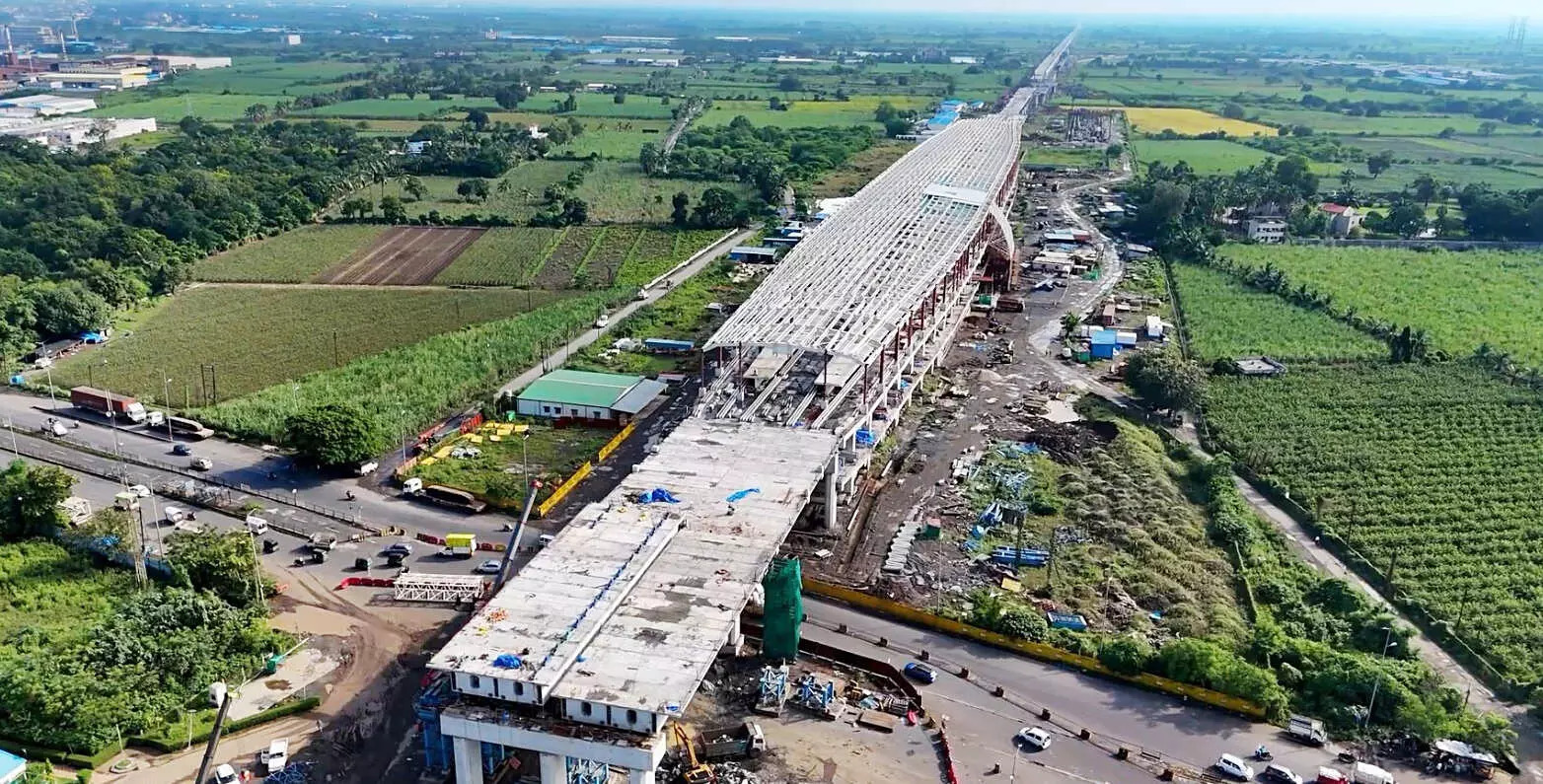
The Mumbai-Ahmedabad bullet train project, which has faced previous delays primarily due to land acquisition challenges in Maharashtra, is now gaining significant momentum. According to a recent announcement from the Ministry of Railways, foundation work has been completed for a total of 406 kilometres, with most of the progress taking place in Gujarat. The recent completion of the bridge over the Vishwamitri River in Vadodara brings the total number of completed river bridges in the state to 17 out of 21. These bridges, constructed using advanced techniques like the Span-by-Span (SBS) method, are engineered for durability and stability under demanding conditions, ensuring a reliable foundation for the high-speed corridor. This swift pace of construction in Gujarat is a positive indicator of the project’s overall trajectory and a model for future infrastructure projects.
In a landmark achievement for the Maharashtra section, the project has successfully completed the first four kilometres of its planned 21-kilometre undersea tunnel. This tunnel, which includes a seven-kilometre section beneath the Thane Creek, is a complex engineering challenge. Its progress signifies the overcoming of major geographical and logistical hurdles. The tunnel is being constructed using a combination of the New Austrian Tunnelling Method (NATM) and Tunnel Boring Machines (TBMs), with comprehensive safety measures in place to ensure the stability of the ground and surrounding structures. This technological advancement is a beacon of progress for the region, promising to reduce travel time and connect two of India’s most economically vibrant cities.
Beyond the engineering and financial metrics, the MAHSR project holds significant implications for the vision of sustainable, gender-neutral, and equitable cities. The high-speed rail, running on electric power, offers a more energy-efficient and low-carbon alternative to traditional modes of transport like cars and air travel. This modal shift is critical for India’s climate goals, contributing to a substantial reduction in greenhouse gas emissions. The project’s stations are also being designed with eco-friendly features such as rainwater harvesting, wastewater treatment, and solar panels, further embedding sustainability into the infrastructure. Furthermore, the development of new station areas is expected to generate employment opportunities for diverse populations, promoting an inclusive and equitable economic landscape. While some environmental concerns remain, particularly regarding the impact on mangroves, the project’s comprehensive mitigation strategies, including planting new trees and building taller viaducts, are designed to minimise its ecological footprint. The commitment to a phased completion, with the Gujarat section anticipated to be ready by December 2027 and the entire corridor by 2029, sets a clear and ambitious timeline for this transformative project.