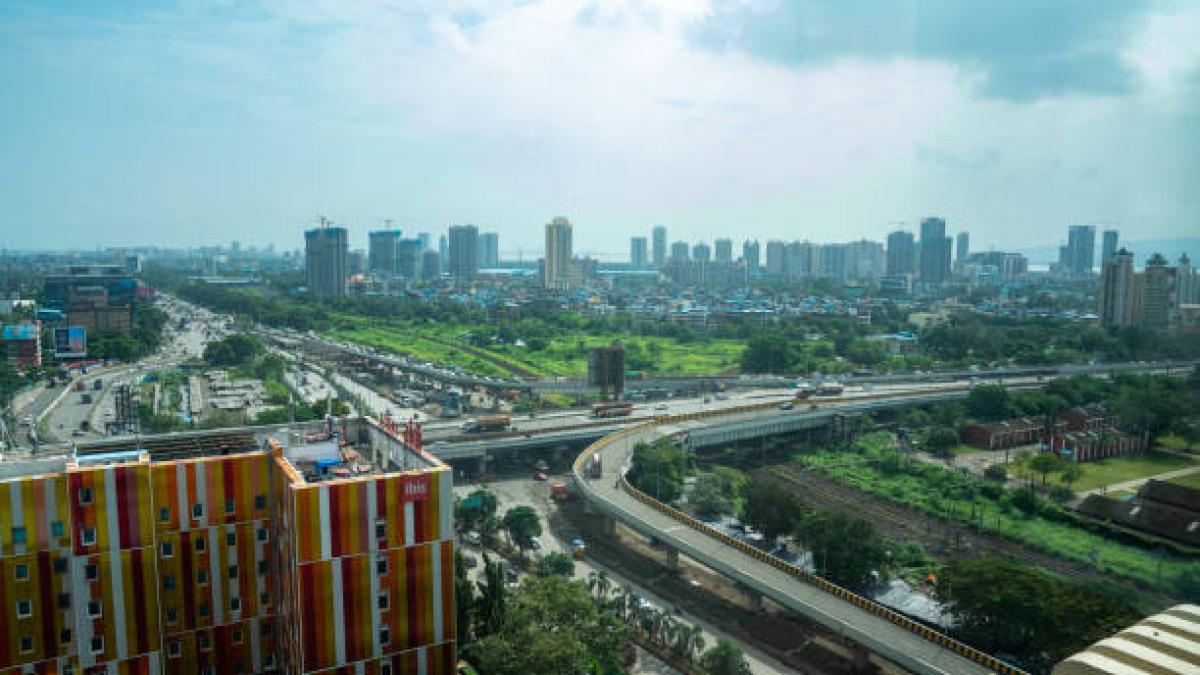
Mumbais Navi Mumbai Airport boosts real estate growth with improved connectivity
The construction and expansion of major aviation hubs across India, notably the Navi Mumbai International Airport (NMIA) and Noida’s Jewar Airport, are proving to be transformative catalysts for surrounding real estate markets. These ambitious projects are not merely enhancing travel convenience; they are strategically reshaping urban landscapes, driving significant property value appreciation, and fostering integrated ecosystems that align with the national agenda for sustainable and equitable city development.
The profound impact of these airports extends far beyond their runways, initiating a cascade of complementary infrastructure projects. In Navi Mumbai, the advent of NMIA has coincided with developments like Metro Line 1, the Mumbai Trans Harbour Link (MTHL), and the Seawoods–Uran railway line. This integrated connectivity has directly boosted land prices by 20-30% in burgeoning areas such as Ulwe, Panvel, and Kharghar. Similarly, around Jewar Airport, new expressways, metro extensions, and road links have fuelled a sharp surge in real estate values, with land prices increasing by nearly 40% over the last five years. Such planned infrastructure reduces commuting times and vehicular emissions, contributing to a lower carbon footprint for these emerging urban centres.
State governments and urban development authorities are actively supporting this growth through substantial investments in supporting infrastructure. In the JEWCI/YEIDA Region, for instance, nearly 5,232 acres of land were acquired between 2021 and 2025 to facilitate major projects including a Japanese-Korean Tech Hub, a Film City, a Medical Device Park, and a Fintech Zone. These planned developments, alongside essential civic amenities like police and fire stations, logistics parks, and industrial clusters, are transforming these micro-markets into dynamic live-work-play destinations. This holistic approach ensures that growth is inclusive, providing diverse employment opportunities and improving access to services for all residents, thereby fostering more equitable and gender-neutral urban environments.
The robust returns on investment in these airport-centric regions underscore their appeal to developers and investors alike. In Jewar, land prices have witnessed an astonishing 400% jump in just six years, escalating from ₹25-28 lakh per hectare in 2018 to ₹1.25-1.5 crore in 2024. Similarly, Navi Mumbai has seen residential rates appreciate by 23% annually, with average prices reaching ₹10,810 per square foot in 2024. This rapid appreciation reflects confidence in the long-term sustainability and planned nature of these urban expansions, which are designed to accommodate future growth without compromising environmental quality.
Looking ahead, both Jewar Airport and NMIA are poised for significant operational milestones. Jewar Airport is expected to commence Phase 1 operations by 2025, handling 12 million passengers annually, with a long-term vision to become one of Asia’s largest aviation hubs. NMIA’s Phase 1 is anticipated to accommodate 25 million passengers, with commercial operations projected to begin around late 2025. Further enhancing connectivity, rapid rail corridors like the Ghaziabad–Jewar RRTS will directly link Jewar Airport to the National Capital Region, accelerating regional development and reinforcing the strategic importance of these integrated transport hubs in India’s sustainable urban future.