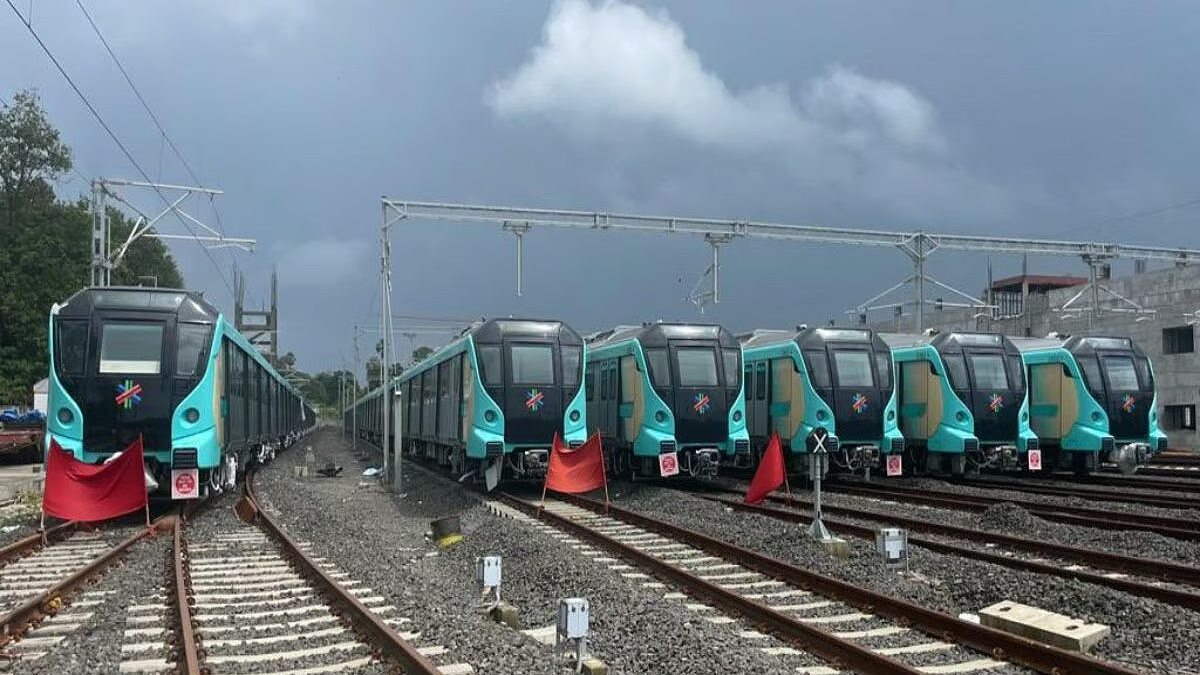
Mumbai is poised to witness a significant shift in its public transportation landscape as the long-awaited 9.77-km segment of Metro Line 3 between Bandra Kurla Complex and Acharya Atre Chowk nears operational readiness. Following the initial partial launch of the Aqua Line from Aarey to BKC in October 2024, the upcoming stretch is now under the final scrutiny of the Commissioner of Metro Rail Safety, and is expected to open to the public as early as next week, subject to safety clearance.
This milestone marks a pivotal development in the city’s ambition to deliver a cleaner, faster, and more integrated transport alternative to lakhs of daily commuters. The latest inspections are being conducted with a sense of urgency and purpose, according to officials associated with the project. A full route inspection by the CMRS is reportedly scheduled around 10 April. The Mumbai Metro Rail Corporation has submitted all required documentation, including a detailed safety report from an Independent Safety Assessor, which was received in March. The CMRS is currently examining critical elements such as civil structures, power systems, track alignment, and emergency protocols before giving the final nod. If the green light is granted, the city could see the first trains running on this vital central corridor by this weekend or early next week.
Metro Line 3, once fully functional, is designed to connect key nodes across Central Mumbai, linking the Jogeshwari–Vikhroli Link Road with South Mumbai’s Cuffe Parade through a 22.5-km underground corridor comprising 16 strategically located stations. The stretch from BKC to Acharya Atre Chowk encompasses densely populated and economically significant zones such as Dharavi, Dadar, Siddhivinayak, and Worli. The line is also expected to offer direct connectivity to major commercial and cultural destinations including SEEPZ, MIDC, and Andheri-Kurla Road, while making religious and heritage spots like Mahim Church, Makhdum Ali Mahimi Dargah, Shitaladevi Temple, and Siddhivinayak Temple more accessible.
For a city like Mumbai, where public transport is the lifeblood of daily life, Metro Line 3 is more than just infrastructure—it is a promise of equitable urban mobility. The line is expected to significantly ease pressure on the city’s overburdened suburban railways and arterial roads, cutting travel time and carbon emissions, and aligning with the broader vision of building net-zero, inclusive cities. With the average Mumbaikar spending over 90 minutes a day commuting, this intervention offers not just convenience but also a healthier and more sustainable lifestyle.
As Mumbai continues its transition towards becoming a truly global metropolis, the importance of projects like Metro Line 3 cannot be overstated. While the final segment from Acharya Atre Chowk to Cuffe Parade is expected to be ready by July 2025, the near completion of the BKC-Worli link brings tangible progress to the city’s long-term mobility goals. As always, the success of such ambitious infrastructure relies not only on timely approvals and engineering excellence but also on maintaining transparency, environmental consciousness, and inclusive access at every phase.