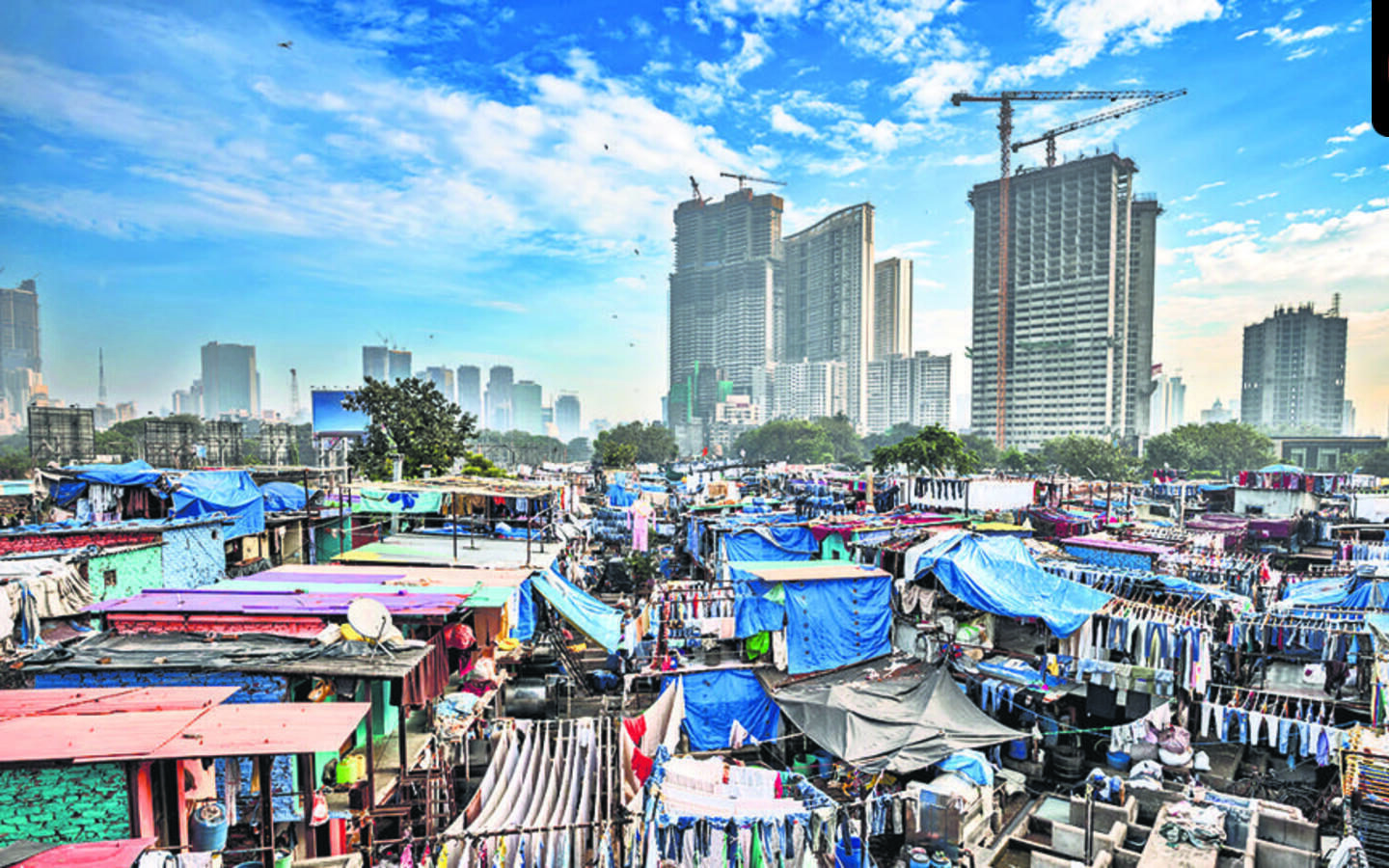
A long-running dispute over land near Dhobi Ghat in central Mumbai has intensified concerns about the future of one of the city’s most recognisable labour landscapes, as redevelopment activity around Mahalaxmi continues to reshape the area. Washerfolk who have historically worked at the open-air laundry complex say the shrinking availability of drying space is threatening both their livelihoods and the survival of a traditional service economy that has operated in the city for generations.
Located on municipal land in Mahalaxmi, Dhobi Ghat is widely considered the largest open-air laundry facility in Mumbai. The site contains hundreds of washing platforms used by licensed washerfolk to clean and process clothes for households, hotels, hospitals and businesses across the city. For more than a century, the facility has functioned through a structured system in which each licensed worker operates from a designated washing cubicle and uses allocated open ground to dry linen. However, the balance between heritage livelihoods and rising urban land values has become increasingly fragile. Washerfolk representatives say a large portion of the traditional drying area once used by workers has gradually been absorbed into neighbouring redevelopment projects associated with slum rehabilitation schemes and high-rise residential construction.
Urban planners observing the situation say the dispute reflects a broader pattern playing out across dense metropolitan regions. As land values rise in central locations, spaces historically used for small-scale urban occupations often face pressure from large redevelopment projects. In neighbourhoods like Mahalaxmi, where premium residential developments have expanded rapidly, even small land parcels can become highly valuable. According to officials familiar with the matter, the conflict began more than a decade ago when a private developer sought to integrate part of the drying ground with an adjoining redevelopment project. Washerfolk groups contested the move, arguing that the open ground formed an essential part of the Dhobi Ghat ecosystem rather than vacant land available for construction.
Over time, the dispute moved through multiple administrative and legal stages, including petitions filed before the Bombay High Court. The washerfolk sought either an alternative drying facility or compensation to offset the loss of operational space. In early 2026, the court ruled that the workers could not block redevelopment activity after authorities indicated that alternative arrangements had been offered for drying laundry. Officials from the municipal administration and redevelopment agencies informed the court that eligible workers had either been allocated substitute space or provided financial compensation. However, some washerfolk groups maintain that the alternative sites provided are not practical for daily operations. Representatives say the absence of a large contiguous drying area has forced many workers to adopt improvised arrangements within the washing complex itself, reducing efficiency and limiting the volume of laundry they can process.
Urban development experts note that Dhobi Ghat represents more than just a workplace. It is a functioning piece of Mumbai’s service infrastructure that connects informal labour networks with the city’s hospitality and healthcare sectors. As redevelopment continues across central Mumbai, the situation raises broader questions about how historic labour ecosystems can coexist with modern real estate expansion. For city planners focused on sustainable urban growth, the challenge lies in ensuring that redevelopment projects accommodate both economic progress and the preservation of traditional livelihoods that remain deeply embedded in the city’s social and economic fabric.
Mumbai’s Historic Dhobi Ghat Faces Space Crunch Amid Rising Real Estate