


Maharashtra Chief Minister Devendra Fadnavis has issued a pivotal directive to the Urban Development Department, initiating immediate action on the long-standing demand to integrate seven key villages, including the prominent IT hub of Hinjawadi, into the Pimpri-Chinchwad Municipal Corporation (PCMC) limits. This significant move, endorsed by Deputy Chief Minister Eknath Shinde, signals a crucial step towards fostering integrated and sustainable urban development in these rapidly expanding corridors. The decision aims to address severe strains on civic services and propel planned, eco-friendly growth in one of India’s most dynamic economic zones.
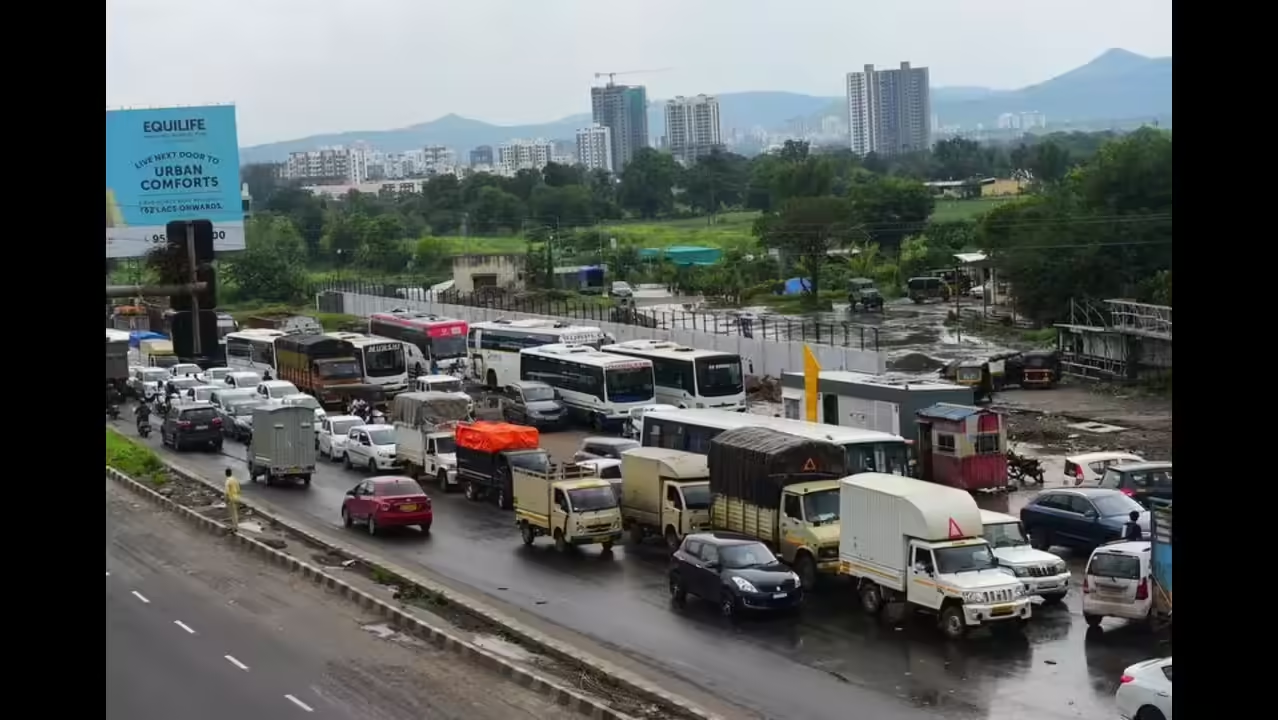
The impetus for this administrative reorganisation stems from the burgeoning population and industrial expansion within these villages, which include Maan, Marunji, Nere, Jambe, Sangavade, and Gahunje, alongside Hinjawadi. The presence of the Rajiv Gandhi IT Park and numerous industrial zones has led to an estimated floating population exceeding two lakh, overwhelming the capacity of existing gram panchayats. Basic civic amenities such as roads, water supply, drainage, waste management, and healthcare infrastructure are under severe strain, compounded by a critical lack of coordination among multiple administrative bodies that has historically stalled vital infrastructure projects.
The proposed inclusion into PCMC is poised to unlock a new era of streamlined and sustainable urban planning under a unified administrative framework. This consolidation is expected to facilitate faster and more coordinated decision-making, which is paramount for the efficient deployment of essential services and the implementation of large-scale infrastructure projects. Enhanced transportation networks, improved waste management systems, and better access to public amenities are among the direct benefits anticipated. Such integrated governance is foundational to creating zero net carbon and eco-friendly cities, where resources are optimally managed and environmental impacts are minimised through coherent policy and execution.
For the thriving IT and industrial sectors in Hinjawadi, this administrative integration promises enhanced support and a more predictable operational environment. The provision of reliable civic services and upgraded infrastructure is vital for attracting further investment and ensuring the continued growth of these critical economic drivers. Beyond economic considerations, the move holds significant implications for social equity. By bringing these villages under a robust municipal framework, all residents, including the diverse floating population, stand to gain equitable access to quality civic amenities, health services, and educational opportunities, fostering a more inclusive urban fabric.
The demand for this merger, initially formalised by a PCMC resolution in 2018, has gained renewed political momentum through persistent advocacy by local leaders like BJP’s Chinchwad MLA Shankar Jagtap. His assertion that these villages have “outgrown the capabilities of gram panchayats” resonates with the urgent need for planned urbanisation. As Maharashtra continues its trajectory of rapid development, such strategic administrative reforms are indispensable for building resilient, gender-neutral, and equitable cities that can effectively manage growth, mitigate environmental challenges, and ensure a high quality of life for all their inhabitants.
Also Read: Jaipur Workshop Urges National Marine Litter Policy Tackle Inland Plastic Waste
