


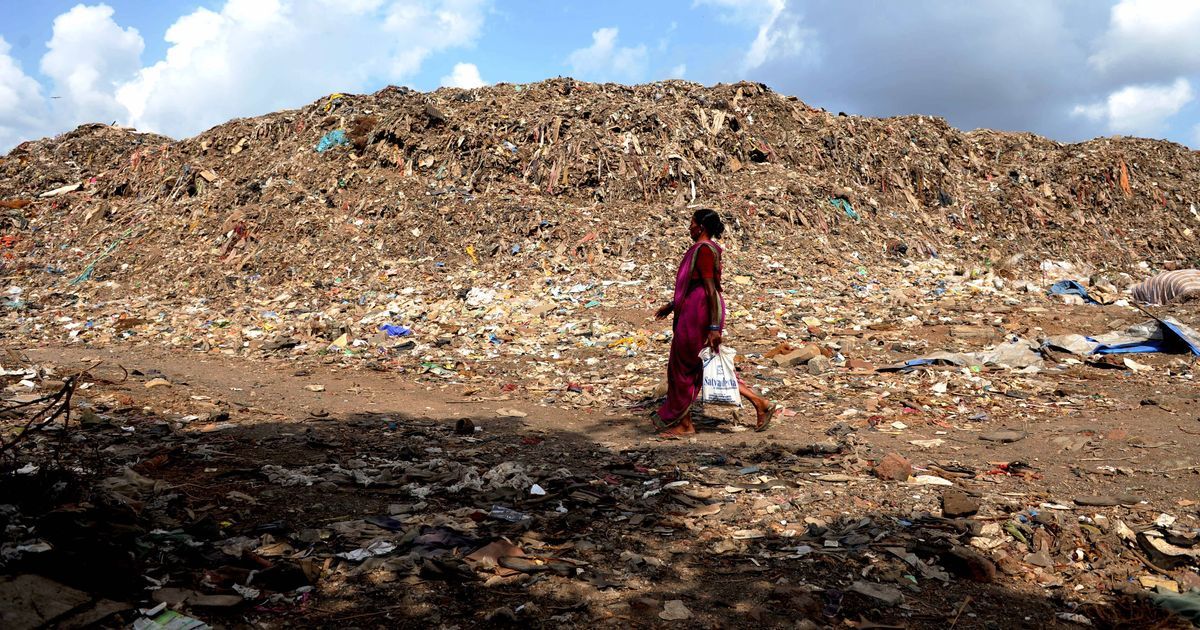
Mumbai’s Deonar landfill, one of India’s oldest and largest waste disposal sites, is undergoing a significant transformation.
The Brihanmumbai Municipal Corporation (BMC) has initiated a ₹2,368 crore project to clear approximately 185 lakh tonnes of legacy waste accumulated over decades. The project aims to reclaim 110 hectares of land within three years, employing eco-friendly bioremediation techniques. The Deonar landfill, operational since 1927, spans 311 acres and houses waste heaps rising up to 40 metres. This massive accumulation has led to severe environmental issues, including air and water pollution, health hazards, and frequent fires, particularly affecting nearby areas like Govandi and Chembur. Daily, over 23,000 tonnes of waste are added, with approximately 1,200 vehicle trips contributing to the site’s overburdened state.
Under the new initiative, the selected contractor will employ sustainable methods such as bio-inoculation and waste sorting to convert legacy waste into usable outputs. These include inert materials like stones and bricks, recyclable metals and glass, combustible items for waste-to-energy projects, and soil-like material to be used as filler for low-lying areas. The project covers a total area of 311 acres at Deonar, with plans to reclaim 124 acres. The remaining 136 acres are already in use, and 51 acres lie on unusable marshland. The land reclaimed from the Deonar landfill is intended to support the Dharavi Redevelopment Project (DRP), a joint venture between the state government and the Adani Group. This initiative aims to rehabilitate residents of Dharavi, including those ineligible for free housing. However, the project has sparked controversy, with opposition leaders accusing the government of using public funds to benefit a private entity. Critics argue that Mumbaikars are being burdened with waste management fees to fund the project.
Local residents and civic activists have long demanded action to address the pollution caused by the Deonar dump. While the BMC’s plan to clear the landfill is a step forward, concerns remain about the overlapping nature of the various waste management projects and their execution challenges. Experts warn about the site’s persistent toxicity due to trapped methane, which causes fires during summer. Additionally, the effectiveness of addressing legacy waste is questioned when mixed waste continues to arrive daily. If completed successfully, the Deonar landfill remediation project could mark a major milestone in Mumbai’s solid waste management policy. Transforming one of its most toxic sites into a model for urban land reclamation would not only alleviate environmental hazards but also pave the way for sustainable urban development in the city.
Also Read :Dombivli Adopts Chennai Waste Management Model
