


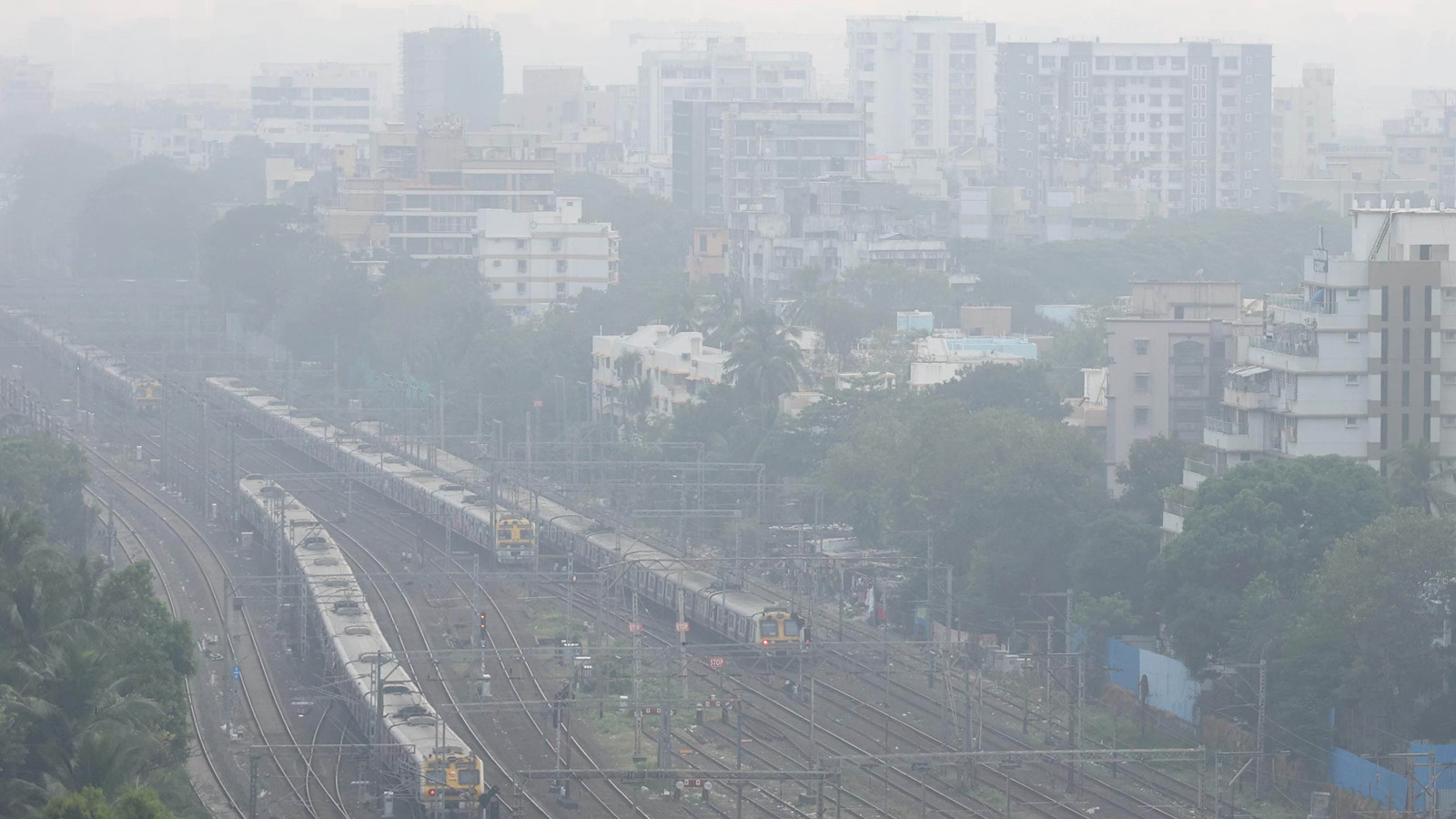
Mumbai woke up to another smog-laden morning on Wednesday as the city’s air quality slipped into the “unhealthy” range, clouding its skyline under a dense haze despite clear skies and cool conditions. The overall Air Quality Index (AQI) climbed to 207, signalling growing urban pollution stress just days after a short spell of relief.
According to data from AQI.in, several parts of the city reported alarmingly high pollution levels, with some areas entering the “severe” category. The Wadala Truck Terminal recorded an AQI of 380, while Juhu (305) and Vile Parle West (302) also reported severely polluted air. Colaba (297) and Bandra-Kurla Complex (273) remained in the “unhealthy” bracket. The India Meteorological Department (IMD) said Mumbai will continue to experience clear skies through the day, with daytime temperatures around 34°C and a minimum of 21°C — the lowest this month. While the cooler breeze lent a hint of winter to the city, it also exacerbated the smog, as lower temperatures and calm winds allowed pollutants to linger close to the ground.
Meteorologists attributed the haze to temperature inversion — a phenomenon where warm air traps cooler, denser air below it, preventing pollutants from dispersing. “The weather conditions are conducive to smog formation, and until wind speed increases or humidity changes, air stagnation will continue,” a senior IMD official explained. Just a week ago, heavy rainfall had cleansed the atmosphere, significantly reducing particulate matter and improving air quality. However, the improvement was short-lived. Experts say that vehicular emissions, ongoing construction activity, and open waste burning quickly restored pollution to pre-rainfall levels. “Rainfall gives us a temporary reprieve, but without structural reforms in emissions management, the cycle of smog will repeat every winter,” said an environmental researcher from a Mumbai-based think tank.
Health experts have warned that PM2.5 concentrations — the fine particulate matter responsible for respiratory distress — are particularly high during early mornings. Residents, especially children and the elderly, are advised to avoid prolonged outdoor exposure and use protective masks while commuting. The civic environment department has reportedly intensified monitoring in high-pollution clusters and is considering localised measures such as stricter dust control at construction sites and better waste management enforcement. Urban planners suggest that tackling air pollution in a dense coastal city like Mumbai will require a multipronged approach — from reducing traffic emissions through sustainable mobility systems to expanding urban green buffers that can act as natural filters.
As Mumbai edges deeper into the winter season, the city’s recurring smog crisis underscores an urgent need for cleaner transport, better construction regulation, and citizen awareness — critical steps towards building an equitable and breathable urban future.
Also read: Essential Pipeline Work Prompts Weekend Water Cut in Ghatkopar, Kurla, Chembur & Matunga
Mumbai’s Air Enters ‘Very Unhealthy’ Bracket, Experts Advise Caution
