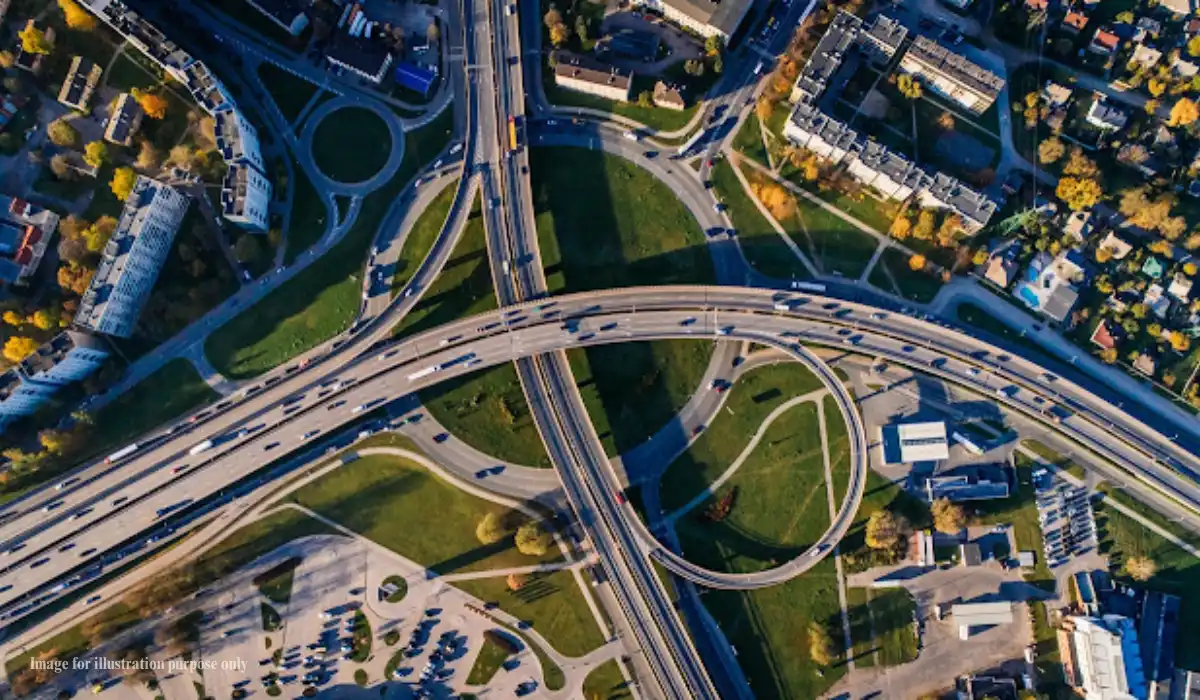
The Mumbai Metropolitan Region Development Authority (MMRDA) has unveiled an ambitious plan to construct a 90.18-kilometre ring road network across the city by 2029. The ₹58,517 crore Mumbai Ring Road Master Plan is designed to decongest one of India’s most traffic-choked urban centres and create a seamless travel loop connecting the city’s northern and southern ends.
Planned as a multi-agency collaboration involving MMRDA, the Brihanmumbai Municipal Corporation (BMC), and the Maharashtra State Road Development Corporation (MSRDC), the project aims to deliver seven interconnected ring roads that link major highways, flyovers, tunnels, and sea links. Once operational, the network is expected to significantly reduce travel time, boost economic activity, and enhance public transport integration within the Mumbai Metropolitan Region (MMR). According to officials, the first phase will connect Nariman Point to the Coastal Road, Worli Sewri Connector, and the Eastern Freeway, looping back via the proposed Orange Gate Tunnel. Each subsequent ring will extend connectivity further into the western, central, and northern suburbs, linking critical corridors such as the Bandra–Versova Sea Link, Goregaon–Mulund Link Road, and the Eastern Freeway Extension.
Experts believe this multi-tiered road network could redefine Mumbai’s commuting experience. “The city’s mobility systems are under immense pressure. This ring road plan integrates coastal, suburban, and arterial routes into a continuous corridor, which can reduce congestion and enhance fuel efficiency,” said a senior transport planner. One of the key goals is to ensure that no journey within the metropolitan region exceeds 59 minutes — a benchmark reflecting both improved road design and smarter traffic management. The project also aligns with Mumbai’s broader shift towards sustainable urban mobility, encouraging the use of electric vehicles and multimodal transport.
MMRDA officials have confirmed that tenders for feasibility studies and detailed design reports are underway for the initial 16-km phase linking the Coastal Road at Worli to the Chhatrapati Shivaji Maharaj International Airport’s Terminal 2 via Bandra-Kurla Complex (BKC). Urban mobility experts, however, caution that achieving a 2029 completion target will depend on effective coordination across agencies, timely land acquisition, and integration with upcoming metro and coastal projects. “If executed efficiently, this could become Mumbai’s most transformative infrastructure intervention since the Bandra–Worli Sea Link,” said an urban development expert.
Once complete, the ring road network promises to not only decongest Mumbai’s surface roads but also contribute to a cleaner, more sustainable city by reducing idling emissions and enabling smoother traffic flows across the metropolitan region.
Mumbais 90-kilometre Ring Road Master Plan Set To Transform Urban Connectivity By 2029