


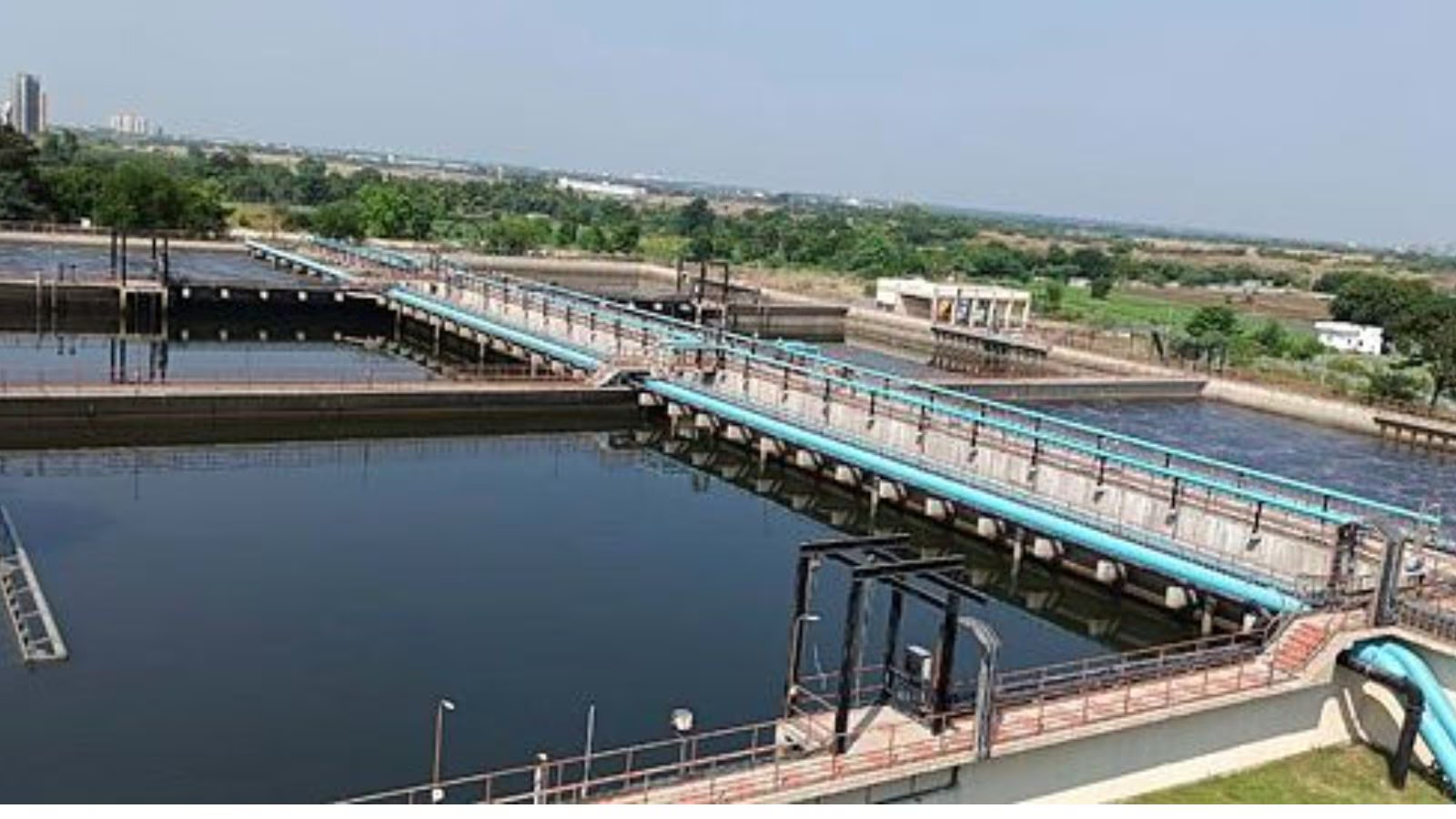
Mumbai’s ₹30,000 Crore Sewage Treatment Plant Project Takes Centre Stage in BMC Budget
Mumbai’s sewage treatment plant (STP) project has emerged as the most significant infrastructure initiative in the 2025-26 BMC budget, receiving a substantial allocation of ₹5,545 crore, representing 12.8% of the total capital expenditure. This marks a 35% increase in funding compared to last year, highlighting the critical importance of this initiative for the city’s future.
The STP project, which has a total cost of over ₹30,000 crore, was officially launched by Prime Minister Narendra Modi in January 2023. The project aims to address two major challenges facing Mumbai: the growing water supply deficit and water pollution. Currently, Mumbai faces a 400 MLD (million litres per day) water shortfall, and nearly 80% of the water supplied is converted into sewage. The STP initiative aims to treat and recycle 2,464 MLD of wastewater daily, with a capacity for potable and non-potable uses. Seven STPs are being developed across Mumbai, strategically located in Worli, Bandra, Dharavi, Versova, Malad, Ghatkopar, and Bhandup. These plants are expected to ease the pressure on Mumbai’s water supply, which currently depends on distant lakes in Thane, Palghar, and Nashik.
The largest of these plants, located in Worli, will have a capacity to treat 500 MLD, followed by Malad at 454 MLD, Dharavi at 418 MLD, Bandra at 360 MLD, Ghatkopar at 337 MLD, Bhandup at 215 MLD, and Versova at 180 MLD. Once completed, these plants will play a pivotal role in not only bridging the demand-supply gap but also in reducing water pollution in the city. Given Mumbai’s reliance on external water sources and the increasing strain on its water infrastructure, the STP project will significantly impact the city’s water sustainability. By recycling treated wastewater, the project aims to reclaim 80% of the city’s sewage for use, providing potable water for residents and curbing the environmental damage caused by untreated sewage being dumped into the sea. The progress of these plants is on track, with projects in Bhandup, Ghatkopar, and Dharavi expected to be operational by July 2026, and the remaining plants set to open by July 2027 and 2028. The plants at Ghatkopar and Bhandup are already ahead of schedule, with 28% and 26% progress, respectively.
Abhijit Bangar, Additional Municipal Commissioner of Projects, highlighted that despite delays in land acquisition and environmental clearances for the Malad plant, the overall progress is impressive, and the project remains on schedule. “These STPs will not only help close the gap in Mumbai’s water supply but also reduce the environmental burden by treating wastewater that is currently polluting our seas,” said Bangar. This major investment by BMC is a step towards making Mumbai a more sustainable city, addressing both its water shortages and pollution challenges. The STP project stands as a testament to the civic body’s commitment to a greener, cleaner, and water-secure future for Mumbai.
