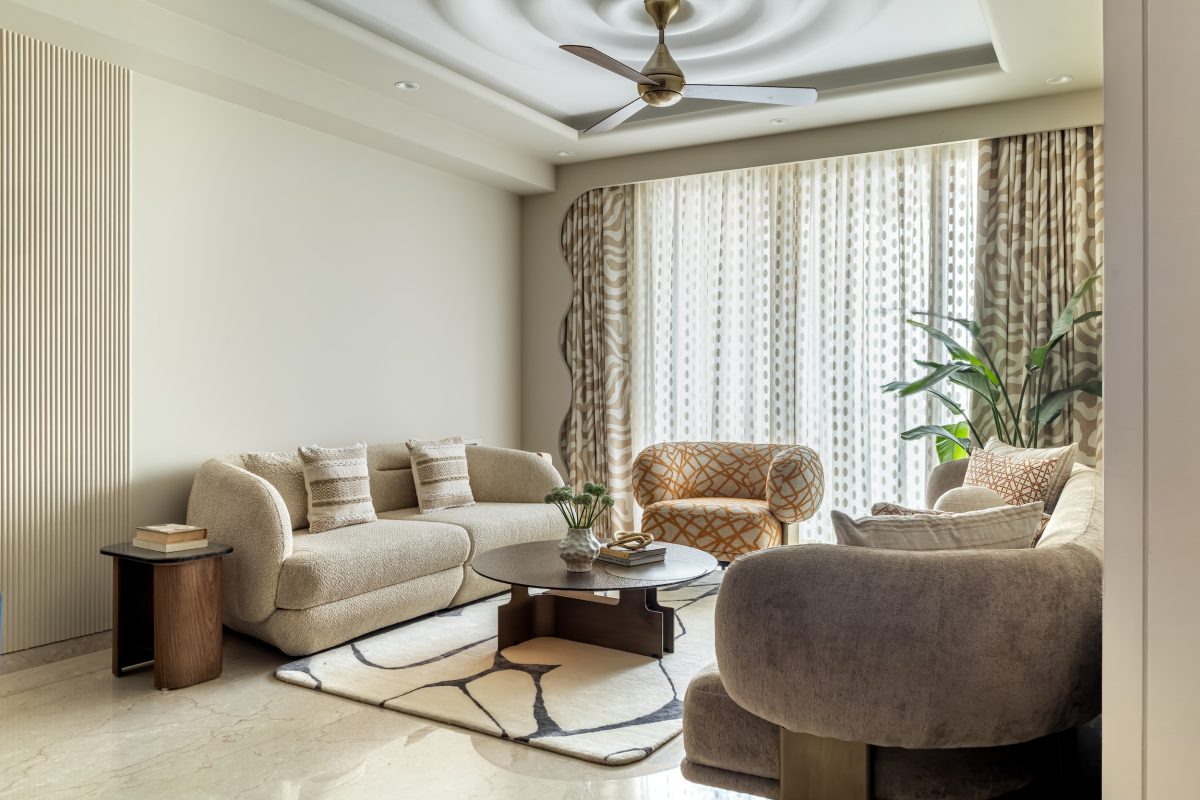
A contemporary 4BHK residence in Mumbai is reinterpreting urban living through fluid spatial planning and sculptural design elements, as design firm YG Design Studio crafts a home that blends movement, form, and functionality within a dense city context.Located in one of Mumbai’s residential districts, the apartment uses curved geometries, archways, and ripple-inspired detailing to create a sense of continuity across spaces. The design approach moves away from rigid layouts, instead favouring a seamless flow between living, dining, and private zones—reflecting evolving preferences in urban housing.
The project by YG Design Studio highlights a growing shift in residential design, where spatial flexibility is becoming central to modern apartments. As urban homes increasingly double up as workspaces and social environments, the need for adaptable layouts is reshaping interior architecture.Material selection plays a key role in reinforcing the design narrative. Soft finishes, layered textures, and neutral palettes are used to enhance natural light while maintaining visual cohesion. Curved walls and ceiling elements introduce a sense of movement, reducing the visual rigidity often associated with high-rise living.Urban design experts note that such projects signal a broader transition in how interior spaces are conceived in cities like Mumbai, where space constraints demand both efficiency and creativity. Instead of compartmentalised rooms, designers are exploring open, flowing layouts that maximise usability without compromising privacy.
The emphasis on arches and organic forms also reflects a renewed interest in biophilic and human-centric design principles. By incorporating softer geometries, interiors can create a more calming and intuitive living environment—an increasingly important factor in high-density urban settings.From a real estate perspective, such design interventions are also influencing buyer preferences. Homebuyers are placing greater value on experiential quality, aesthetics, and adaptability, rather than just square footage. This is particularly evident in premium residential segments, where design differentiation is becoming a key selling point.The project further underscores the role of interior design firms like YG Design Studio in shaping the identity of urban housing. As cities grow vertically, interiors are becoming the primary canvas for innovation, allowing designers to redefine how space is perceived and experienced.Sustainability considerations are also gradually becoming embedded in such projects. Efficient use of natural light, material optimisation, and long-lasting finishes contribute to reducing the environmental impact of interiors over time. While subtle, these choices align with the broader push towards resource-efficient urban living.
For Mumbai, where residential space is both limited and highly valued, projects like this illustrate how design can transform constraints into opportunities. By prioritising fluidity, comfort, and adaptability, the residence reflects a shift towards more responsive and human-centric urban homes.As India’s cities continue to densify, such design approaches are likely to gain wider relevance, influencing not just premium apartments but also mainstream housing developments seeking to balance space efficiency with quality of life.