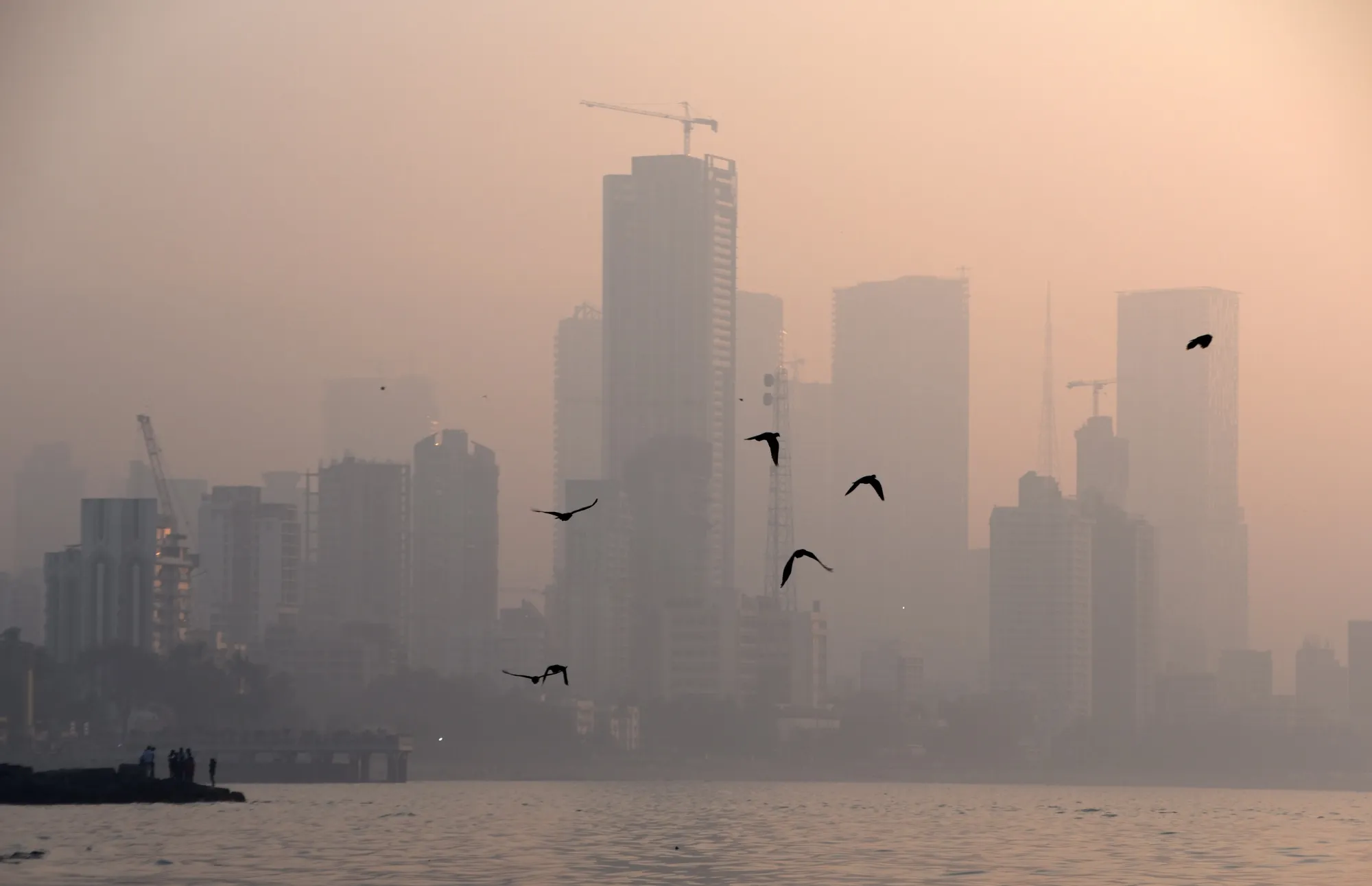
HomeblogMumbai Witnesses Blue Skies Although Several Areas Show Severe AQI Above 300 Mumbai Witnesses Blue Skies Although Several Areas Show Severe AQI Above 300
Mumbai experienced an unusually crisp start on Thursday, with temperatures dipping below 20°C before sunrise and skies remaining largely clear. The early coolness provided residents a brief seasonal relief, but the improvement in weather was overshadowed by a rapid deterioration in air quality, reinforcing long-standing concerns over the city’s growing pollution burden.
According to officials from the India Meteorological Department (IMD), the city is likely to retain clear conditions through the week, although maximum temperatures are expected to climb to around 34°C by afternoon. Meteorologists noted that the cooler pre-dawn hours are the result of weak northerly winds and reduced overnight cloud cover — factors that typically offer Mumbai rare moments of mild winter-like weather. However, they warned that these same conditions allow pollutants to settle closer to the surface, amplifying morning smog. By Thursday morning, Mumbai’s overall Air Quality Index (AQI) surged to 243, categorised as ‘unhealthy’.
The sharp rise follows comparatively moderate levels earlier in the month, signalling a swift shift in atmospheric conditions as winter approaches. A senior official from the state pollution control board described the jump as “concerning but not unexpected”, noting that industrial emissions, construction dust and rising vehicular congestion remain primary contributors. Real-time monitoring showed stark variations across neighbourhoods. The Wadala Truck Terminal, a long-time pollution hotspot due to freight movement and depot congestion, recorded an alarming AQI of 396, pushing it into the ‘severe’ band. Other high-density industrial pockets — including Deonar, Malad, Colaba and Worli — reported values above 300. Suburban areas fared marginally better, though still within problematic ranges.
Localities such as Kandivali East, Borivali East, Mankhurd and Jogeshwari remained in the ‘poor’ to ‘unhealthy’ categories, illustrating the spread of pollution far beyond traditionally affected zones. Urban planners say the situation underscores the urgency of rethinking how Mumbai manages emissions and urban growth. While the city has taken steps to modernise public transport, expand green cover and regulate construction practices, experts argue that progress remains uneven. “Mumbai needs a coordinated air-quality strategy that balances economic activity with public health,” a mobility researcher noted, pointing to the need for cleaner industrial operations, low-emission mobility corridors and decentralised monitoring.
For residents, the day’s contrasting conditions — a cool morning paired with heavy haze — served as a reminder of the city’s complex environmental challenges. As Mumbai continues to densify, equitable access to clean air will become a defining metric of its urban resilience.
Mumbai Witnesses Blue Skies Although Several Areas Show Severe AQI Above 300