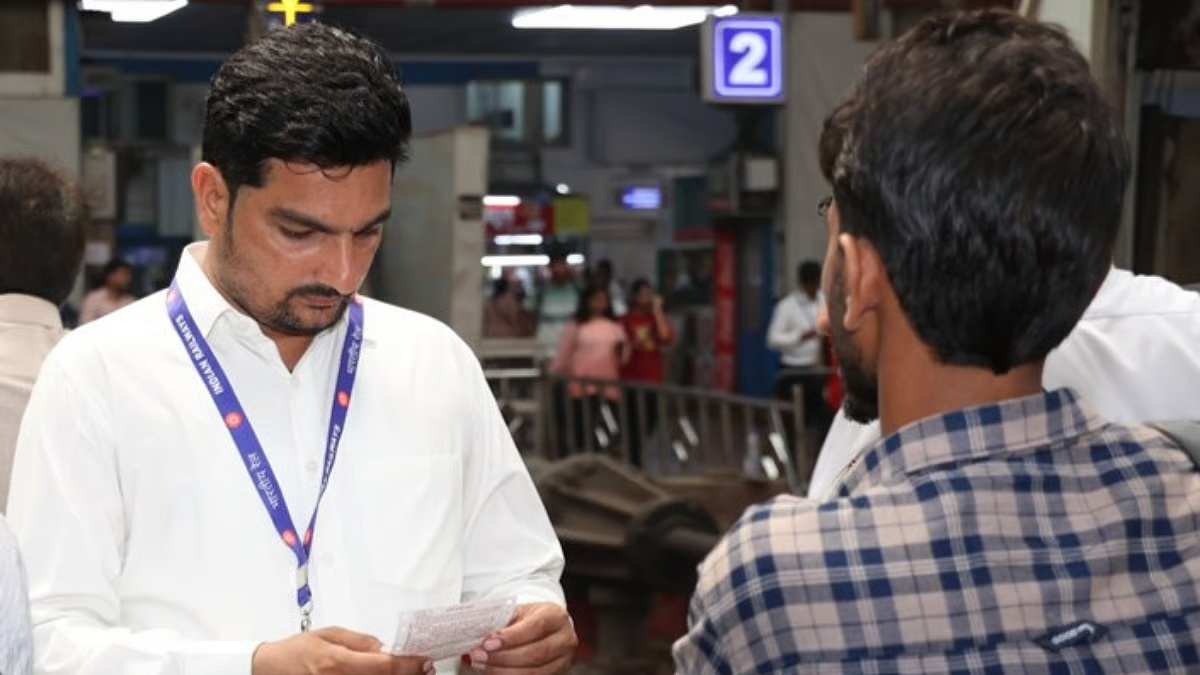
Mumbai’s Western Railway has recorded a sharp rise in penalty collections during the first nine months of FY26, signalling a more aggressive enforcement approach aimed at curbing ticketless travel across one of the world’s busiest suburban rail networks. Between April and December 2025, the railway zone collected ₹155.46 crore in fines, reflecting a significant year-on-year increase and underscoring the financial and operational impact of compliance-driven transit management.
Railway officials attribute nearly ₹41.26 crore of this amount to the Mumbai suburban section alone, highlighting persistent challenges around unauthorised travel in high-density corridors. Industry observers note that while fines are not a revenue strategy in themselves, effective ticket enforcement plays a critical role in protecting fare-based income, managing peak-hour congestion, and improving service reliability for daily commuters. The enforcement drive covered suburban services, Mail and Express trains, passenger routes, and seasonal special services. According to transport analysts, such network-wide checks indicate a shift toward data-driven and targeted enforcement, rather than sporadic inspections. The overall fine collection during this period was nearly 49 per cent higher than the same months last year, suggesting improved operational coordination and stronger on-ground monitoring.
December 2025 alone emerged as a particularly high-impact month, with officials detecting over 2.5 lakh cases of ticketless or irregular travel, including violations related to unbooked luggage. This resulted in penalty collections of ₹15.54 crore, marking a substantial increase compared to December in the previous year. Experts point out that intensified year-end travel, combined with enhanced inspection deployment, often reveals structural gaps in passenger compliance that require long-term behavioural interventions. Special attention was also directed toward air-conditioned suburban services, which operate at a higher fare point and are intended to offer a premium commuting experience. During the April–December period, enforcement teams penalised approximately 91,000 unauthorised passengers travelling in AC local trains, collecting ₹2.97 crore in fines. This figure represents almost double the collections recorded during the same period last year, indicating improved identification and deterrence measures.
Urban transport planners say such enforcement is essential as Mumbai expands its rail-based mobility ecosystem. Ticketless travel not only erodes public revenue but also undermines capacity planning, service frequency optimisation, and passenger comfort—key factors in building sustainable, people-centric public transport systems. Strong compliance frameworks also support equitable access by ensuring that investments in cleaner, more efficient rolling stock benefit genuine users. Looking ahead, railway authorities are expected to complement enforcement with service upgrades, including the induction of customised air-conditioned suburban trains designed specifically for Mumbai’s operating conditions. Experts believe that pairing improved passenger amenities with consistent enforcement can help shift commuter behaviour, strengthen public trust, and support the long-term viability of rail as Mumbai’s most climate-efficient mode of mass transit.
Mumbai Western Railway Fine Collections Surge In FY26