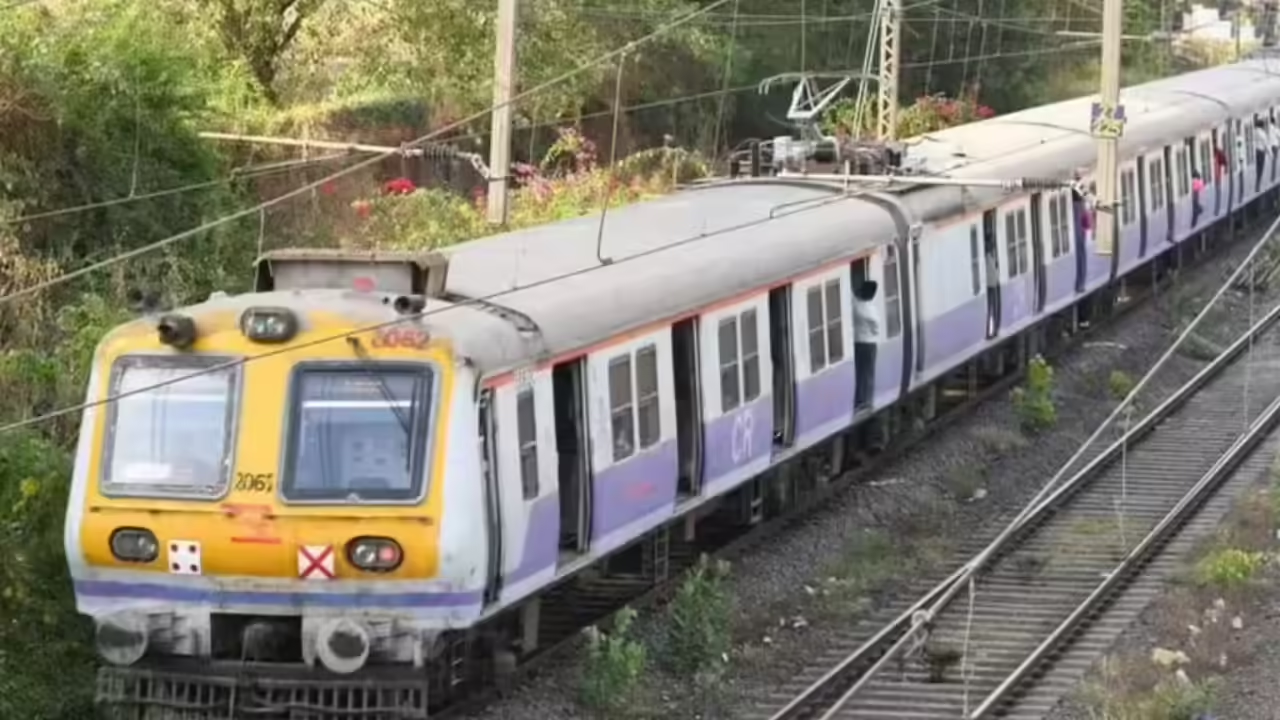
Mumbai’s suburban transport network is facing one of its most challenging phases this winter as a prolonged infrastructure block on the Western Railway disrupts daily travel for millions. The large-scale block, which began in the final week of December and extends into mid-January, has led to widespread train cancellations, intensified overcrowding and growing dependence on road-based public transport. For India’s financial capital, the episode underscores the fragility of urban mobility systems during major upgrades.
Railway authorities say the disruption is linked to critical track and signalling works aimed at unlocking long-term capacity. Once completed, the project will create a dedicated corridor for long-distance trains between Bandra Terminus and Borivali, easing pressure on fast suburban services. Officials argue this separation is essential for future-proofing Mumbai’s rail network as commuter volumes continue to rise. In the short term, however, the impact on daily life has been severe. During the most intense phase of the block, hundreds of suburban services are being fully or partially cancelled each day, with peak-hour commuters bearing the brunt. Platforms at major stations have seen persistent congestion, while trains that do operate are running well beyond comfortable capacity.
To mitigate the disruption, Western Railway has sought emergency support from the city’s public bus operator, requesting additional services on key north–south corridors. Transport planners note that this coordination between rail and bus systems reflects the importance of multimodal resilience in dense cities. Yet they also acknowledge that road-based alternatives have limited capacity in a city already struggling with congestion and air quality concerns. Help desks and additional staff have been deployed at high-footfall stations to manage crowds and provide guidance. Despite these measures, commuter groups say the experience has highlighted long-standing issues in planning infrastructure works without adequate passenger cushioning. “Major upgrades are necessary, but their social cost must be planned for more carefully,” said an urban mobility expert, pointing to the need for staggered schedules, better communication and stronger last-mile options.
The Mumbai Western Railway disruption has wider implications beyond daily inconvenience. Reliable public transport is central to reducing car dependence, lowering emissions and ensuring equitable access to jobs and education. When rail services falter, lower-income commuters are often hit hardest, facing longer journeys and higher out-of-pocket costs. Urban policy specialists argue that the current episode should prompt a broader rethink of how Indian cities manage large transit upgrades. Investing in temporary capacity, improving bus priority lanes and accelerating low-emission fleets could help cities remain functional during disruptions while staying aligned with long-term sustainability goals.
As Mumbai counts down to the completion of the block, the challenge for authorities will be to restore confidence in public transport not only by delivering promised capacity gains, but by ensuring that future transitions are smoother, more inclusive and better integrated across the urban mobility ecosystem.
Mumbai Western Railway Faces Weeks Long Disruption Amid Large Scale Traffic Block