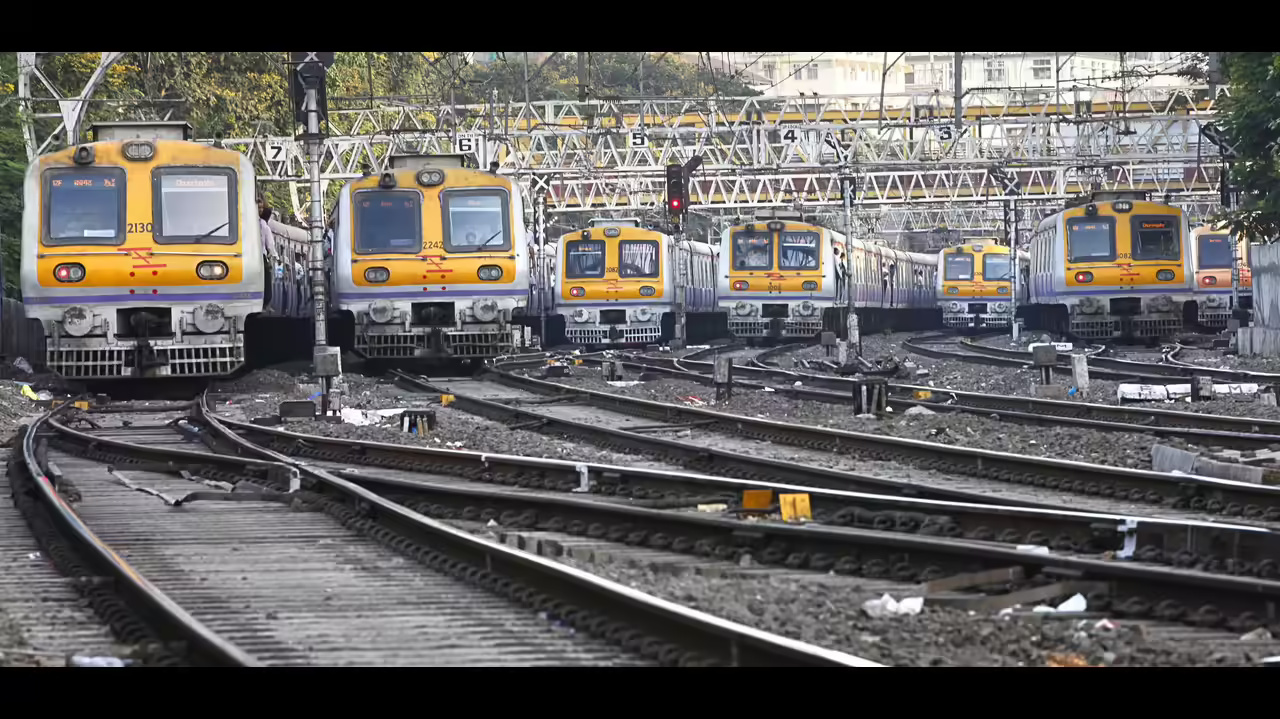
Mumbai Western Railway Adds Special Night Services
Western Railway (WR) has announced two additional overnight local train services between Churchgate and Virar on the intervening night of 3–4 February 2026 to manage expected passenger surge during Shab‑e‑Baraat, a widely observed cultural occasion. The extra trains aim to decongest suburban services and support safer, more orderly late‑night travel across one of India’s busiest commuter corridors.
Western Railway’s decision reflects a broader operational challenge in regulating capacity on the Western Line, where millions depend on local trains daily for work, education and social commitments. These special slow services, halting at every station en route, are designed to distribute late‑night travel demand more evenly within the suburban network.The first, a Churchgate–Virar special train, will depart at 2:35 am on 4 February, reaching Virar by about 4:15 am. Its return counterpart will start from Virar at 1:42 am and terminate at Churchgate around 3:22 am. Both services are categorised as “slow” locals, stopping at each station between Mumbai’s core and its northern fringe.
Urban transit planners highlight that additional overnight services for religious or festival‑related travel are part of a responsive scheduling approach adopted by Indian Railways, balancing routine commuter peaks with episodic demand spikes. These services, though limited in number, can significantly ease pressure on regular timetables by offering alternatives for those travelling outside peak morning and evening hours.From an urban mobility standpoint, these special trains also underscore the role of civic infrastructure in accommodating cultural practices without overwhelming core services. Mumbai’s suburban rail — often described as the city’s “lifeline” — routinely operates at near‑capacity during peak periods. Ensuring adequate late‑night transport options during significant observances helps mitigate crowding and enhances safety, especially when regular services taper off close to midnight.
However, the sporadic nature of such special runs highlights ongoing gaps in all‑night public transport provision in megacities like Mumbai. While the metro network has extended service hours in recent years, many outlying suburbs remain reliant on rail services that generally cease by late night. Enhanced night mobility infrastructure could not only support festival travel but also benefit shift workers, healthcare commuters and night‑time economic activity. Urban planners and transport officials point to this alignment as a priority for long‑term transit resilience strategies.For residents and visitors planning travel around Shab‑e‑Baraat, Western Railway’s advisory to check updated schedules and platform announcements remains critical, given the variability associated with special services and routine maintenance work on the suburban network.
As Mumbai’s transport agencies look ahead, integrating real‑time demand forecasting and dynamic scheduling is likely to be central to addressing episodic crowding while strengthening everyday network reliability across the metropolis.