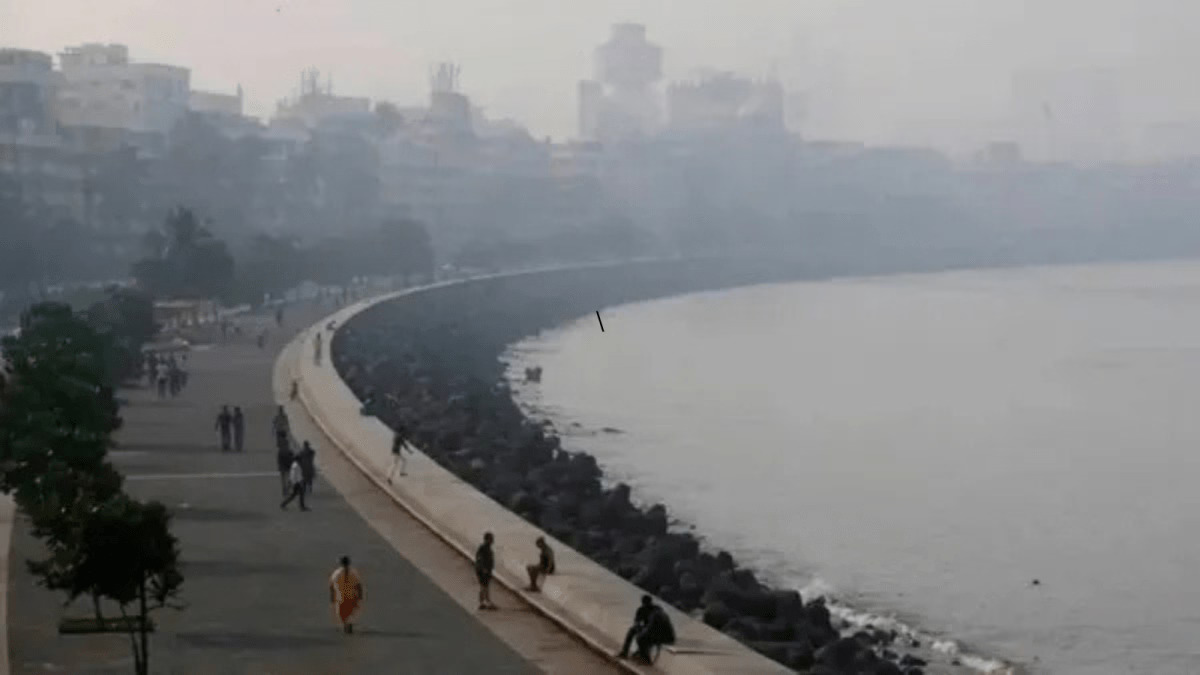
Mumbai began the week with warmer temperatures and visibly hazy skies, signalling an early transition towards summer even as air quality across several neighbourhoods deteriorated. On Monday, March 2, the city recorded clear weather conditions but continued to remain in the ‘Poor’ air quality category, raising concerns for public health and urban liveability in India’s financial capital.
Data from the India Meteorological Department indicates that Mumbai is likely to experience largely cloud-free conditions through the day, with temperatures ranging between 20 degrees Celsius in the early morning to around 33 degrees Celsius by afternoon. Weather officials note that daytime temperatures have stabilised at higher levels over recent weeks, reflecting a seasonal shift that typically precedes rising heat stress in dense urban areas. While the weather remained calm, air quality levels told a more complex story. Citywide monitoring showed the overall Air Quality Index hovering just above the threshold that defines ‘Poor’ air, a level associated with increased respiratory discomfort for sensitive groups. Health experts caution that sustained exposure, even at moderate pollution levels, can aggravate asthma, cardiovascular conditions and heat-related illnesses—particularly when combined with rising temperatures.
Air quality readings across Mumbai varied sharply by location, highlighting persistent spatial inequality in environmental conditions. Certain eastern and suburban pockets recorded pollution levels categorised as ‘Severe’, while a few coastal and greener neighbourhoods reported ‘Good’ to ‘Moderate’ air quality. Urban planners say such contrasts reflect differences in traffic density, construction activity, industrial emissions and access to open spaces. “The uneven distribution of air quality mirrors how infrastructure, land use and mobility patterns shape daily exposure,” an environmental policy expert said. Areas with limited tree cover and high vehicular congestion tend to experience sharper pollution spikes, especially during periods of stable weather when pollutants are not dispersed by wind or rain.
The emerging weather pattern has broader implications for Mumbai’s urban economy. Warmer days combined with poor air quality can affect labour productivity, increase energy demand for cooling, and place additional strain on public health systems. Real estate analysts also note that air quality is becoming an increasingly important factor in residential location choices, influencing demand for homes near open spaces, coastal corridors and low-traffic zones. From a climate resilience perspective, the current conditions underline the need for long-term urban interventions. Experts emphasise that expanding green cover, accelerating clean mobility, and enforcing dust-control measures at construction sites are critical to mitigating pollution as temperatures rise. They also point to the importance of neighbourhood-level monitoring and targeted responses rather than citywide averages alone.
With summer approaching, civic agencies are expected to review heat-action preparedness and pollution-control strategies. For residents, the combination of warmer weather and compromised air quality serves as an early reminder that Mumbai’s environmental challenges are deeply interconnected—and that solutions will require coordinated planning across climate, health and urban infrastructure systems.
Mumbai Weather Turns Warmer As Pollution Rises