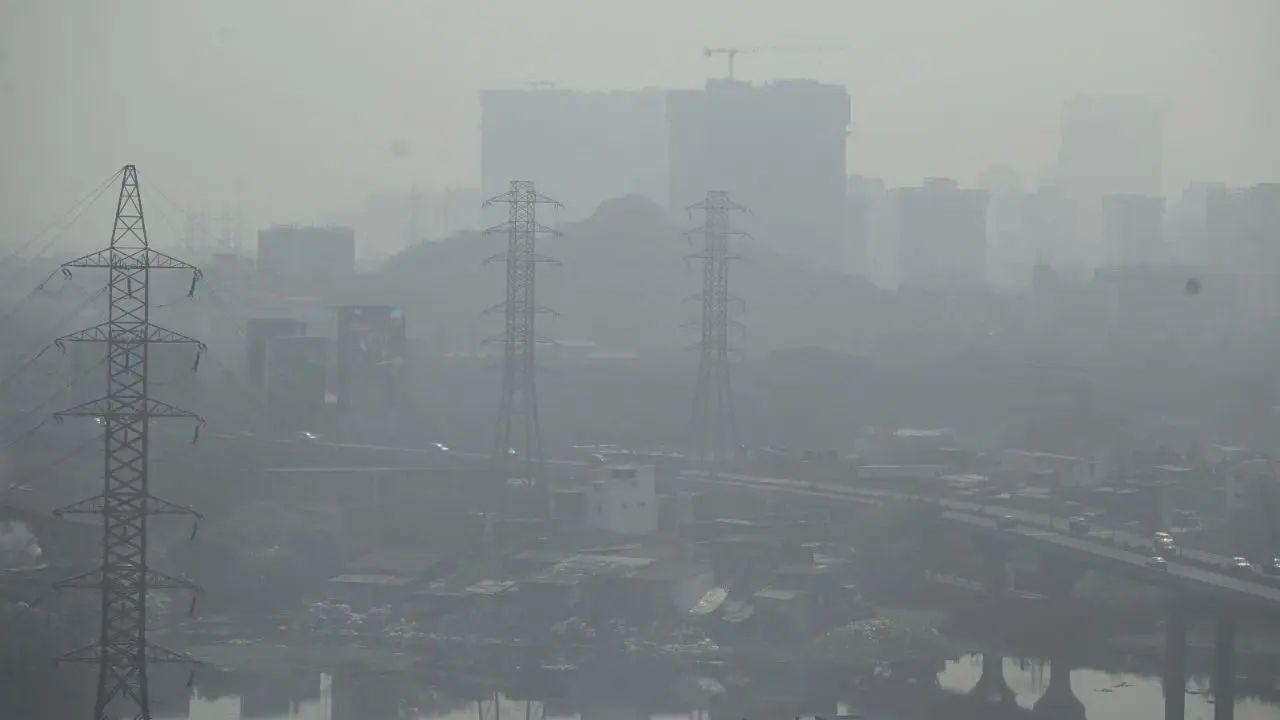
Mumbai woke up to a relatively cool and calm winter morning on Saturday, offering residents a rare spell of climatic comfort amid the city’s typically humid conditions. Lower early-morning temperatures and clear skies made outdoor movement easier, particularly for commuters and morning walkers. Yet beneath the seasonal relief lay a deeper urban challenge: persistently unhealthy air that continues to undermine public health and long-term liveability.
Meteorological assessments indicated that minimum temperatures dipped close to the 19°C mark, while daytime highs were projected to remain around 30°C. Such conditions are considered favourable for Mumbai’s winter, reducing heat stress and energy demand. Urban planners note that milder winter days can support outdoor economic activity and ease pressure on power consumption, particularly in residential neighbourhoods. However, air quality data painted a far less encouraging picture. Citywide readings showed particulate pollution levels well above safe thresholds, placing Mumbai in the ‘unhealthy’ bracket. A visible haze lingered over several districts, signalling elevated concentrations of fine particulate matter. Public health specialists warn that such exposure levels can aggravate respiratory and cardiovascular conditions, especially among children, older adults and outdoor workers.
The deterioration in Mumbai civic air quality has been closely linked to the scale and intensity of ongoing construction. Large public infrastructure works — including urban rail corridors, arterial road upgrades, bridge construction and coastal connectivity projects — continue to generate dust emissions. At the same time, private real estate redevelopment across both island city and suburbs has expanded rapidly, adding to particulate loads during the dry winter period when dispersion is limited. Localised data revealed stark disparities across neighbourhoods. Eastern suburbs and industrial-adjacent zones recorded the highest pollution levels, with several areas crossing into the ‘severe’ category. Environmental analysts point out that these pockets often combine dense traffic, construction activity and legacy industrial land use, making mitigation particularly challenging. By contrast, some western and northern suburbs reported relatively lower readings, though still above what is considered safe for prolonged exposure.
Experts emphasise that Mumbai civic air quality issues are not seasonal anomalies but structural urban management concerns. Inadequate dust suppression at construction sites, inconsistent enforcement of emission norms and fragmented coordination between civic agencies have collectively weakened pollution control efforts. From an economic standpoint, sustained poor air quality raises healthcare costs, reduces workforce productivity and erodes the city’s attractiveness as a global business and real estate destination. Urban policy specialists argue that addressing this challenge requires integrating air quality management into infrastructure planning rather than treating it as an afterthought. Measures such as real-time monitoring at project sites, stricter penalties for violations, improved last-mile public transport and accelerated transition to cleaner construction practices are increasingly viewed as essential.
As Mumbai navigates its winter season, the contrast between comfortable weather and compromised air underscores a critical urban reality. Climatic relief alone cannot deliver liveability gains unless paired with sustained improvements in environmental governance. For India’s financial capital, restoring breathable air remains central to building a resilient, inclusive and future-ready city.
Mumbai Weather Turns Mild Air Stays Toxic