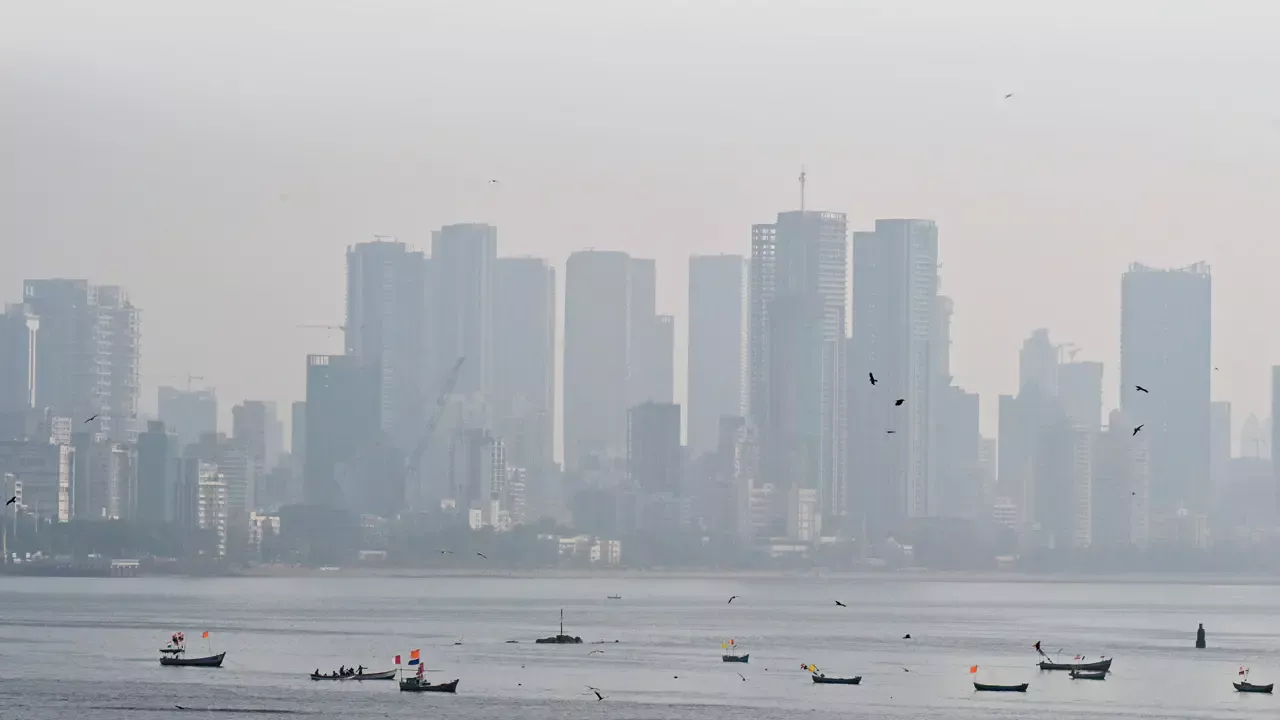
A shift in atmospheric conditions over Mumbai has brought temporary relief from pollution, as cloud cover and pre-monsoon activity improved air quality levels across the city on Wednesday. The change, accompanied by lower particulate concentrations, highlights the close link between weather patterns and urban air health in one of India’s most densely populated metros.
The India Meteorological Department has indicated that the Mumbai weather pattern is expected to remain unstable over the next 24 to 48 hours, with intermittent cloudiness, light rainfall, and the possibility of thunderstorms in isolated pockets. Wind activity and moisture inflow have contributed to dispersing pollutants, resulting in a notable drop in the city’s Air Quality Index. The Mumbai weather shift comes after weeks of deteriorating air conditions driven largely by construction dust, vehicular emissions, and stagnant atmospheric conditions. Environmental experts note that such short-term improvements are often weather-driven rather than structural, underlining the need for sustained pollution control measures.
Data from monitoring stations showed that while the overall air quality improved to the ‘good’ category in several parts of the city, variations persisted across micro-locations. Central and western suburbs recorded relatively higher pollution levels compared to coastal and southern zones, reflecting uneven distribution of emission sources and ventilation patterns. Urban planners suggest that this spatial disparity in air quality highlights deeper challenges in managing emissions in rapidly urbanising regions. Areas with dense construction activity and high traffic volumes continue to face localised pollution spikes, even when broader city-level indicators show improvement.
Civic authorities have, in recent weeks, intensified enforcement against dust-generating construction sites and non-compliant infrastructure projects. According to officials, stricter monitoring and penalties have contributed to reducing particulate emissions, although long-term gains will depend on consistent enforcement and adoption of cleaner construction practices. The Mumbai weather outlook also includes the likelihood of gusty winds and lightning, prompting a cautionary advisory for residents and construction operators. Such weather events, while beneficial in clearing pollutants, can pose risks to ongoing infrastructure work and informal settlements lacking adequate protection.
From a climate resilience perspective, experts view these transitional weather patterns as part of a broader trend of increasing variability. Cities like Mumbai are witnessing more frequent fluctuations between dry pollution-heavy phases and short bursts of rain-driven relief. This underscores the need for integrated urban planning that accounts for both air quality management and extreme weather preparedness. While the current improvement offers a temporary respite, specialists emphasise that sustainable gains in air quality will require systemic interventions—ranging from cleaner mobility systems to better regulation of construction practices and expansion of urban green cover.
As Mumbai weather conditions evolve in the coming days, the focus will remain on whether policy measures can convert episodic improvements into lasting environmental benefits for residents across all neighbourhoods.
Mumbai Weather Shift Brings Cleaner Air Conditions