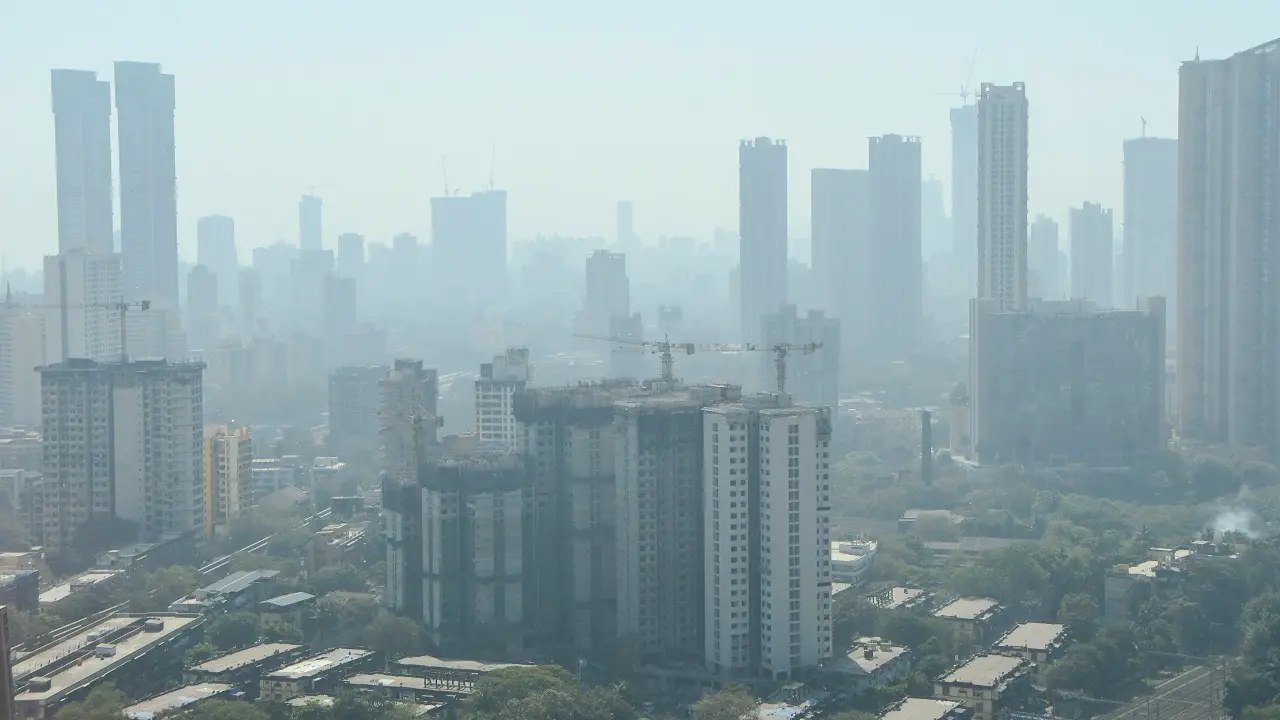
Mumbai experienced stable winter weather conditions on Wednesday, with mild temperatures and moderate air quality recorded across most parts of the city. While the absence of rainfall and cooler nights provided short-term relief for daily commuters and construction activity, air quality levels highlighted ongoing urban pollution challenges that continue to affect public health and city liveability.
According to official meteorological data, minimum temperatures were recorded at just under 20 degrees Celsius in the southern parts of the city and below 18 degrees Celsius in the northern suburbs. These readings are consistent with seasonal norms and reflect relatively calm atmospheric conditions, with no rainfall reported during the observation period. Air quality monitoring data showed the city-wide Air Quality Index at 102, placing Mumbai in the ‘moderate’ category. Environmental officials noted that while conditions remain acceptable for the general population, individuals with respiratory or cardiovascular conditions may experience mild discomfort during prolonged outdoor exposure.
Spatial variations were observed across the metropolitan region. Several eastern and western suburban pockets reported AQI readings between the high 90s and 130s, indicating the influence of traffic density, construction activity, and local wind patterns. Central locations and coastal areas recorded comparatively lower pollution levels, supported by better dispersion due to sea breezes and open urban form. Urban climate experts point out that Mumbai’s moderate AQI, even during favourable weather, underscores structural pollution sources rather than episodic factors alone. Vehicular emissions, infrastructure construction, and dust from redevelopment projects remain persistent contributors, particularly in rapidly densifying suburban corridors.
Neighbouring urban centres within the Mumbai Metropolitan Region also reflected similar trends. Satellite cities recorded air quality largely within the satisfactory to moderate range, suggesting region-wide atmospheric stability rather than isolated pollution spikes. This consistency is seen as a positive indicator for regional mobility and economic activity, especially in logistics, real estate development, and outdoor labour-dependent sectors. Comparatively, northern Indian metros continued to face significantly poorer air quality, highlighting the relative advantage of coastal climate systems in dispersing pollutants. However, planners caution against complacency, noting that Mumbai’s pollution baseline has steadily risen over the years despite favourable geography.
From an urban planning perspective, the current conditions reinforce the need for long-term interventions rather than short-term weather dependence. Experts emphasise the importance of expanding low-emission public transport, accelerating electric mobility adoption, enforcing dust-control norms at construction sites, and increasing urban green cover to improve baseline air quality. Officials indicated that air quality trends will continue to be monitored closely as winter conditions persist, with changing wind speeds and temperature inversions capable of influencing pollution concentration.
As Mumbai continues to grow vertically and horizontally, maintaining breathable air amid climate variability remains central to building a resilient, inclusive, and people-first city. Moderate conditions today serve as both a relief and a reminder of the structural reforms still required to secure cleaner urban futures.
Mumbai Weather Sees Mild Temperatures Moderate Air Quality