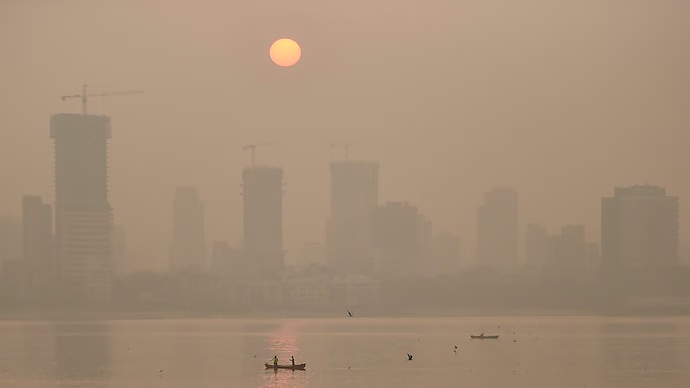
Mumbai Weather Brings Mild Temperature And AQI Update
Mumbai began Wednesday with a cool, dry morning and moderate air quality levels, as urban dwellers navigated both gentle winter temperatures and ongoing air pollution concerns across the metropolitan area. The Air Quality Index (AQI), a composite measure of atmospheric pollutants, hovered in the moderate category across much of the city, signalling potential respiratory discomfort for sensitive populations and highlighting persistent environmental stress points in India’s largest financial centre.
Early temperature readings recorded across central and suburban zones showed milder conditions typical for January, with no significant rainfall disrupting daily routines. Forecasters from the India Meteorological Department (IMD) noted a continuation of dry and stable weather patterns that can amplify pollutant accumulation near the surface when winds are light. Current air quality monitoring platforms indicate that key residential and commercial districts such as Andheri Eastregistered AQI readings approaching or above 130–140, underscoring spatial variation in pollutant concentrations shaped by traffic intensity and local emissions. The AQI classification system places values between 101 and 200 in the “moderate” band, where particulate matter (PM2.5 and PM10), nitrogen dioxide and other pollutants can cause breathing discomfort for people with asthma, cardiovascular conditions and older adults.
Urban planners and environmental health specialists stress that moderate air quality, while less severe than “poor” or “very poor” categories, should not be dismissed in a dense metropolis like Mumbai. Seasonal temperature inversions typical of winter months can trap emissions close to the cityscape, slowing dispersion and increasing chronic exposure risks for commuters, outdoor workers and street‑level vendors. From an infrastructure perspective, metropolitan authorities face dual pressures: balancing economic growth and construction activities with emissions control, and ensuring mobility systems do not exacerbate pollution. Traffic congestion remains a primary source of urban emissions, particularly in western and central corridors that experience high commuter volumes. Industry experts note that without coordinated policy enforcement — such as construction site dust mitigation and vehicle emissions regulations — AQI levels could tip into higher categories as seasonal weather patterns change later in the year.
For citizens, moderate AQI means remaining informed about neighbourhood‑specific pollutant conditions and adjusting outdoor activities accordingly. Parents of school‑age children, elderly residents and those with underlying health conditions are advised to monitor local air quality indices and limit prolonged exertion outdoors when readings climb. Access to real‑time AQI data through official apps and monitoring networks helps households plan daily routines with environmental health in mind. The broader metropolitan region, including Thane and Navi Mumbai, is also experiencing similar moderate air quality profiles, driven by regional traffic patterns and industrial emissions. While not triggering immediate health advisories, this sustained moderate classification signals the need for long‑term urban environmental strategies. Municipal and state agencies are increasingly under scrutiny to align development activity with air quality safeguards — a crucial step towards climate‑resilient, people‑centred urban growth.
Looking ahead, sustained data‑driven policy integration — from expanding green buffers to optimising traffic flow and enforcing emission standards — will be central to reducing pollutant loads and improving everyday air quality for Mumbai’s residents.