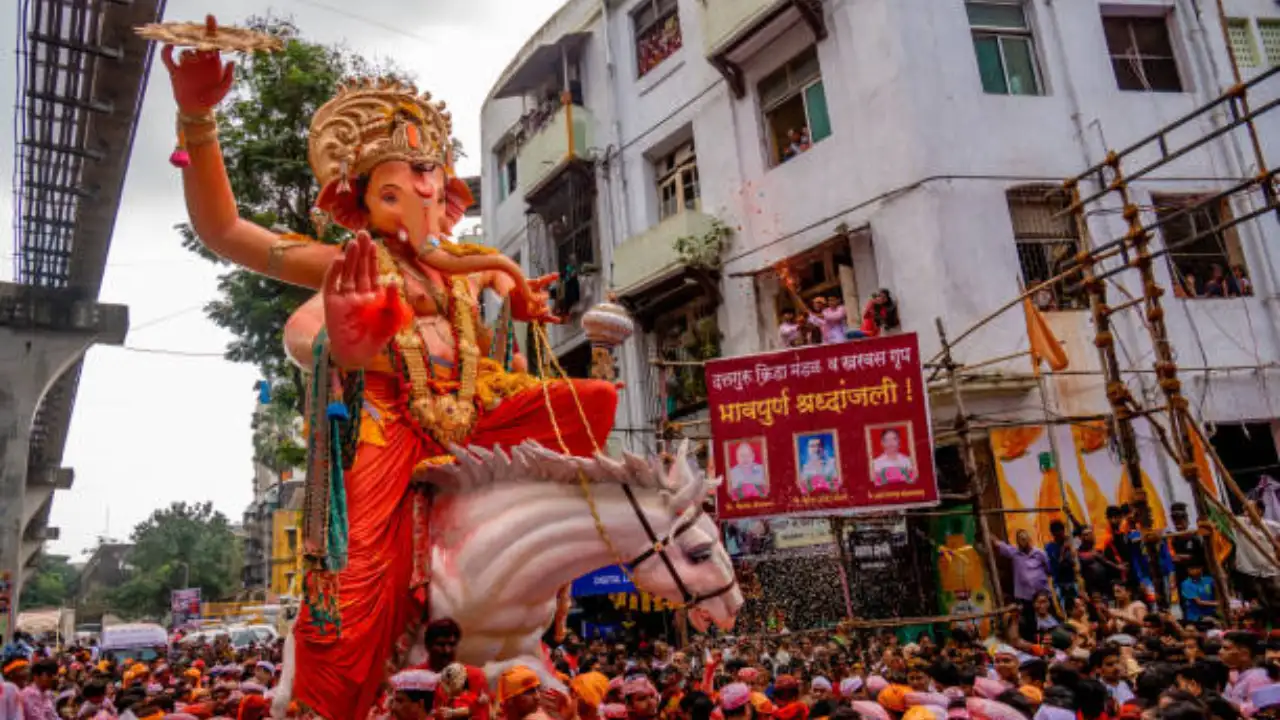
Mumbai Weather Alert Warns Heavy Rains To Disrupt Ganesh Chaturthi
Mumbai is preparing for Ganesh Chaturthi with both anticipation and anxiety, as the city faces a fresh spell of heavy monsoon showers. The India Meteorological Department (IMD) has issued a yellow alert, cautioning citizens about the likelihood of intense rainfall coinciding with the festival beginning on August 27 and continuing through September 1. The warning has raised concerns over possible traffic congestion, waterlogging, and challenges in managing massive public gatherings.
Officials have urged residents to plan their travel carefully, highlighting that festive crowds combined with weather-related slowdowns could disrupt daily movement. Public transport systems are expected to play a crucial role in ensuring smoother connectivity, as authorities encourage citizens to reduce reliance on private vehicles. The advisory comes after Mumbai experienced a brief pause from heavy rainfall, only for showers to intensify again just as the city prepares to welcome millions of devotees to the streets.Independent meteorological experts have also forecast widespread rainfall across the Mumbai Metropolitan Region, including Thane and Navi Mumbai, with showers ranging between 5 and 35 mm on August 27. Pune and adjoining districts are expected to see light to moderate rain, while the Western Ghats may witness heavier spells, which could trigger localised flooding and affect connectivity between urban and rural areas.
The extended forecast for the week ahead points to generally cloudy skies with intermittent moderate to heavy showers through to September 1. Temperatures are expected to hover between 24°C and 28°C, adding to the humid discomfort of the season. Officials emphasise that the rains, while challenging for logistics, also replenish groundwater levels and support agriculture in surrounding regions, underscoring the dual impact of the monsoon on urban life and sustainability.From an urban management perspective, the timing of the rainfall during one of Mumbai’s largest cultural festivals has brought renewed focus on the city’s resilience.
Civic authorities are under pressure to ensure that stormwater drainage systems can handle the additional load, while simultaneously managing the massive movement of people during Ganesh idol immersions. Experts note that the city’s long-term strategy must include eco-friendly festival practices, decentralised water management, and infrastructure upgrades that keep pace with both climate variability and population density.Ganesh Chaturthi, often seen as a symbol of Mumbai’s cultural vibrancy, will thus unfold against the backdrop of an unpredictable monsoon. While devotees are unlikely to let the rains dampen their spirit, the coming days will test the city’s ability to balance tradition with safety, and celebration with sustainability.