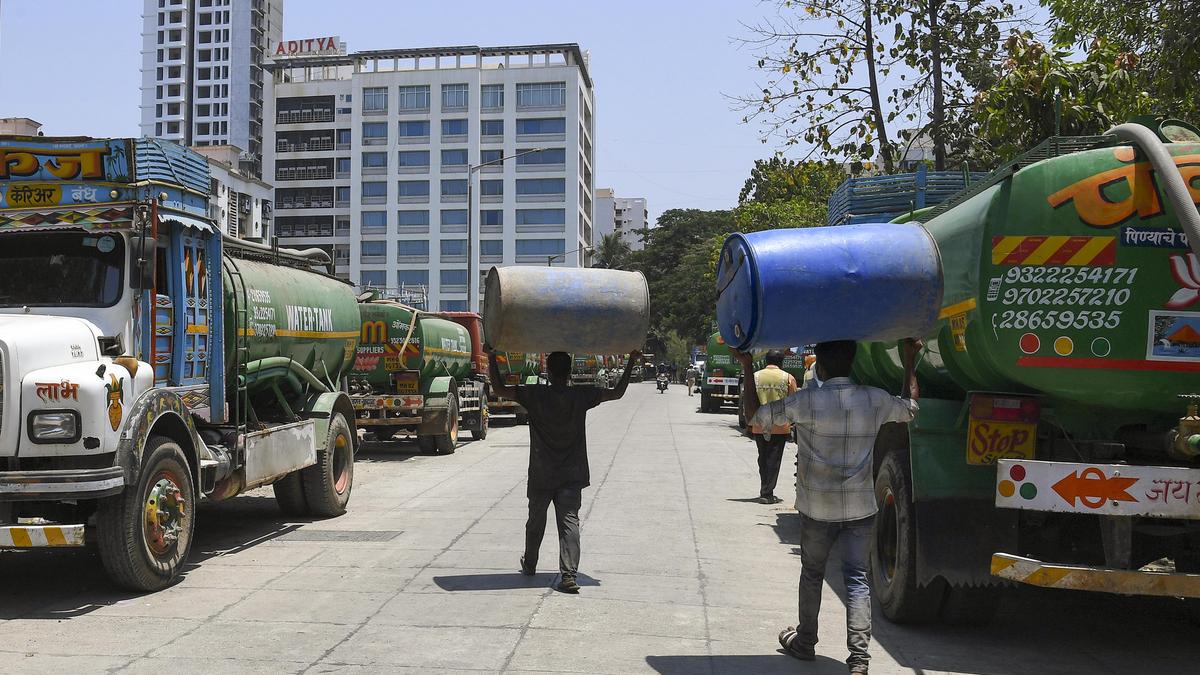
Mumbai’s urban water stress is intensifying, with mounting concerns over inconsistent supply, falling pressure levels, and growing dependence on private tankers across several neighbourhoods. The issue, raised during a recent municipal deliberation, underscores deeper structural inefficiencies in the city’s ageing water infrastructure and raises questions about long-term urban resilience.
Elected representatives across political lines highlighted that large sections of the city are receiving inadequate water despite official supply commitments. In several wards, residents are reportedly supplementing municipal water with privately sourced tankers, significantly increasing household expenses. Urban planners note that such parallel systems often emerge when public utilities fail to keep pace with population growth and spatial expansion. A key concern flagged during the discussions was the condition of Mumbai’s decades-old pipeline network. Experts indicate that leakages and transmission losses remain a major challenge, with substantial volumes of treated water failing to reach end users. This not only undermines supply efficiency but also contributes to inequitable distribution, particularly in densely populated and lower-income areas.
The Mumbai water crisis is further compounded by unregulated demand. Officials acknowledged that new water connections are often approved without fully assessing existing network capacity, placing additional strain on already stretched infrastructure. In rapidly urbanising pockets, this imbalance has resulted in a widening gap between supply and demand, forcing informal and expensive alternatives to fill the void. Urban governance experts also point to systemic planning gaps. Water demand forecasting, infrastructure upgrades, and maintenance have not kept pace with the city’s growth trajectory. As a result, citizens in multiple wards face irregular supply schedules, while local authorities struggle to manage complaints and ensure equitable distribution.
Another emerging dimension of the Mumbai water crisis is the reliance on potable water for non-essential uses, including construction and sanitation. Sustainability advocates argue that this practice is both inefficient and environmentally unsound. They emphasise the need for treated wastewater reuse systems, which can reduce pressure on freshwater sources while supporting the city’s expanding built environment. The financial burden on residents is also becoming increasingly visible. In some localities, communities are collectively spending substantial amounts annually on tanker water, raising concerns about affordability and access. This trend reflects a broader shift where essential urban services are partially privatised in practice, even if not in policy.
Looking ahead, experts stress the urgency of modernising Mumbai’s water management systems. This includes reducing leakages through pipeline upgrades, implementing smart monitoring technologies, and expanding wastewater recycling infrastructure. Equally important is the need for integrated planning that aligns water supply with urban growth. As climate variability and population pressures intensify, addressing the Mumbai water crisis will be critical not only for service delivery but also for building a more equitable and climate-resilient city.
Mumbai Water Supply Concerns Rise Amid Irregular Distribution