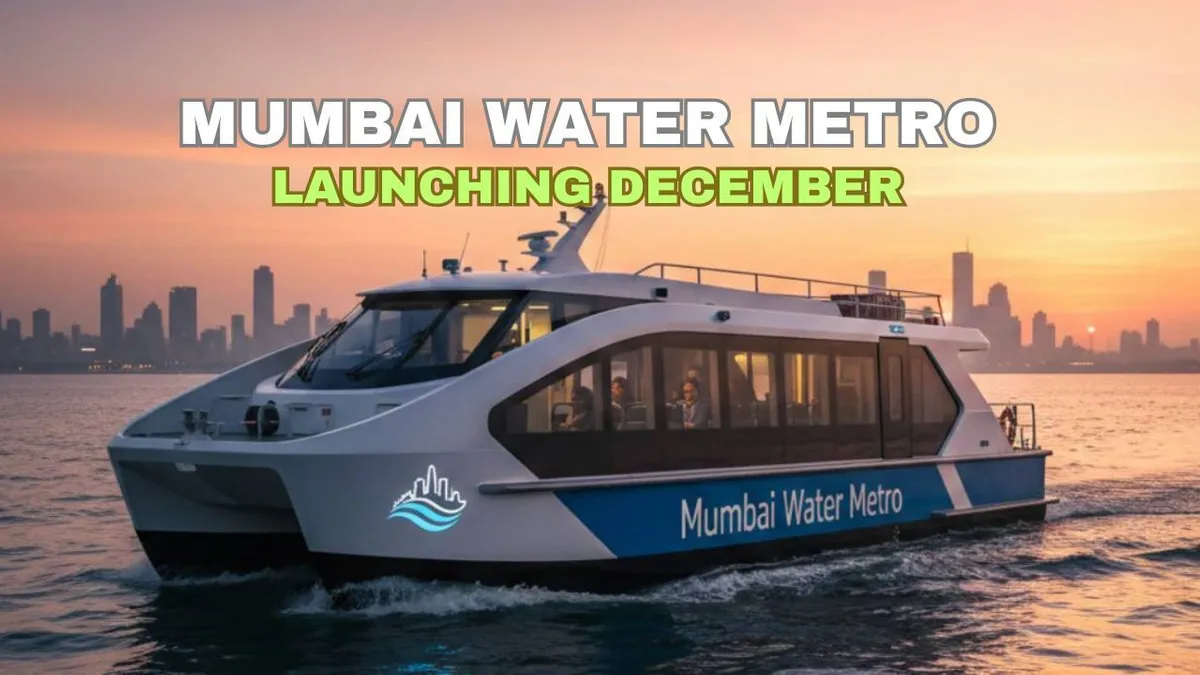
Mumbai is preparing to test a new chapter in urban mobility as plans for a citywide water metro move closer to execution, with phased operations targeted to begin later this year. The initiative, aimed at deploying battery-powered ferries across coastal and creek routes, marks a strategic effort to reduce pressure on roads and suburban rail while expanding low-emission transport options in Mumbai and its surrounding urban region.
According to officials overseeing ports and maritime transport, a Detailed Project Report (DPR) for the water metro network in the Mumbai Metropolitan Region is expected to be finalised by the end of February. The report will define route viability, passenger demand, terminal infrastructure and environmental safeguards, forming the basis for financial and operational approvals at the state level. The proposed investment, estimated at around ₹1,200 crore, envisions a network of electric ferries operating on six to eight identified corridors. Two priority routes are likely to be selected for the first phase, focusing on areas with high commuter density and limited alternatives during peak hours. Subsequent phases would expand services deeper into the metropolitan region, including adjoining districts.
Within the city, planners are assessing high-traffic coastal stretches that link employment hubs, residential clusters and leisure districts. These corridors, long constrained by road congestion and limited east–west connectivity, are seen as well-suited for water-based transit. Industry experts note that even partial mode shifts from road to water could deliver measurable benefits in travel time reliability and fuel savings. The project draws operational lessons from the Kochi Water Metro, which has demonstrated how electric ferries can integrate with buses and metro rail to form a multimodal public transport system. For Mumbai, officials say the emphasis will be on seamless ticketing, last-mile access and terminals designed to withstand tidal variation and extreme weather—an increasing concern in climate-vulnerable coastal cities.
A strategically located jetty in South Mumbai is also being evaluated as a key interchange. Once operational, water metro services from this node could significantly shorten travel times to the upcoming Navi Mumbai International Airport, offering a time-competitive alternative to road travel during peak congestion. Urban economists point out that diversified transport networks improve city resilience by reducing dependence on single corridors or modes. Water-based transit, while not a replacement for mass rail, can absorb niche demand, support tourism-linked economies and lower per-capita transport emissions when powered by clean energy.
A formal policy announcement is expected alongside the upcoming state budget. As Mumbai evaluates the DPR and route economics, the project’s success will hinge on disciplined execution, transparent pricing and its ability to function as everyday public transport—not merely a premium service. If implemented well, the water metro could reshape how India’s largest metropolis uses its natural geography to move people more efficiently.
Mumbai Water Metro Plan Advances Toward Phased Launch