


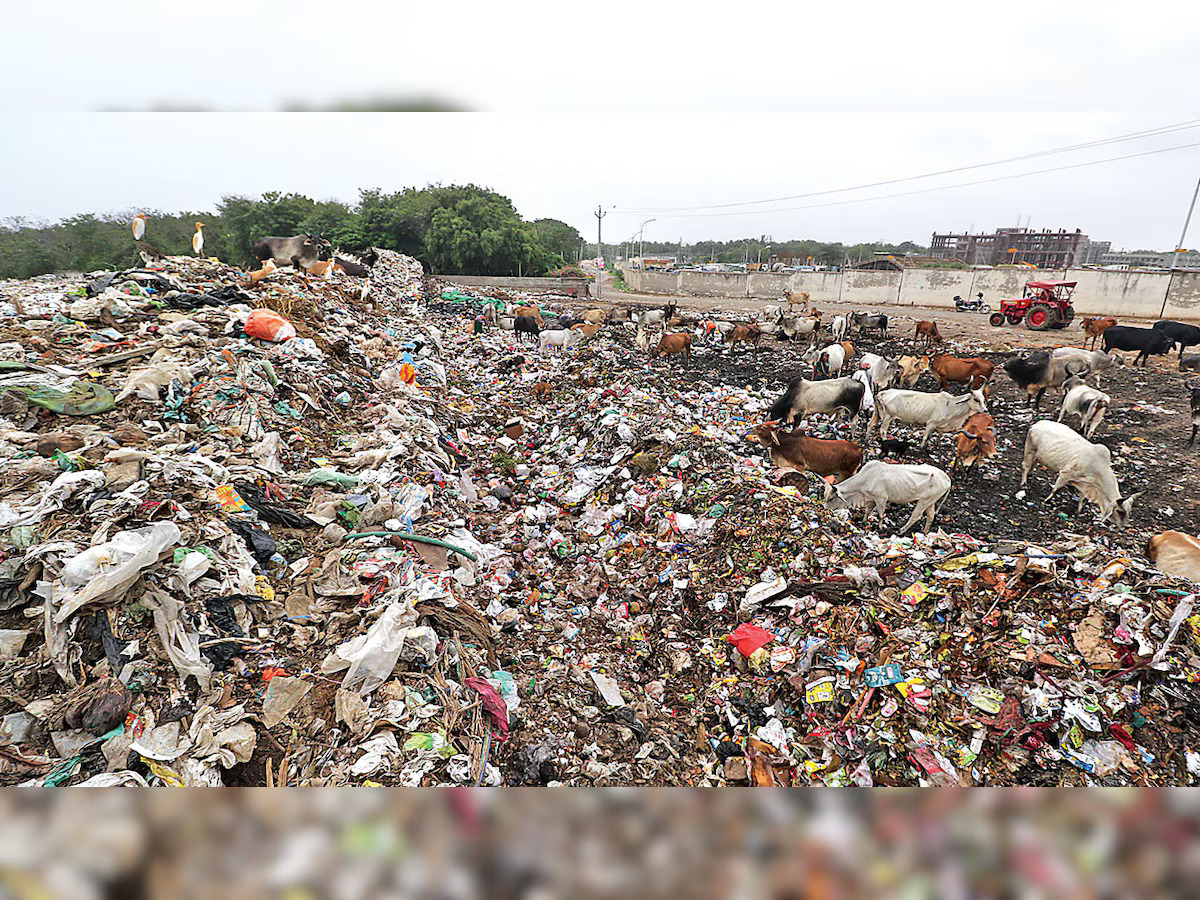
Mumbai’s largest landfill at Kanjurmarg will continue to operate following a crucial reprieve from the Supreme Court, civic officials confirmed on Thursday. The decision brings short-term relief to the Brihanmumbai Municipal Corporation (BMC), which currently lacks any alternative site for managing the city’s massive daily waste output.
According to officials, over 88% of Mumbai’s municipal solid waste—amounting to approximately 6,200 tonnes daily—is directed to the Kanjurmarg landfill. With the remaining 800 tonnes being diverted to Deonar, the city’s waste management system remains under immense pressure. A team of senior BMC officials was present in Delhi to attend the legal proceedings, where the top court cleared the continued operations of the facility. Officials stated that the ruling offers critical breathing room to advance long-term waste infrastructure reforms. Mumbai generates around 7,500 tonnes of waste every day. Though biomining of legacy waste has commenced at Mulund and Deonar dumping grounds, those sites were deemed unviable for handling ongoing waste loads.
In response to the prolonged legal hurdles that had earlier stalled development at Kanjurmarg, the BMC had drafted plans for a major transformation of the site into a sustainable waste processing hub. The blueprint includes a minimum daily processing capacity of 5,000 tonnes of mixed waste, segregated into 3,600 tonnes of dry and 1,400 tonnes of wet waste. Officials detailed that a 60-megawatt waste-to-energy plant is on the drawing board for handling dry waste, while wet waste will be treated at a separate 500 TPD (tonnes per day) facility to yield over 16 tonnes of compressed biogas (CBG) each day. In addition, a 1,000 TPD composting unit will convert biodegradable matter into 122 tonnes of compost daily, with a parallel sanitary landfill facility for inert rejects. The project, spread across 40 hectares, is also expected to generate over 460 million units of electricity annually.
While civic engineers view the court clearance as a win for the city’s infrastructure stability, environmental stakeholders have expressed concern over the process. One petitioner associated with the legal battle criticised the court’s handling of the matter, citing limited opportunity to respond to the special leave petition. Activists argued that after years of litigation and a favourable high court verdict, the Supreme Court’s relief to the BMC came abruptly and without due process. Despite these objections, the focus now shifts to execution. Civic officials maintain that the future of Mumbai’s waste lies in integrated waste-to-energy models, improved segregation, and bio-mining. The Kanjurmarg site, they say, will serve as a model if the proposed systems are implemented effectively and transparently.
With no immediate alternatives in sight, the continuation of landfill operations is not just a legal matter—it is a lifeline for Mumbai’s waste management ecosystem. The onus now rests on the city administration to ensure that this relief translates into real, measurable progress toward a sustainable urban waste future.
Also Read : CR Installs Automatic Door In Non AC Local Train Coach
