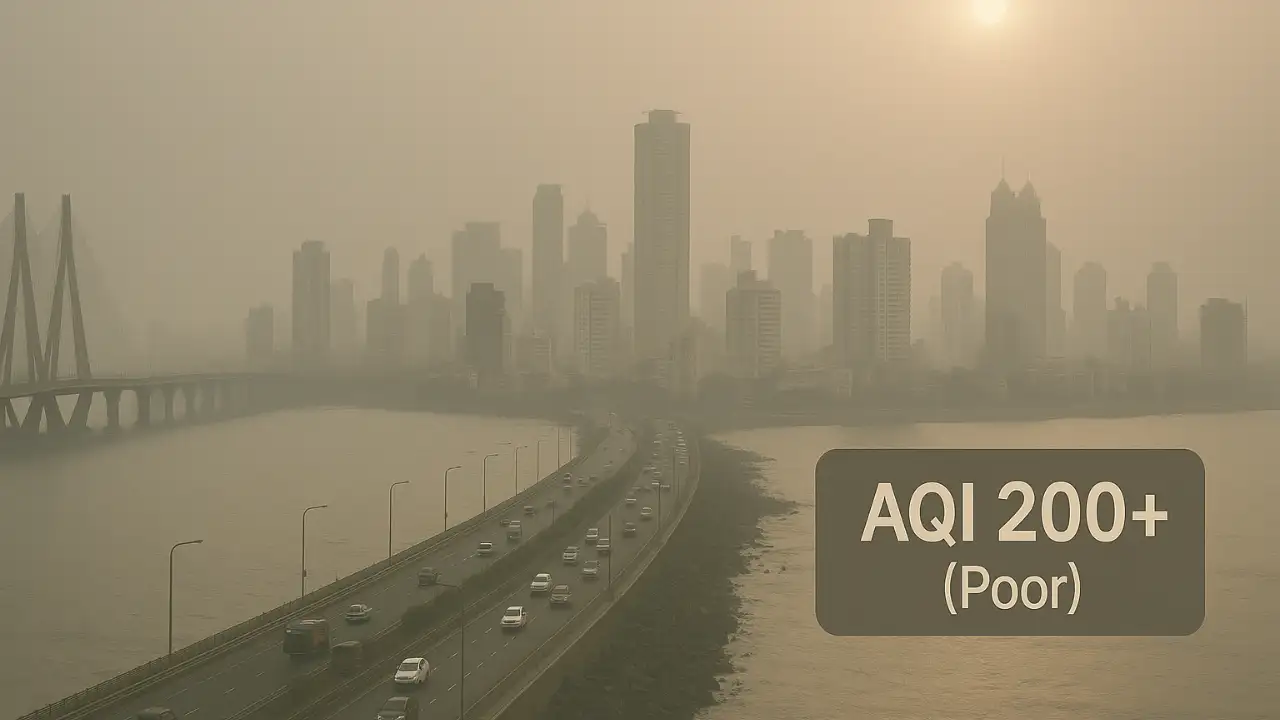
Mumbai’s civic administration has warned that construction activity and certain industrial operations could be halted if neighbourhood-level air quality continues to remain in the ‘poor’ category despite ongoing mitigation measures. The Brihanmumbai Municipal Corporation (BMC) said the move forms part of a graded response framework aimed at preventing further deterioration of the city’s Air Quality Index (AQI), which has remained above desirable limits at several locations this season.
The civic body stated that closures would be enforced under the highest tier of its response system, known as the Graded Response Action Plan 4 (GRAP-4), which is activated when emissions persist even after prescribed controls are implemented. A senior official explained that the intention is to address pollution at its source while ensuring that essential public works and daily life are minimally disrupted. “We will intervene only if AQI readings remain above 200 consistently,” the official said, indicating that the threshold reflects both public health considerations and operational feasibility.To strengthen oversight, flying squads have been deployed across all municipal wards. Each unit comprises two engineers and a police representative and has been tasked with inspecting construction sites, monitoring compliance with sensor-based air systems, and preventing activities such as waste burning and the use of firewood for heating or cooking. These squads have also been instructed to initiate immediate penalties for violations.
Municipal authorities said that the city’s pollution control efforts have expanded over the past year, particularly in sectors that directly affect vulnerable communities. Cleaner fuel transitions at crematoriums and bakeries, an increase in electric buses within the public transport fleet, scientific handling of debris, and dust-suppression through misting machines have already been rolled out. Urban planners note that these steps signal a shift towards a more integrated approach to environmental management, combining technological upgrades with on-the-ground enforcement.The construction industry, which accounts for a significant share of particulate emissions in Mumbai, has been under heightened scrutiny since the civic body released comprehensive site guidelines in October 2024. These rules require barricades, green cloth coverings, water sprinkling systems, real-time air monitoring, and smoke-absorption equipment. While developers acknowledge that compliance increases operational costs, they also recognise that stricter monitoring is inevitable as dense cities face escalating climate and health risks.Industry experts emphasise that predictable and transparent enforcement will be crucial. Sudden shutdowns, they argue, can affect project timelines and labour incomes, but a clear early-warning system based on AQI trends gives stakeholders room to adapt.
For citizens, meanwhile, improved air quality remains an urgent priority, particularly for children, older adults, and those living in congested precincts where pollution settles more heavily.As Mumbai continues to expand its urban footprint, balancing growth with environmental resilience will require coordinated action from regulators, developers, and communities. The BMC’s graded response plan signals a shift towards this alignment, underscoring the need for cleaner, more inclusive urban systems that safeguard public health while enabling sustainable development.
Mumbai Warns Construction Sites Will Shut If AQI Stays Above Two Hundred