


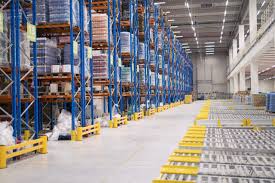
Mumbai’s extended logistics corridor has recorded another high-value, long-tenure warehousing transaction, reinforcing the region’s emergence as one of India’s most strategically important back-end supply chain zones. A large-format retailer has committed to a multi-decade lease at a logistics facility in the Panvel Raigad belt, securing space critical to its distribution network serving the Mumbai Metropolitan Region.
Property registration records indicate that over 66,000 square feet of warehousing space has been leased at a facility located near Panvel, with the agreement structured for nearly three decades. The cumulative rental outgo over the lease period is estimated to exceed Rs 100 crore, reflecting growing confidence among organised retailers in long-term logistics infrastructure rather than short-cycle arrangements. The warehouse forms part of a larger industrial land parcel designed for high-volume storage and regional distribution. The lease includes a fixed escalation clause at regular intervals, a structure that aligns with inflation protection for asset owners while offering cost visibility to occupiers. Industry experts note that such long lock-in agreements are becoming more common as retailers prioritise supply chain resilience over flexibility. Urban planners tracking freight movement patterns say the Panvel–Raigad belt has gained prominence due to its multi-modal connectivity. Proximity to Mumbai’s consumption centres, access to national highways, nearby ports, and the operationalisation of new aviation infrastructure have collectively repositioned the corridor as a logistics gateway rather than a peripheral industrial zone. This has reduced last-mile delivery times and fuel intensity, indirectly lowering the carbon footprint of large retail operations.
The leased facility is intended to support storage and distribution across a wide range of consumer categories, highlighting the growing scale and complexity of organised retail logistics. Analysts point out that backend infrastructure is increasingly dictating retail competitiveness, especially in urban regions where road congestion, land scarcity, and environmental constraints demand consolidated, well-located warehousing. The transaction also reflects broader trends in the Mumbai Metropolitan Region’s industrial real estate market. Over the past year, several large occupiers across retail, third-party logistics, food supply chains, and advanced manufacturing have committed to sizeable warehouse spaces in Panvel, Bhiwandi, and Kurla. This has pushed institutional interest in logistics parks that comply with modern fire safety, energy efficiency, and vehicle circulation standards. National data indicates that India’s industrial and logistics sector recorded its highest-ever annual space absorption in 2025, driven by manufacturing expansion, organised retail, and a revival in e-commerce activity. The shift towards longer lease tenures suggests occupiers are betting on stable demand rather than cyclical growth.
As Mumbai continues to decentralise freight and storage away from its congested core, the challenge ahead will be ensuring that logistics growth is supported by planned infrastructure, clean energy adoption, and workforce accessibility. How cities balance economic efficiency with environmental responsibility will determine whether logistics hubs evolve as sustainable urban assets or merely high-intensity industrial enclaves.
Also Read: Delhi DDA Adds Premium Homes Near Metro
Mumbai Warehousing Market Sees Major Retail Commitment
