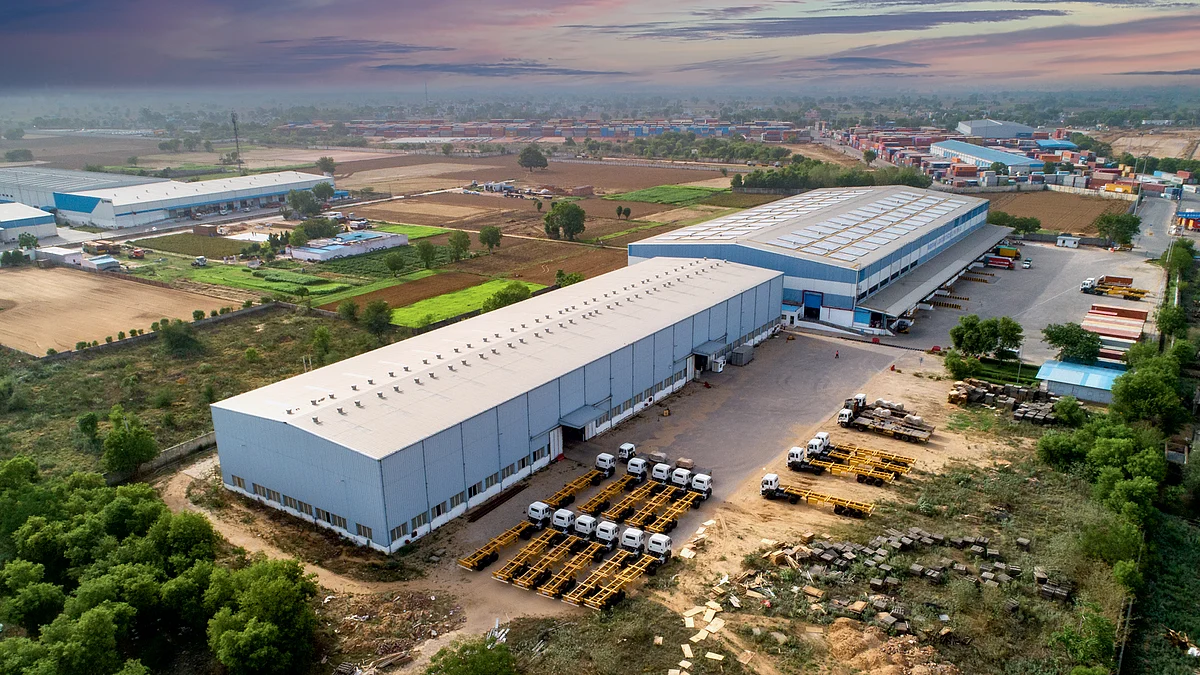
Mumbai’s peripheral logistics landscape has recorded a notable signal of long-term confidence, with a large organised retailer committing to a multi-decade warehouse lease in the Panvel–Raigad region. The transaction reflects a broader shift in how retail supply chains are being structured around the Mumbai Metropolitan Region, as occupiers prioritise stability, scale, and infrastructure resilience over short-term flexibility.
Property registration records indicate that the retailer has leased over 66,000 square feet of warehousing space near Panvel under an agreement spanning nearly three decades. The cumulative rental outgo over the lease tenure is estimated to exceed ₹100 crore, underscoring the growing preference among large-format retailers for long-horizon logistics planning. Market participants say such lease durations are uncommon in traditional commercial real estate but are becoming more frequent in modern logistics and industrial assets. The facility forms part of a larger industrial park developed to support high-volume storage, regional fulfilment, and time-sensitive distribution. The lease includes scheduled rent escalations, allowing asset owners to hedge against inflation while offering operational predictability to the occupier. Industry experts note that this structure aligns with the operational needs of organised retail, where consistency in backend infrastructure directly affects inventory management, delivery timelines, and cost control.
The Panvel–Raigad corridor has rapidly emerged as a preferred logistics destination for Mumbai-bound supply chains. Its appeal lies in multi-modal connectivity, including highway access, proximity to ports, and emerging aviation infrastructure, which together reduce dependency on congested inner-city warehousing. For the Mumbai Metropolitan Region, this decentralisation is critical to easing freight movement, lowering last-mile emissions, and freeing up urban land for residential and commercial uses. Analysts point out that consolidated warehousing in peripheral zones also supports more sustainable logistics operations. Larger, purpose-built facilities enable better energy management, scope for rooftop solar, and improved vehicle routing compared to fragmented storage spread across dense urban areas. As climate resilience becomes a planning imperative, such efficiencies are increasingly factored into occupier decisions.
The transaction mirrors a wider upswing in industrial and logistics leasing across the MMR, particularly in locations such as Panvel, Bhiwandi, and select eastern suburbs. Over the past year, these zones have attracted both manufacturing and consumption-led occupiers, drawing interest from long-term institutional capital focused on infrastructure-grade real estate. At a national level, the industrial and logistics sector has seen record absorption, driven by manufacturing expansion, organised retail growth, and the steady evolution of e-commerce. The move towards longer lease tenures suggests occupiers are planning for sustained demand rather than cyclical spikes.
Urban planners caution, however, that the next phase of growth will depend on coordinated infrastructure provisioning, cleaner energy adoption, and workforce accessibility. How effectively emerging logistics hubs integrate these elements will determine whether they evolve into balanced economic engines—or add new layers of stress to already stretched regional systems.
Mumbai Warehousing Market Draws Long Term Retail Lease