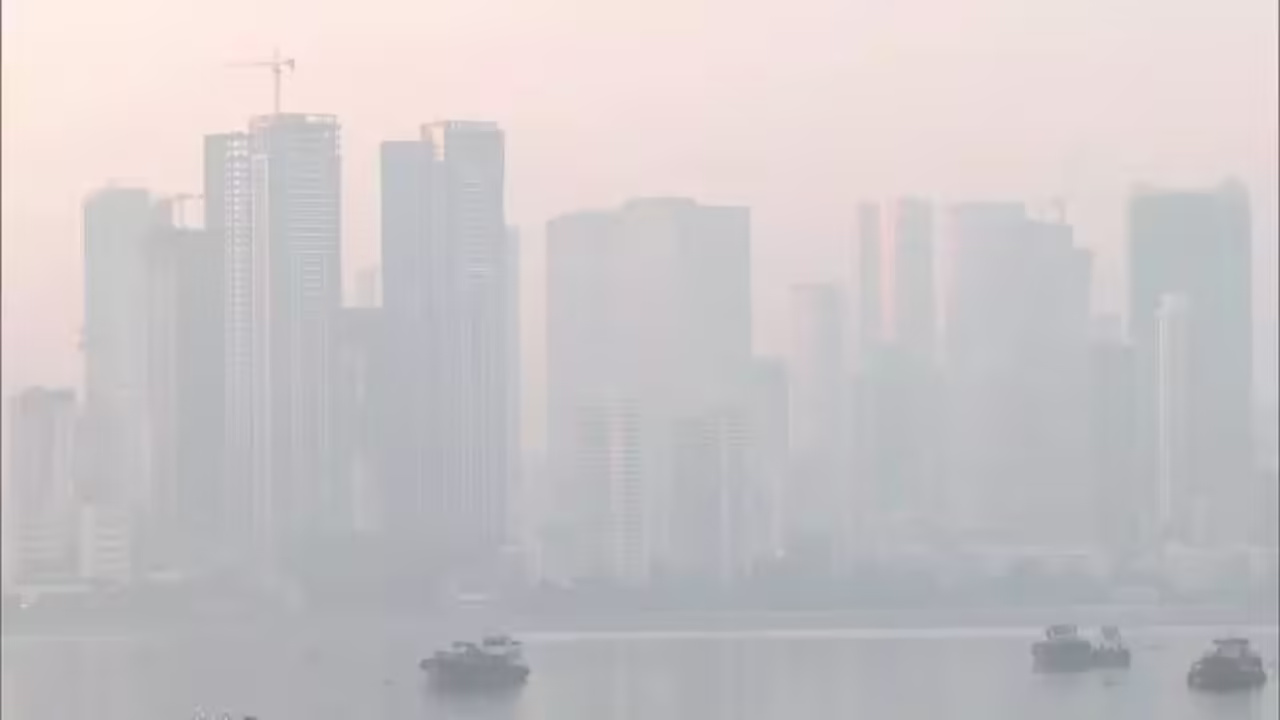
Mumbai woke up to a rare hint of winter on Wednesday, with cooler temperatures and clearer skies offering residents a brief sense of seasonal relief. However, the respite proved short-lived as smog gradually enveloped large parts of the city, pushing air quality back into unhealthy territory and renewing concerns over Mumbai’s growing pollution burden during the winter months.
Weather officials had predicted a largely pleasant day, with temperatures expected to hover between 19°C and 34°C and relatively low humidity levels in the morning. Early commuters and morning walkers initially welcomed the crisp conditions. By mid-morning, however, visibility began to drop across several neighbourhoods as haze became more pronounced, particularly along major traffic corridors and low-lying areas. Air quality data indicated a sharp deterioration as the day progressed. Mumbai’s overall Air Quality Index (AQI) was recorded at 265 in the early hours, categorising the city’s air as unhealthy. Experts noted that such levels pose health risks not only to vulnerable groups such as children, older adults, and those with respiratory illnesses, but also to otherwise healthy individuals exposed for prolonged periods.
Several locations across the Mumbai Metropolitan Region emerged as pollution hotspots. Logistics and industrial zones reported some of the highest readings, with AQI levels crossing into hazardous and severe categories. Central and eastern suburbs, known for heavy traffic and ongoing infrastructure works, also saw sustained poor air quality. Even traditionally breezier western suburbs failed to escape the impact, registering AQI levels firmly within the poor range. Environmental specialists attribute the spike largely to construction dust and fine particulate matter. Large-scale public infrastructure projects, including metro corridors, flyovers, and arterial road upgrades, continue to generate significant dust emissions. These are compounded by private redevelopment activity and dense vehicular traffic during peak hours. Seasonal factors such as calmer winds and cooler nights further trap pollutants closer to the ground.
An urban air quality expert said Mumbai’s experience reflects a recurring winter pattern seen in many Indian cities. “Lower temperatures and stable atmospheric conditions reduce the dispersion of pollutants. Without strict dust control and emission management, even a few calm days can lead to sharp pollution spikes,” the expert explained. While the India Meteorological Department does not expect extreme cold, similar weather patterns are likely over the coming days, raising concerns that air quality could fluctuate frequently. Civic authorities have urged construction sites to follow dust mitigation norms and advised residents, especially those with health conditions, to limit outdoor exposure during peak pollution hours.
As Mumbai continues to expand its infrastructure to support growth and mobility, the latest episode highlights the challenge of balancing development with public health. Strengthening construction controls, improving traffic management, and accelerating cleaner transport options will be critical if the city is to enjoy its winter mornings without the shadow of smog.
Mumbai Wakes Up To Winter Chill But Smog Pushes Air Quality Back