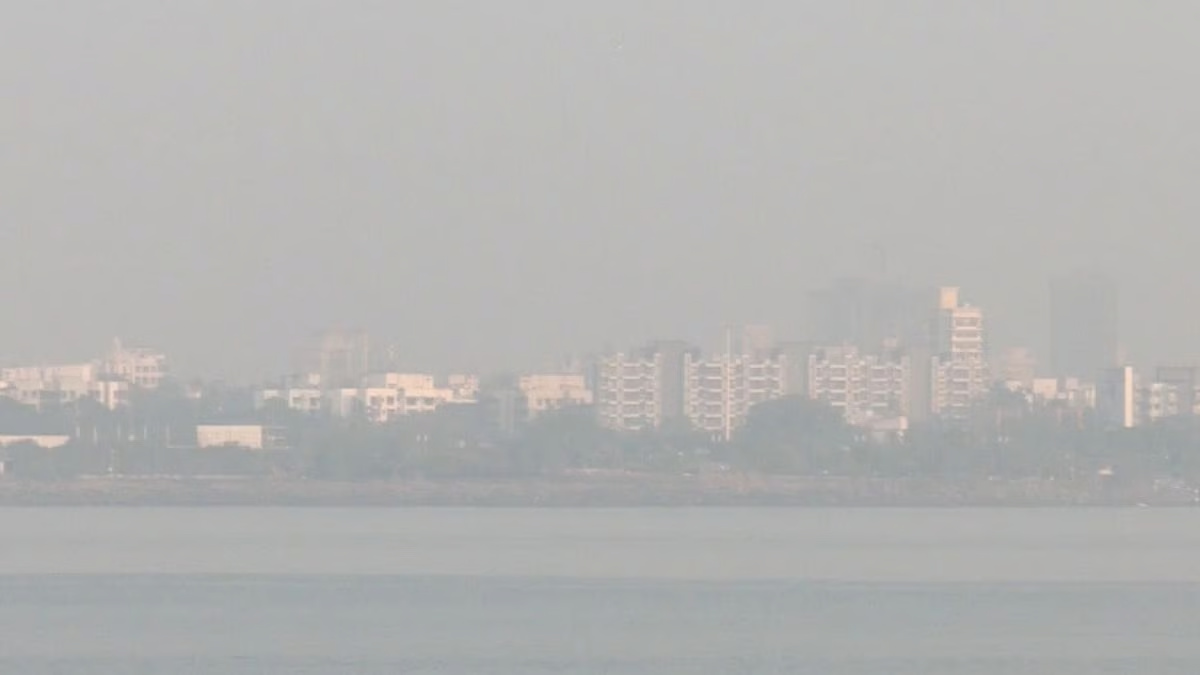
Mumbai woke to a dense layer of smog on Wednesday, raising health concerns for residents across the city, even as winter temperatures remained moderate. The Air Quality Index (AQI) registered 257, placing the metropolis in the ‘unhealthy’ category, with certain areas such as Wadala, Deonar, and Worli crossing the ‘severe’ threshold, according to official monitoring data. The haze has notably reduced visibility, affecting daily commutes and outdoor activity.
Experts attribute the spike in air pollution primarily to suspended particulate matter from construction and infrastructure projects. Private building sites, along with large-scale civic initiatives including metro lines, bridges, and road expansions, have contributed significantly to airborne dust levels. An official noted that ongoing urban development, while essential for mobility and economic growth, has intensified the city’s struggle to maintain breathable air. Certain central and industrial zones bore the brunt of the deterioration. Wadala Truck Terminal recorded an alarming AQI of 355, classified as severe, while Deonar (320) and Worli (306) followed closely. Key commercial areas including Colaba and BKC hovered near hazardous levels, affecting office-goers and residents alike. Suburban pockets also reported poor air quality, with Kandivali East at 121, Powai at 140, and Malad West at 190, reflecting the widespread nature of the pollution wave.
The city’s Air Quality Index uses a scale where 0–50 is considered good, 51–100 moderate, 101–150 poor, 151–200 unhealthy, and anything above 200 hazardous. “The particulate matter in areas of heavy traffic and construction is clearly influencing overall AQI readings,” said an environmental analyst. “Without sustained dust control measures, particularly around urban development zones, spikes like these will continue to recur.” The persistent haze underscores the challenges Mumbai faces in balancing rapid urbanisation with environmental health. While the India Meteorological Department (IMD) forecasted clear skies and temperatures ranging from 16°C to 33°C, the city’s infrastructure growth has led to unintended public health consequences. Authorities continue to monitor the situation, advising vulnerable populations such as children, the elderly, and individuals with respiratory conditions to limit outdoor exposure.
Urban planners and environmental experts emphasise that integrating stricter construction dust control, green buffer zones, and more widespread air monitoring could help cities like Mumbai mitigate future pollution peaks. As Mumbai expands, combining sustainable development with proactive public health measures remains a critical priority.
Mumbai Wakes Up To Thick Smog As AQI Remains Unhealthy Today