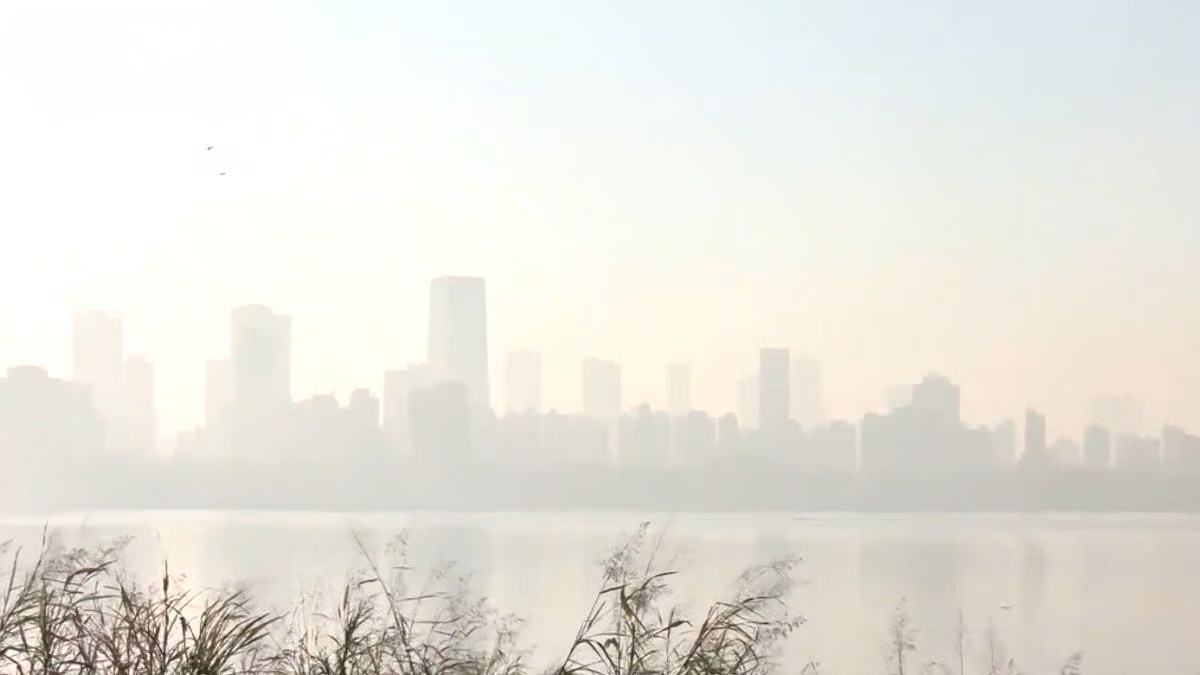
Mumbai began Tuesday with a distinctly winter feel as clear skies and a mild morning chill set the tone for the day. However, a faint layer of smog lingering over the city served as an unwelcome reminder of the region’s ongoing air quality challenges. While overall pollution levels showed marginal improvement, the concentration of dust and emissions continued to distort visibility and raise concerns about the impact on public health and everyday mobility.
According to officials from the India Meteorological Department, temperatures were expected to remain steady, with minimums around 16°C and highs reaching close to 33°C. The favourable weather did little to offset deteriorating air quality linked to accelerated construction activity, increased vehicular emissions and reduced wind movement—three factors that have become characteristic of Mumbai’s winter months. Data from an air-quality monitoring platform on Tuesday placed the citywide Air Quality Index (AQI) at 139, categorised as ‘poor’. Although this reflected an improvement compared to the heavily polluted conditions witnessed in late November and early December, experts noted that air quality remains far from the “healthy” bracket. A senior environmental analyst explained that the city’s pace of infrastructure construction—particularly metro corridors, road expansion and real estate development—continues to elevate particulate matter across neighbourhoods.
Several pockets of the city emerged as pollution hotspots. The logistics-heavy Wadala Truck Terminal reported a severe AQI of 346, indicating highly hazardous conditions for outdoor workers and vulnerable groups. The area around Mumbai Airport also recorded concerning levels at 213, which falls in the ‘unhealthy’ range and is often influenced by aircraft movement, high traffic density and ongoing infrastructure works. Industrial and mixed-use neighbourhoods such as Deonar and Chembur continued to display persistently poor levels with AQIs of 180 and 177 respectively. Similar readings were observed in Kurla and Worli, highlighting that pollution concentration remains unevenly distributed across the metropolitan region.
By contrast, suburban clusters reported relatively better conditions. Charkop’s AQI of 73 and Jogeshwari East’s reading of 78 fell in the ‘moderate’ category, reflecting a temporary respite. Other suburban points including Kandivali East, Govandi and Mulund West also recorded moderate levels. While these areas remained within acceptable short-term limits, experts emphasised that sustained exposure to even moderate pollution contributes to long-term respiratory stress. Urban planners noted that Mumbai’s recurring winter smog should serve as a renewed call for sustainable development practices. Measures such as stricter dust-mitigation at construction sites, improved public transport adoption, and the enhancement of green buffers around dense corridors were highlighted as essential urban interventions. As the city continues its transition towards large-scale infrastructure, balancing development with cleaner air will be crucial for building an equitable and climate-resilient future.
Mumbai Wakes Up To Clear Skies With Thin Smog Layer AQI Improves